How to Become a California Firefighter Without Quitting Your Job
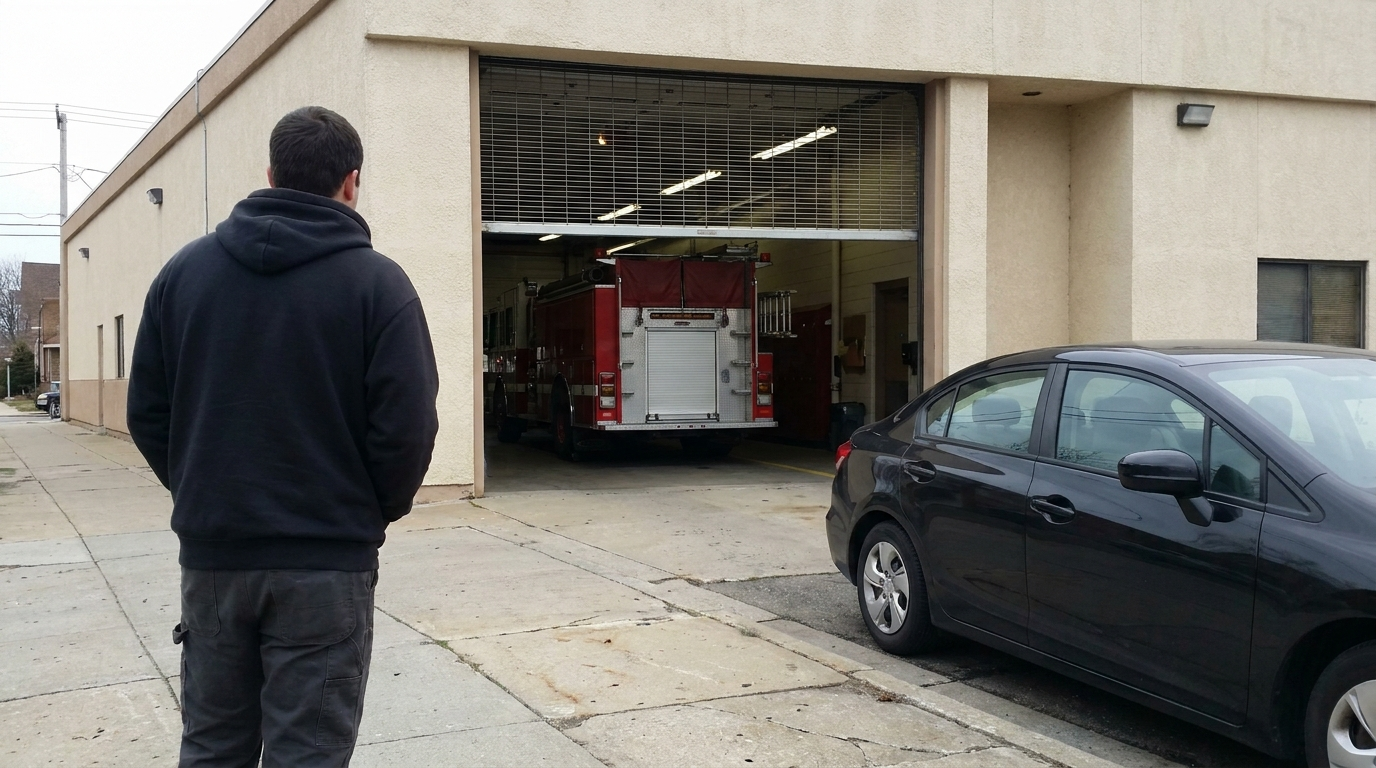
Most advice about becoming a firefighter quietly assumes you are 22, single, and free to take low-paid EMT shifts or a full-time academy on short notice. If you are 32 with a mortgage, or 41 with kids and a career, that advice is useless. You need to know which steps fit around a job you cannot afford to leave, which steps genuinely do not, and when in the process you actually face the income cliff.
The shape of it: almost everything before the badge can be done while employed, if you sequence it deliberately. The full-time commitments come late, and by then you should know they are worth it. This guide lays out that sequence. If age is also on your mind, read Am I Too Old to Become a Firefighter? alongside this.
What Fits Around a Full-Time Job
EMT school. A California EMT course is at least 170 hours by regulation, including 24 hours of clinical time. Schools deliver that in many formats, and part-time evening and weekend schedules exist alongside accelerated daytime ones. Confirm the schedule with the school before you enroll. After the course you pass the NREMT exams and certify through your local EMS agency. For most career changers this is the first move, and it does not require quitting anything. Details in Do You Need Your EMT Before Applying?
The FCTC tests. The FCTC Written Test is a single 2.5-hour sitting, offered at least quarterly, and costs $50. The CPAT is a scheduled test day, costs $160 including two orientation sessions, and the physical preparation is training you do on your own time. If the fees are a genuine hardship, the California Fire Foundation offers financial aid covering both tests. These are weekend-sized commitments, not job-sized ones. Prep guidance is in The FCTC Written Test, Explained and How to Pass the CPAT.
Applications, oral boards, and background paperwork. Applications are evenings. Oral boards and interviews are single days you can usually plan leave around. The Personal History Statement is tedious but it is homework, not a schedule conflict. Practice interviews with our oral board drill cost you nothing but evenings.
Fitness. The CPAT and the academy both punish poor conditioning. Training for them is the one part of this process with total schedule flexibility. Start now.
What Does Not Fit Around a Job
A self-sponsored fire academy. Academy formats vary, and some programs run evening or weekend schedules, but the traditional format is a semester of full-time, physically demanding training. Treat a self-sponsored academy as a real schedule decision: confirm the format with the specific accredited academy before you assume either way. What the experience demands is covered in What Fire Academy Is Actually Like.
Paramedic school's back half. A California paramedic program is at least 1,094 hours, including 160 hospital clinical hours and a 480-hour field internship. Didactic phases may be schedulable around work; the clinical and internship phases realistically are not. If your path runs through medic school, that is where your income plan gets tested. Weigh it in Should You Become a Firefighter-Paramedic?
A CAL FIRE season. A CAL FIRE Fire Fighter I seasonal position is paid full-time work for up to 9 months, in remote areas, with extended duty weeks. It is a job change, not a side credential. It can be a strong move, but it belongs in the "I am committed and switching income sources" phase, not the "testing the water" phase.
The department academy and probation, once hired. When a department hires you, their academy and your probationary year are your full-time job. That is the finish line, not a planning problem. By then you have the paycheck.
Working as an EMT. Here is the trap for career changers: EMT field experience is valuable, and some departments want documented experience, but taking a large pay cut to run IFT shifts is not automatically required. Many departments require the certification, not employment. Check what your target departments actually require in their bulletins before you sacrifice your salary for ambulance wages. Part-time and per-diem EMT work exists in some markets and can thread this needle; availability varies by region and employer. What each experience option proves to a hiring panel, and what it costs you, is compared in Which Experience Actually Helps a California Firefighter Application?
The Expiration Clocks: Do Not Start Too Early
This is the mistake that quietly costs career changers the most money. Several credentials in this process are perishable, and a multi-year hunt will outlive some of them.
- FCTC Written Test score: expires 12 months from the test date. You can retest, but not more than once in any 30-day period, and each sitting is $50.
- CPAT card: expires after 12 months by default, unless a hiring department sets its own requirement. Each test is $160.
- EMT certification: valid for two years, renewable with 24 hours of continuing education or a 24-hour refresher. Your original course completion record is also only good for two years for certification purposes, so do not finish an EMT course and then sit on it unregistered.
The planning rule: do the durable, slow things first (fitness, research, EMT course, applications practice), and time the perishable things (written, CPAT) to land when you are actively applying. Renew your EMT on schedule even if the hunt is going slowly. Letting it lapse mid-process creates paperwork you do not need.
A Staged Plan With Decision Gates
Every situation differs, but the staging below keeps your income intact for as long as possible and puts a real decision point between each spend.
Stage 1: Research, free. Pull bulletins for the departments you would actually accept, using the department directory and job board. Note which require Firefighter I, which are paramedic-focused, which train their own. This tells you your sequence. Gate: if nothing on your realistic list works for your life (commute, pay, timeline), find that out now, not after spending.
Stage 2: EMT plus fitness, low cost, job intact. Evening or weekend EMT course, NREMT, county certification. Train for the CPAT while you study. Gate: did you like the medical work and the environment? If the ambulance clinicals repelled you, that is data. Read Is Being a Firefighter Worth It? with fresh eyes.
Stage 3: Test and apply, job intact. FCTC written, CPAT, Statewide Eligibility List, plus every department process on your list. This stage can run one to three years, and that is normal. Track everything, keep testing, keep your job. Gate: are you making lists and reaching interviews? If yes, hold course. If no after a fair sample, get feedback and consider whether Stage 4 credentials would change your profile.
Stage 4: The credential spend, if your targets demand it. Self-sponsored academy or paramedic school, chosen from bulletin evidence, not forum pressure. This is where savings runway matters: price your specific route with the cost and timeline calculator and plan how many months of reduced or zero income your household can absorb. Run the decision with Academy or Paramedic First?. Gate: for programs you cannot hold your job through, do you have the runway in writing? If not, build it first. That delay is a plan, not a failure.
Stage 5: The offer. The conditional offer, background, medical, then a department academy on a department paycheck. The income cliff most people fear at Stage 1 often never comes; the ones who quit early usually did so for Stage 4 training they had not confirmed they needed.
Budget planning note: base your household math on the guaranteed pay in the bulletin, not on overtime totals you saw online. Recruit and probationary pay is real money but it varies by agency, and overtime is never promised. Our take on planning around firefighter pay is in Firefighter Salary in California.
The Real Timeline
Career changers who keep their jobs typically move slower than full-time candidates, and the hiring process itself is slow for everyone. Two to five years from first EMT class to badge is a realistic planning window, and the spread depends mostly on your target list and testing performance, not on effort. That is not a reason to quit your job to speed it up; it is the reason not to. A long, funded hunt beats a short, desperate one, and departments background-check your employment history either way. The timeline mechanics are in How Long It Really Takes to Become a Firefighter.
FAQ
Can I really become a firefighter without quitting my current job?
The credentials and testing phases, EMT school included, are commonly completed around full-time work. The points where employment genuinely conflicts are a traditional full-time academy, the clinical and internship phases of paramedic school, and a CAL FIRE season. Many candidates never need the first two before hire, so check your target departments' requirements before assuming an income gap.
Do I need to work as an EMT, or just hold the certification?
It varies by department. Many require the certification only; some want documented field experience. Read each bulletin. If experience matters for your targets, part-time or per-diem EMT work in your region may cover it without giving up your salary.
When should I take the FCTC written test and CPAT?
When you are ready to apply actively, not before. The written score expires 12 months from the test date, and CPAT results default to a 12-month expiration, so testing a year before you intend to apply just means paying twice.
Should I quit my job to attend a self-sponsored academy?
Only if your target departments require Firefighter I at application and no compatible academy format exists near you, and only with savings runway you have actually calculated. If your targets train their own recruits, the academy spend may be unnecessary.
How long does the whole process take for a career changer?
Plan in years, not months. Two to five years from starting EMT school to a badge is a realistic window, and the hiring process itself moves slowly for every candidate. Keeping your income during that window is an advantage, not a delay.
Will departments hold my age or career change against me?
Departments hire adults with work histories all the time, and a solid employment record helps your background investigation. Meet the physical standard and know your why for the oral board. More in Am I Too Old to Become a Firefighter?
Next Steps
Start with Stage 1 tonight: pull the bulletins for five departments in the department directory and note what each one requires at application. Then price your likely route in the cost and timeline calculator and download the free EMT-to-Badge Roadmap to keep the sequence straight.
Sources
- EMT Certification - California EMSA (two-year certification, 24-hour CE or refresher renewal, two-year validity of course completion records, NREMT and local EMS agency process)
- California Code of Regulations, Title 22, Division 9 - EMSA (EMT course minimum 170 hours; paramedic program minimum 1,094 hours including 160 clinical and 480 internship hours)
- FCTC Written Testing and Written Test FAQs (PDF) - FCTC ($50 fee, 2.5-hour format, quarterly-minimum administration, 30-day retake spacing, 12-month score validity)
- Cal-JAC CPAT and CPAT FAQs (PDF) - FCTC ($160 fee with two orientations, 12-month default expiration, California Fire Foundation financial aid)
- FCTC Statewide Eligibility List - FCTC (SEL requirements and written-score expiration)
- Accredited Academies - Office of the State Fire Marshal (academy accreditation; enrollment managed by each academy)
- Fire Fighter I - Join CAL FIRE (seasonal full-time classification, up to 9 months, remote-area and extended-duty conditions)
Golden State Firefighter is an independent resource and is not affiliated with CAL FIRE, the OSFM, the FCTC, EMSA, or any fire department. This is general career information, not financial advice; requirements, schedules, and pay vary by department, program, and year, so verify details with official sources before making employment or financial decisions. No outcome is guaranteed. Last reviewed: August 2026.