Surviving Firefighter Probation: A Rookie's Playbook
You worked years to get hired. Now comes the part nobody warns you about hard enough. Probation is the phase where you can still lose the job, and plenty of people do. This is the playbook for keeping it.
Read this as the pillar for the whole probation cluster. The sibling articles go deeper on the specific traps, the station rules, and the task book. Start here.
What firefighter probation actually is
Probation is a working tryout. You were hired, but you are not yet a permanent employee. Your department is watching to decide whether to keep you. That decision runs the length of your probationary period and it does not stop until the day you clear.
Length varies by department. Probation is commonly 12 to 18 months, and some departments run it longer or restart the clock after academy. Follow your department and your officers on the exact timeline, because your MOU or civil service rules set it, not a blog.
The part that catches people off guard: probation is typically at-will. A tenured firefighter has strong protections and a long process behind any discipline. A probationer usually does not. In most departments a probie can be released far more easily and with far less cause than a firefighter who has cleared. That is not a threat. It is the reality you plan around.
Why departments run it this way
A fire department is trusting you with tools, apparatus, and other people's lives. The hiring process filters for who might work out. Probation is where they find out if you actually do. It protects the crew, the public, and the department from a hire who looked good on paper but cannot do the job or cannot live in the house.
What your department is really evaluating
New firefighters are evaluated continuously, not just on test day. Most departments track your progress through a formal task book (see the task book explained) plus regular written evaluations from your company officer. But the evaluation is bigger than the paperwork. Here is what they are actually measuring.
Can you do the job. Skills, drills, hose loads, ladders, SCBA, medical calls. You are expected to learn fast and retain it. The standard behind most of this is NFPA 1001, the Standard for Fire Fighter Professional Qualifications, which your Firefighter I and II training was built on. In the 2024 edition, NFPA consolidated 1001 and several related professional qualification standards into a single document, NFPA 1010. In California, the Office of the State Fire Marshal adopted the 2024 edition for its Fire Fighter certification effective July 1, 2025.
Can you learn. Nobody expects a rookie to know everything. They expect you to close the gap fast, take notes, and not make the same mistake twice.
Can you be trusted. Do you show up early. Do you tell the truth when you break something or miss something. Do you do the small task right when nobody is checking.
Can you live in the house. A crew shares a kitchen, a dorm, and long hours. If you are hard to be around, that shows up in the evaluation even when your skills are fine. This is a real wash-out reason, not a soft one. Read fire station etiquette for the unwritten rules.
The mindset that gets you through
The probies who clear tend to share a way of carrying themselves. It is not about being the most talented person in the academy. It is about being coachable, humble, and relentless.
- You are a guest earning a seat. You have not proven anything yet. Act like it, without being a doormat.
- Ego is the enemy. The fastest way out is to think you already know. See why probationary firefighters fail for how ego takes people down.
- Correction is a gift, not an attack. When a senior firefighter corrects you, they are investing in you. The ones they have written off get silence.
- Effort is the one thing fully in your control. You cannot control how fast you learn everything. You can control being the first one up and the last one to sit down.
The survival playbook
1. Out-effort everyone
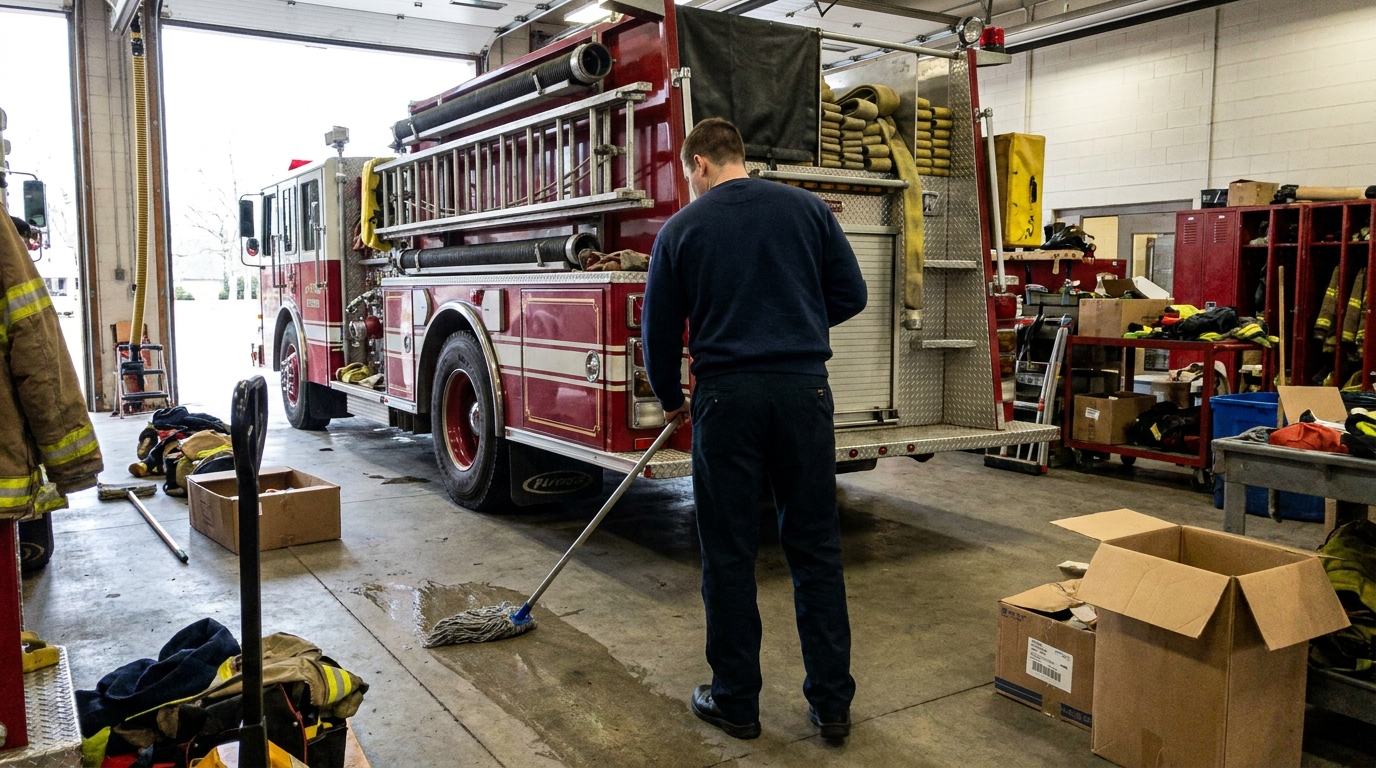
Be early. Early is not on time. Get to the station with enough margin to check your gear, learn the day's plan, and start the coffee. Grab the chores before you are asked. Effort is the currency that buys you patience when your skills are still rough.
2. Study on your own time
Probation is not a nine-to-five that ends at shift change. You study the task book, the district, the apparatus, hydrant locations, and department policy at home. When your officer quizzes you, the answer should already be there. The people who fail almost always stopped studying once they got hired.
3. Take correction without flinching
When you get corrected, the whole response is: "Copy that, thank you." No excuses. No explaining why it was not your fault. Fix it and show them it is fixed. Defensiveness reads as uncoachable, and uncoachable is a release-able trait on probation.
4. Read the room
Learn how your crew and your captain like things done, then do it that way. This is not about losing yourself. It is about respecting the house you joined. Watch more than you talk for the first while. Ask good questions at the right time, not during a call or a busy moment.
5. Master the basics cold
Nobody clears probation on flashy saves. You clear it by tying the knot right every time, throwing the ladder clean, donning your SCBA fast under stress, and keeping your gear ready. Drill the fundamentals until they are automatic.
6. Own your mistakes fast
You will break something and you will miss something. Say so immediately. A rookie who reports their own mistake builds trust. A rookie who hides it and gets caught loses it permanently. Honesty is the whole game on a crew.
7. Take care of the body and the head
Probation is physically and mentally heavy. Sleep when you can, eat right, keep training your fitness, and use the support you have. Burning out or getting hurt because you ran yourself into the ground helps no one.
FAQ
How long is firefighter probation?
It varies by department. Probation is commonly 12 to 18 months, and some run longer or restart after academy. Your exact period is set by your department's rules and MOU, so confirm it with your department and your officers.
Can you get fired during firefighter probation?
Yes, and more easily than after you clear. Probation is typically at-will, meaning a probationer can be released with far less process than a tenured firefighter. That is exactly why this phase demands your best.
What gets probationary firefighters fired the most?
Rarely a single dramatic failure. Usually it is a pattern: not studying, being hard to live with, an ego that will not take correction, or a lack of initiative. We break each one down in why probationary firefighters fail.
Is being good at the skills enough to clear probation?
No. Skills are necessary but not sufficient. Departments also evaluate whether you can be trusted, learn fast, and fit into the crew. A skilled firefighter who cannot live in the house still washes out.
What should I do on my first shift?
Show up early, keep your mouth shut and your ears open, do the chores, introduce yourself with a firm handshake, and ask where you can help. Learn names. Do not try to impress anyone. Just be useful and humble.
How do I survive my probationary year as a firefighter?
Treat it as a working tryout you win on the small things. Arrive early, walk the rig and check your gear every shift, study the task book and your district at home, and outwork everyone on the chores. When you break something or miss something, admit it fast. Respect the hierarchy and take every correction cleanly. Do that consistently and the year takes care of itself. Length and rules vary, so confirm the specifics with your department and officers.
Clear probation, keep the career
Probation is the price of the seat. Out-effort the room, study at home, take every correction like a professional, and be someone the crew wants around. Do that consistently and you clear.
Keep reading: why probationary firefighters fail, fire station etiquette, and the firefighter task book explained.
Sources
- NFPA 1001, Standard for Fire Fighter Professional Qualifications - National Fire Protection Association
- NFPA 1010, Standard on Professional Qualifications for Firefighters (2024 edition, consolidating NFPA 1001, 1002, 1003, and 1005) - National Fire Protection Association
- Fire Fighter 1 Certification - California Office of the State Fire Marshal, State Fire Training (2024 edition implemented July 1, 2025)
- How Long is a Firefighter Probationary Period? - general overview of probation length and at-will status (varies by department and MOU)
Golden State Firefighter is an independent resource and is not affiliated with CAL FIRE, the FCTC, or any fire department. Probation rules vary. Follow your department and your officers. Standards and certification details are current as of 2026 and can change; confirm specifics with your department and the Office of the State Fire Marshal.