Do You Need an EMT to Be a Firefighter in California?
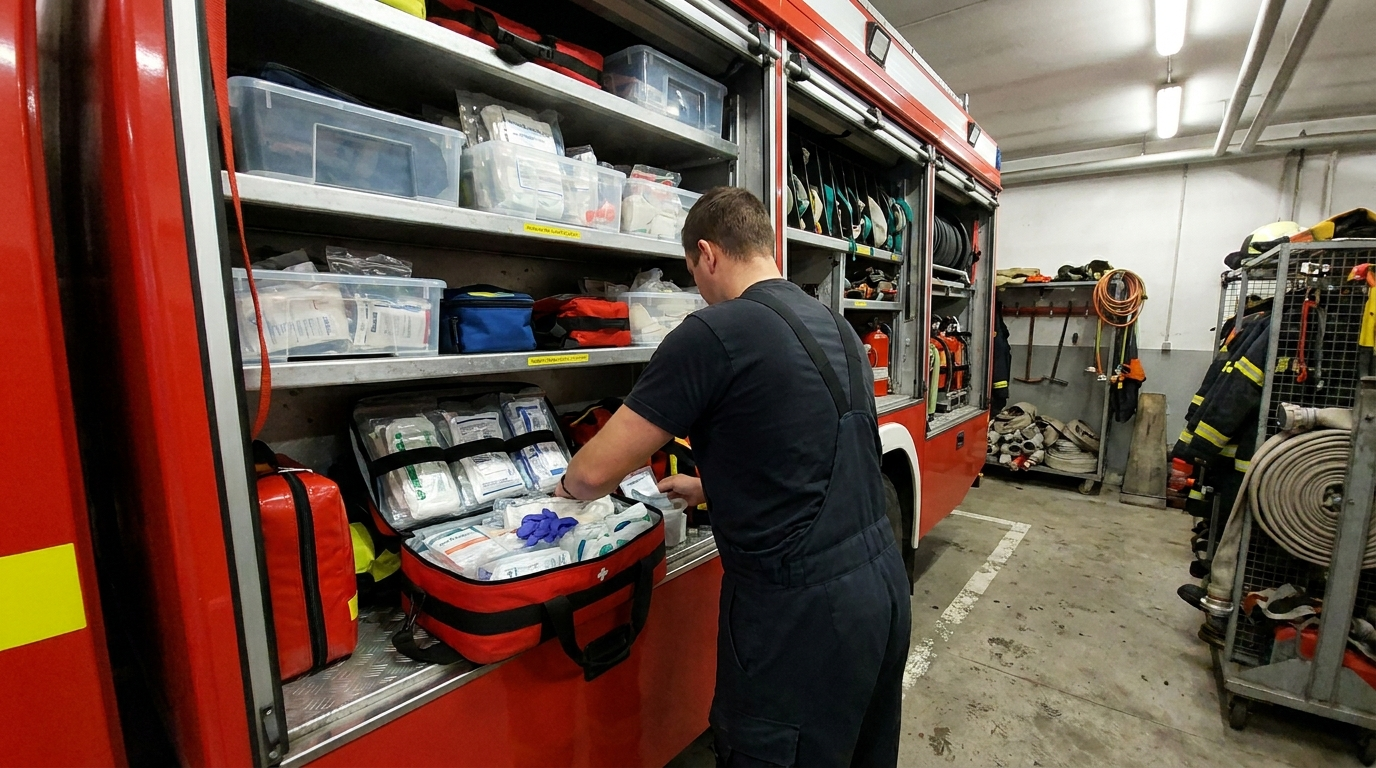
One of the most common questions new California candidates ask is whether they need their EMT certification before they can apply. It depends on the department. Some require it the day you apply. Some want it later in the process. Some let you earn it within a year of hire. This article explains the difference, why it exists, and the fastest legitimate way to get certified.
The Short Answer
Nearly every California fire department expects an EMT certification at some point, because most 911 calls are medical, not fires. What changes from department to department is the deadline. Read every job bulletin carefully, because the word "required" can mean "required now" or "required before academy" depending on who wrote it.
Departments That Do Not Require EMT at Application
Several well-known California departments let you apply without an EMT already in hand. Based on our department dataset and their published processes as of 2026:
- LAFD (City of Los Angeles): You only need to be 18 or older with a high school diploma to apply. EMT or paramedic certification is required later, before appointment.
- Fresno Fire Department: EMT or EMT-P is required by the Chief's Interview stage, not at application.
- Stockton Fire Department: EMT can be obtained within one year of employment.
- Alameda County Fire Department: For the Firefighter Recruit-EMT path, the EMT may be obtained within 90 days after a conditional offer.
These are examples, not a complete list, and department rules change. Confirm the current requirement on the department's own careers page before you rely on it.
EMT deadlines vary by department
Departments set different EMT deadlines. Some require certification when you apply, while others allow a later deadline during selection, by conditional offer, or before the academy. Recruitment rules change, so confirm the deadline in the current official job bulletin before relying on it.
The pattern is not regional and it is not tied to department size. It is set by each agency's own hiring rules. That is exactly why "check the department" is the only safe rule.
Why the Timing Varies
Departments that require EMT at application are usually trying to narrow a very large applicant pool to people who have already committed time and money to the field. Departments that let you earn it later are often trying to widen the pool, sometimes to reach candidates who cannot afford training up front, and they train or certify you along the way.
Neither approach is better for you as a candidate in the abstract. What matters is matching your certification timeline to the departments you actually want to work for.
The Practical Takeaway: Get It Early Anyway
Even though some departments let you wait, getting your EMT early is usually the smart move. Here is why:
- It keeps every door open. You can apply to the departments that require it now and the ones that do not.
- It shows commitment on an application.
- It is a prerequisite for paramedic school if you later choose that path, which many California departments value or require.
Unless you have a specific reason to wait, treat the EMT as one of your first steps. Our free EMT-to-Badge Roadmap places it in the right order relative to the academy, CPAT, and the FCTC test.
The Fastest Legitimate Route to a California EMT Certification
There is no shortcut around the actual training and testing, but you can move efficiently. Here is the real process in California:
1. Complete an Approved EMT Course
You must complete an EMT training course approved in California. Course length varies by school. Full-time or accelerated programs can be finished in a matter of weeks, while part-time evening programs stretch over a few months. Community colleges, private schools, and some fire departments offer them. Be careful to pick an approved program, because an unapproved course will not count.
2. Pass the NREMT Exams
After your course, you take the National Registry of Emergency Medical Technicians (NREMT) exams: a cognitive (computer) exam and a psychomotor (skills) exam. California uses the NREMT for entry into the field. You generally must show proof of passing these within two years of applying for certification.
3. Apply to a Local EMS Agency
California EMT certification is not issued online by the state. You apply to a local EMS agency (usually the one for the county where you want to be certified). They handle the fee, a background check using their form, and issuing the certificate. EMT certificates are valid for two years. The state Emergency Medical Services Authority (EMSA) sets the standards, but the local EMS agency does the certifying, renewing, and reinstating.
4. Keep It Current
To renew before it expires, you generally need 24 hours of approved continuing education or an approved 24-hour refresher course within the two-year cycle. Do not let it lapse while you are still testing with departments.
Because course prices and local agency fees vary, confirm current costs directly with the school and the local EMS agency. Do not budget off a number you saw in a forum. Price your own route with the cost and timeline calculator.
A Note on Paramedic-Focused Departments
Some California departments hire primarily Firefighter/Paramedics and want a current California paramedic license, not just an EMT, at application. Escondido and San Bernardino County are examples in our dataset. Paramedic training is a much larger commitment (typically requiring EMT experience first, then a long paramedic program and California licensure). If a department you want is paramedic-focused, factor that longer path into your plan early.
FAQ
Do you need an EMT to be a firefighter in California?
In practice, yes, at some point. Most departments require an EMT certification, but the deadline varies. Some want it at application, some by a later stage, and some within a year of hire. Always confirm with the specific department.
Which California departments let you apply without an EMT?
LAFD, Fresno, Stockton, and Alameda County are examples that do not require EMT at application, based on their published processes. This can change, so verify on the department's careers page.
How long does it take to get an EMT certification in California?
It depends on the program. Accelerated courses can take a few weeks, part-time courses a few months, and then you must pass the NREMT exams and apply to a local EMS agency. Plan for the full sequence, not just the class.
Is an EMT the same as a paramedic?
No. An EMT is the entry-level certification. A paramedic holds a state license after much more training. Some California departments hire only Firefighter/Paramedics, so check whether your target department is paramedic-focused.
Should I get my EMT before or after the fire academy?
There is no single rule, but many candidates get the EMT first because it is a shorter, lower-cost step that keeps every department open to them. See the ordering in our EMT-to-Badge Roadmap.
Next Steps
If you have not started your EMT, that is often the best first move on this whole journey. Download the free EMT-to-Badge Roadmap to see where it fits, then read the full path in our pillar guide, How to Become a Firefighter in California.
Sources
- EMT Certification - California Emergency Medical Services Authority (NREMT entry, 2-year certification, 24-hour CE or refresher renewal, local EMS agency issues/renews)
- Department-specific EMT deadlines change by recruitment. The Long Beach Fire Recruit bulletin for its 2026 academy required EMT or NREMT at conditional offer, but that bulletin closed December 19, 2025 and does not establish the city's current rule. Use each agency's current official bulletin.
Golden State Firefighter is an independent resource. We are not affiliated with CAL FIRE, the FCTC, EMSA, or any fire department. Requirements change and vary by department, so always verify details with the department and official sources before you rely on them. No outcome is guaranteed.