Am I Too Old to Become a Firefighter in California?
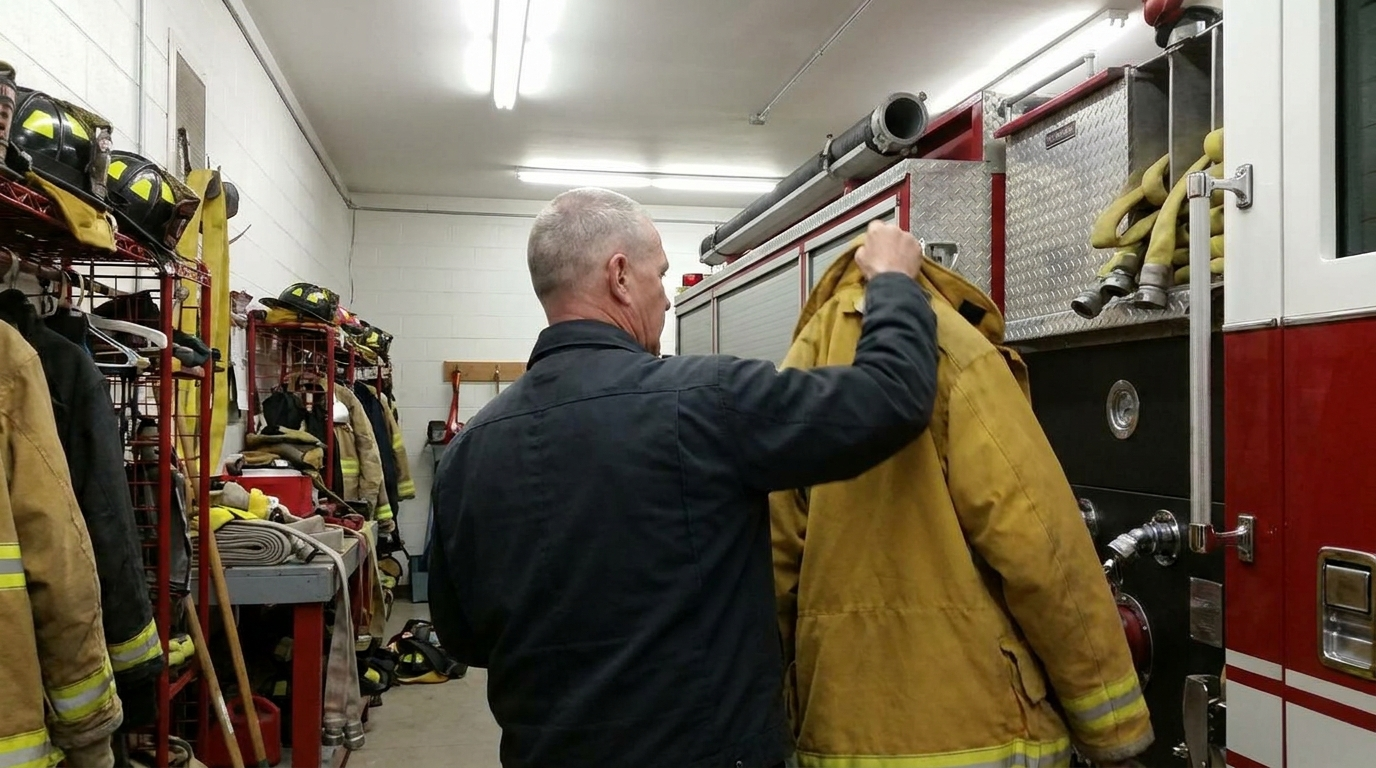
Being in your thirties or forties does not by itself rule out a California firefighter career. LAFD, for example, publishes no upper age limit. Check the current requirements for the department and position you want, then plan around the physical test, hiring timeline, and retirement system.
Is there a maximum age to become a firefighter in California?
The City of Los Angeles Fire Department currently requires applicants to be at least 18 and publishes no upper age limit. Check the current recruitment bulletin for every department you are considering, because employer and position requirements differ.
The floor is different. Most departments require you to be at least 18 at the time of appointment, and some require 21 for a permanent firefighter position. That varies by department, so confirm with the department you are targeting.
Age-discrimination protections do not settle every firefighter hiring rule. The federal Age Discrimination in Employment Act generally protects people 40 and older, but section 623(j) includes an exception for certain state and local firefighter hiring plans. Confirm the rule for the exact employer and role with its hiring office.
So what actually stops older candidates?
After confirming the department's age requirements, consider three practical questions:
The physical test does not care how old you are. Almost every California department requires the Candidate Physical Ability Test (CPAT) or a department-specific test like the Biddle. The standard is the same for a 22-year-old and a 42-year-old. This is good news and a warning at the same time. It means age is not held against you, but it also means you have to train your body to a young, hard standard. If you have been at a desk for fifteen years, budget several months of honest preparation before you attempt it.
The academy is a young person's grind, and you will feel it. The fire academy is a paramilitary training program with high physical demands (more on that in our academy guide). Older recruits get through it every year, but they tend to be the ones who showed up in real shape and who recover well. Your body needs more sleep and more mobility work at 40 than it did at 20. Respect that.
The timeline eats calendar years. Getting hired in California commonly takes three to five years from "I want this" to clearing probation, because you are waiting on departments to open recruitments and on eligibility lists to move. If you start at 44, you may be 48 or 49 by the time you clear probation. That is fine for the job itself. It matters for the pension, which we cover below.
None of these are about being "too old." They are about being prepared and clear-eyed.
Can you really start a firefighting career in your 30s or 40s?
Yes, and career-changers are common in the fire service. Departments often value what an older candidate brings: a work history, a clean and documented background, life experience under pressure, and the maturity that gets a probationary firefighter through a hard year. Former military, EMS, construction, trades, and even office professionals move into the fire service in their thirties and forties.
Here is the part people underestimate. You will start at the bottom no matter what you did before. Your prior title does not transfer. You will be a probationary firefighter taking direction from a captain who may be younger than you, cleaning the station, and studying task books at night. Candidates who struggle with that are not struggling with age. They are struggling with ego. If you can park the ego and be coachable, a second-career start is a genuine strength, not a handicap.
A practical note on prerequisites: your age does not change them. Most departments want an EMT certification and a current physical test card, usually the CPAT. If your target departments use the FCTC, you also need a passing written test and the other current minimums to qualify for the statewide list. See our guides on whether you need EMT before applying and the FCTC written test.
What about military service and buying back time?
If you served in the military, two separate things work in your favor. Do not confuse them.
Veterans' preference on some exams. For California state civil-service firefighter examinations, an approved veterans' preference can place a veteran who earns a passing score (70 or above) in the top rank of the eligibility list. This is administered by the California Department of Human Resources through the CalHR 1093 form and your DD-214, and it applies to eligible veterans, veteran spouses in some cases, and does not apply if you were dishonorably discharged. Note this is the state system. Many city and county departments run their own veterans' preference or bonus points, so confirm with the specific department. CAL FIRE also runs a veterans recruitment program (R.V.E.T.S.).
Buying back military time toward your pension (the "age buy-back"). This is the one people mean when they worry about starting late. Most California fire departments are in CalPERS, and CalPERS lets eligible members purchase up to four years of service credit for prior active military duty. In plain terms: years you spent in uniform can be added to your pension calculation, so you effectively "catch up" on retirement time you would otherwise have missed by starting your fire career later. You generally need at least one year of earned CalPERS service for each year of military credit you buy, at least one year of active duty, and you cannot buy it if you are already drawing a 20-year military retirement or have used that time in another system. The cost and the exact benefit depend on your retirement formula, so get the numbers directly from CalPERS before you count on them.
The takeaway: a veteran who starts firefighting at 38 is often in better shape on the pension than the calendar suggests, because those service years can be bought back.
Will starting later hurt my firefighter pension?
This is the question that actually deserves your attention, more than any age worry.
California safety pensions are based on your years of service, your age at retirement, and your final compensation. Most current hires fall under the PEPRA formula (2.7% at 57 for safety members hired since 2013, though your exact formula depends on the department and hire date, so confirm with CalPERS and your employer). The more years you work, the larger the percentage of your salary you retire on.
If you start at 40, you can still work a full 20-plus year career and retire in your early sixties with a solid safety pension. If you start at 48, you will simply have fewer years to accrue, so your pension percentage will be smaller. That is not a disqualifier. It is a planning fact, and a 457(b) deferred compensation plan is the usual way a later starter makes up ground. Run your own numbers: your likely start age, your target retirement age, your formula, and any military time you can buy back. For a lot of career-changers the math is very workable. For someone starting at 52, it is worth a hard, honest look before you invest years chasing it.
None of this is financial advice, and the formulas change. Talk to CalPERS and, ideally, a financial planner who knows public safety pensions.
How do I know if I am actually ready, regardless of age?
Forget your birthday. Ask these instead:
- Can I pass a CPAT in the next few months if I train seriously? If not, start training now.
- Am I willing to spend three to five years testing and applying broadly across many departments?
- Can I take orders and start at the bottom, even from someone younger?
- Do the pension years still make sense for my situation, especially if I am past 50?
- Do I have or can I earn the prerequisites (EMT, CPAT, FCTC) that most departments require?
If you can answer those honestly and still want it, your age is not the thing standing in your way. Your preparation is, and preparation is something you control. The Where Am I? assessment takes two minutes and tells you which step to work on first.
FAQ
Is there an age limit to become a firefighter in California?
LAFD currently requires applicants to be at least 18 and publishes no upper age limit. Other employers and positions can have different requirements. Read the current bulletin and confirm any age rule with the hiring office before you apply.
Am I too old to become a firefighter at 40?
Age 40 does not rule you out at an employer such as LAFD, which lists no upper age limit. Check the current qualifications, then assess the physical requirements, hiring timeline, and retirement implications.
Can I become a firefighter at 45 or 50 in California?
Starting at 45 or 50 can be an option at a department without an upper hiring age, such as LAFD. Confirm the current requirements first. Then weigh the physical test, academy demands, hiring timeline, and the working years available to build retirement benefits with the relevant retirement system.
Does military service help if I am starting late?
Yes, in two ways. Eligible veterans can receive a veterans' preference on certain exams, and CalPERS members can buy back up to four years of prior active-duty military service as pension credit. That buy-back helps close the gap created by a later start. Confirm eligibility and cost with CalHR, CalPERS, and your department.
Will I be at a disadvantage against younger candidates?
A second-career applicant may bring relevant work experience and maturity. Eligibility and selection depend on the employer's current requirements and assessment process. Ask the hiring office about its rules; do not rely on a general promise that age can never affect eligibility.
Do I still need EMT and a CPAT if I am older?
Yes. The prerequisites are the same at every age. Most departments want an EMT certification and a valid CPAT card, and FCTC departments also want a passing written test and the other current minimums to qualify for the statewide list. Your age does not waive any of them.
Sources
- JoinLAFD Qualifications and Selection Process (City of Los Angeles Fire Department) - no maximum age to apply; minimum age.
- CAL FIRE Fire Fighter I classification and R.V.E.T.S. veterans program - minimum age and veterans recruitment.
- CalCareers Veterans' Preference (California Department of Human Resources) - veterans' preference on state exams, top-rank placement with a passing score of 70+, CalHR 1093 form and DD-214.
- CalPERS Military Service Credit Options guide and Service Credit page - up to four years of purchasable military service credit and eligibility rules.
- U.S. Age Discrimination in Employment Act, sections 623(j) and 631(a), covers certain firefighter hiring exceptions and the general age-40 threshold for protection.
This is an independent resource, not affiliated with CAL FIRE, the FCTC, CalPERS, or any department. Requirements, pension formulas, and laws change and vary by department, so verify everything with the department you are applying to and with CalPERS. Nothing here is financial advice, and no outcome is guaranteed. Last reviewed: July 2026.