How to Become a Firefighter in California
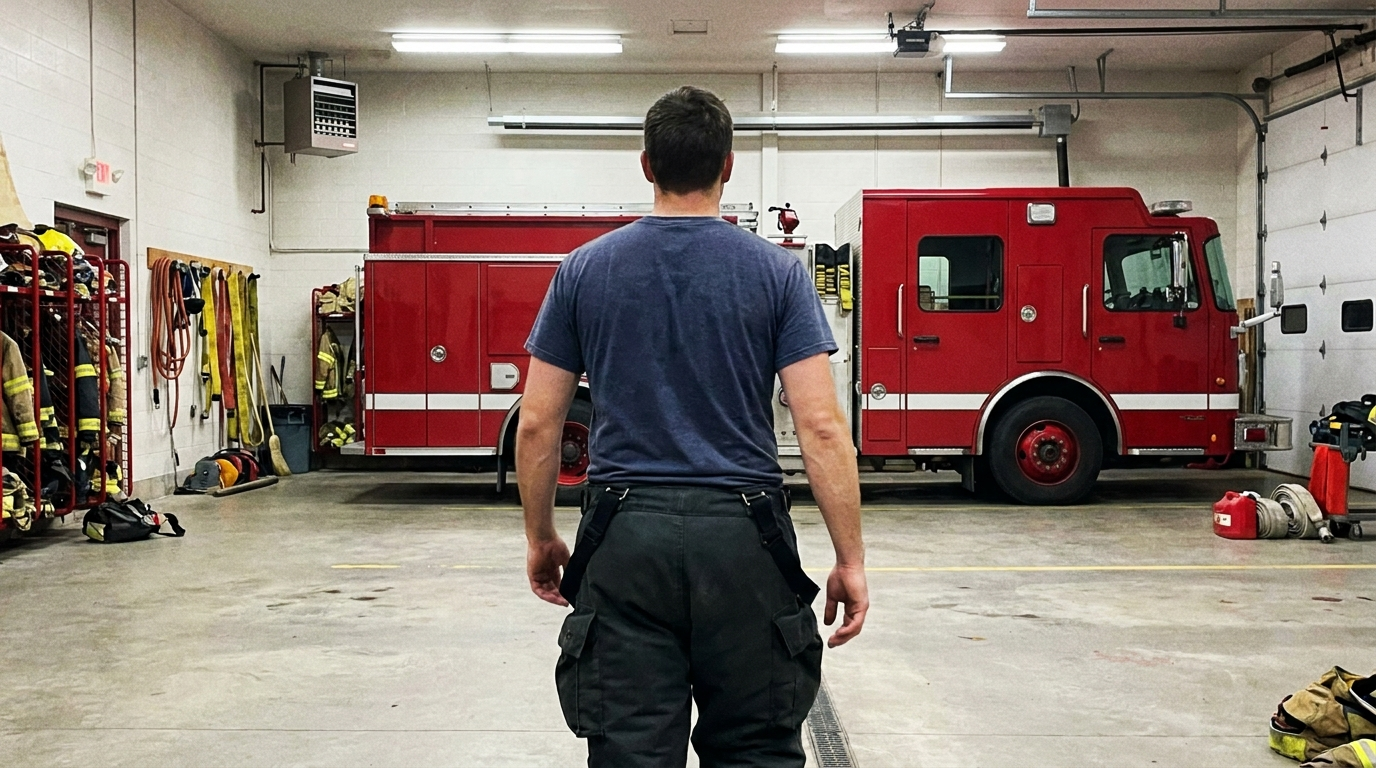
Becoming a firefighter in California is one of the most competitive career pursuits in the state. There is no single button to press. There is a stack of certifications, a physical test, a written test, and a hiring process that can take years to work through. This guide lays out the whole path, in order, so you know what you are walking into and can plan your time and money.
Read it once end to end. Then work the steps one at a time. Not sure which step you are on? Take the two-minute Where Am I? assessment.
The Short Version
Here is the path most California candidates follow. Each step has its own detailed article, linked below.
- Decide this is really what you want.
- Get your EMT certification.
- Check whether your target departments require a prehire Firefighter I academy.
- Pass the physical test your target departments use.
- For FCTC departments, satisfy every Statewide Eligibility List requirement.
- Apply to departments.
- Pass the oral board interview.
- Clear the background check and medical/psychological exams.
- Complete the department's academy.
- Survive your probationary year.
Most people do not move through these in a clean line. You will often work on two or three at once, and you will apply to many departments before one hires you. That is normal. Start your target list with the California fire department directory.
Step 1: Decide It Is Really What You Want
This is not a formality. The road is long, the pay while you train is often nothing, and the competition is real. Ride along with a department if you can. Talk to working firefighters. Understand that the job is 24-hour shifts, disrupted sleep, medical calls far more often than fires, and time away from family. If you still want it after an honest look, keep going.
Step 2: Get Your EMT Certification
Modern fire departments run a huge volume of medical calls, so nearly every California department expects an Emergency Medical Technician (EMT) certification at some point in the process. When they require it varies. Some want it at application, some by a later stage, and some let you earn it within a year of hire.
A California EMT certification means completing an approved EMT course, passing the National Registry (NREMT) cognitive and psychomotor exams, and then applying to a local EMS agency for certification. EMT certificates in California are valid for two years and the standards are set by the state Emergency Medical Services Authority (EMSA), while the local EMS agency does the actual certifying. Course length varies by school, but a full-time program can be completed in a matter of weeks, while part-time programs run longer.
Because the timing of the EMT requirement is one of the most common points of confusion, we cover it in detail here: Do You Need Your EMT Before Applying?
Step 3: Check the Academy Requirement
California academy requirements vary. Some departments require an accredited Firefighter I academy or certification before application. Others hire entry-level recruits and put them through a paid department academy. Read the current bulletin before paying for a self-sponsored academy; do not assume either route is universal.
You have a few routes to Firefighter I training:
- A community college fire academy tied to an Accredited Regional Training Program (ARTP)
- A private fire academy
- A fire technology degree program that includes the academy
No college actually issues the Firefighter I certificate. All Firefighter I and II certifications are issued by the California State Fire Marshal (through the Office of the State Fire Marshal, OSFM). The college simply delivers the accredited training. Costs and time vary widely, and choosing the right route matters. We break the options down here: Fire Academy vs. Fire Technology in California
Step 4: Pass the CPAT
The Candidate Physical Ability Test (CPAT) is the standardized physical test most California departments accept. It is eight timed events on a closed course, done in a 50-pound weighted vest, that you must finish in 10 minutes and 20 seconds. A passing CPAT card is generally valid for 12 months, so timing matters. You do not want it to expire right before a department opens hiring.
Note that not every department uses the CPAT. Some use the Biddle Physical Agility Test or their own version (Anaheim and Ventura County are examples). Always confirm which physical test a department requires before you pay for one.
We cover the eight events and a smart training plan here: How to Pass the CPAT
Step 5: Take the FCTC Written Test
The Firefighter Candidate Testing Center (FCTC) runs a standardized written test used by a large share of California departments. Here are the confirmed facts:
- The test costs $50.
- It is 100 multiple-choice questions.
- You have 2.5 hours to complete it.
- Your score is valid for 12 months.
- A passing score satisfies one SEL requirement. You also need a valid CPAT, complete profile, current documents, and the other published minimum qualifications.
The test covers general aptitude: reading comprehension, mechanical reasoning, and basic math. It is not fire-specific knowledge. FCTC also administers a CPAT.
Not every department uses FCTC. Some run their own written exam or use the National Testing Network (NTN). Oakland, for example, uses NTN, and LAFD and CAL FIRE run their own processes. Check each department.
If cost is a barrier, financial aid is available. The California Fire Foundation partners with FCTC to cover event fees (the written test, CPAT, practice tests, and the written prep course) for candidates who qualify, often through proof of receiving government assistance such as unemployment insurance, CalWORKS, CalFRESH, Medi-Cal, or SSI/SSP. Details and how to apply are on the FCTC financial aid page.
Step 6: Apply to Departments
Once your qualifications and required eligibility records are current, you apply. And you apply widely. More than 170 departments participate in the FCTC system, while many others run separate processes. The SEL is a shared candidate pool, not one statewide ranked queue; each department decides how it screens and ranks candidates.
Departments hire in different ways. City departments, county departments, fire districts, and CAL FIRE all run separate processes. Some open entry-level hiring only every few years. Get on notification lists for every department you would work for, and watch governmentjobs.com, department career pages, and FCTC.
Step 7: Pass the Oral Board
If your application and test scores rank high enough, you get invited to an oral board interview. A panel asks structured questions about your background, your motivation, your judgment, and scenario responses. This is where many strong candidates fall short, because they did not prepare. Practice out loud. Have clear, honest stories about why you want the job and how you handle pressure and teamwork.
Step 8: Background, Medical, and Psychological
A conditional job offer usually triggers a thorough background investigation, a medical exam, and often a psychological evaluation. The background check is detailed. Be honest on every form from day one, because inconsistencies end candidacies faster than the underlying issue often would.
Step 9: The Department Academy
Once hired, you attend the department's own academy, which is typically paid. This is different from the Firefighter I academy you may have completed on your own. It runs the department's specific training, and it is demanding both physically and mentally. Academy length varies, but many run roughly 16 to 24 weeks.
Step 10: Probation
After the academy you enter a probationary period, commonly around 12 months (some departments run 18 months or longer). During probation you are an at-will employee, so you can be released more easily than a permanent firefighter. You keep learning, testing, and proving yourself. The large majority of probationary firefighters make it through, but you earn it.
Realistic Timeline and Cost
For most people, the whole path from starting out to landing a permanent position takes roughly 3 to 5 years. Some move faster, many take longer. The competitiveness of the hiring process, not the training itself, is usually what stretches the timeline.
On cost, plan for the pieces to add up:
- EMT course: varies widely by school; California community college programs commonly run roughly $1,300 to $2,700 all in, and private programs vary (ballpark, confirm with the school)
- Firefighter I academy: varies, often roughly a few thousand dollars at a community college (ballpark)
- FCTC written test: $50
- CPAT: $160 for the test plus two included orientation sessions
These are ballpark ranges. Confirm current prices with each provider, and remember financial aid can offset the FCTC and CPAT fees for those who qualify.
For a step-by-step version you can keep next to you, grab the free EMT-to-Badge Roadmap. To estimate your own numbers, use the cost and timeline calculator.
FAQ
How long does it take to become a firefighter in California?
For most people, roughly 3 to 5 years from starting out to a permanent position. The competitive hiring process is usually what stretches it, not the training. See our full breakdown: How Long Does It Take?
Do I need a college degree to become a firefighter in California?
No. A degree is not generally required. Departments commonly require a high school diploma or equivalent, while EMT, academy, and other certification timing varies by recruitment. A fire technology degree can strengthen an application but is not universally required.
Do I need my EMT before I apply?
It depends on the department. Some require it at application, some at a later stage, and some within a year of hire. As of 2026, LAFD, Fresno, Stockton, and Alameda County are examples that do not require EMT at application, while many others do. Always confirm the current bulletin with the department. More here: Do You Need Your EMT?
Is the FCTC test the only written test I need?
No. FCTC is widely used, but some departments run their own exams or use the National Testing Network. Check each department's process before you assume the FCTC list covers you.
How much does the whole process cost?
It varies. The FCTC written test is $50 and the CPAT is commonly around $160, but EMT and academy training can run into the thousands. Financial aid through the California Fire Foundation can cover the FCTC and CPAT fees for those who qualify. Estimate your own path with the cost and timeline calculator.
How do I become a firefighter in California?
The path runs roughly ten steps: decide it is right for you, check the target department's EMT and academy requirements, pass its required physical and written tests, keep every eligibility record current, apply widely, pass its interview process, then clear the background, medical, and any psychological checks before the department academy and probation. Most people work several steps at once.
What are the age requirements to become a firefighter in California?
Many departments hire permanent firefighters at 21, while some seasonal or temporary roles start at 18. There is no single statewide age, and the upper end is generally open as long as you can do the job. Because the minimum age and any specifics differ from one agency to the next, confirm the exact requirement with the department you are targeting before you apply.
Start With One Step
You do not have to do all of this at once. Pick the next requirement shown in your target departments' current bulletins. For many candidates that is EMT or completing the written, CPAT, profile, and document requirements for FCTC SEL eligibility.
Sources
- FCTC Written Test - Firefighter Candidate Testing Center (test format, 100 questions, 2.5 hours, 12-month score validity, SEL)
- FCTC Statewide Eligibility List - Firefighter Candidate Testing Center (170+ participating departments)
- FCTC CPAT - Firefighter Candidate Testing Center (8 events, 50-lb vest, 25-lb stair-climb add, 10:20 time limit)
- FCTC Fees and Financial Aid - Firefighter Candidate Testing Center ($50 written test, $160 CPAT)
- FCTC Financial Aid Details - Firefighter Candidate Testing Center (qualifying government-assistance programs)
- FCTC Financial Awards - California Fire Foundation (fees covered)
- EMT Certification - California Emergency Medical Services Authority (2-year certification, local EMS agency)
- Accredited Academies - Office of the State Fire Marshal (Firefighter I/II certification, ARTPs)
Golden State Firefighter is an independent resource. We are not affiliated with CAL FIRE, the FCTC, or any fire department. Requirements change and vary by department, so always verify details with the department and official sources before you rely on them. No outcome is guaranteed.