The Firefighter Background Investigation, Explained
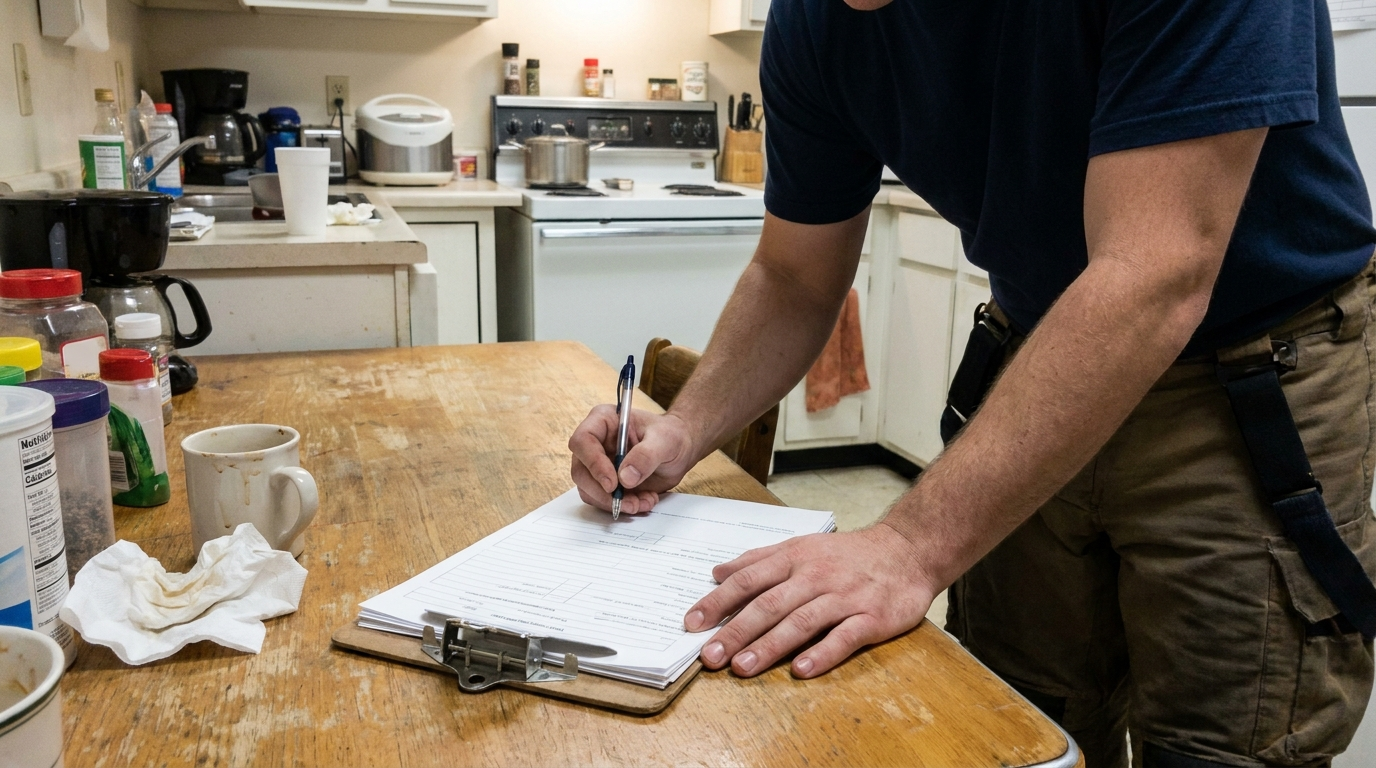
By the time you reach the background investigation, you have already beaten most of the field. You passed the written test, cleared the oral board, and ranked high enough to be considered seriously. Now the department confirms that the person on paper is the person they are hiring. This is the final gauntlet before a conditional offer, and it usually includes a background investigation, and depending on the department a polygraph, a psychological evaluation, and a medical exam. Here is what each one is and how to get through it.
Where this fits in the process
The background phase comes near the end of the hiring process, after the oral board and before (or alongside) your conditional offer. It starts from your Personal History Statement, the detailed questionnaire that maps out your life for the investigator to verify.
Which specific components apply, and in what order, varies by department. Some run a polygraph, some do not. Some do the psych and medical only after a conditional offer. Confirm the exact steps with the department you are applying to.
The background investigation
A background investigator, often a current or retired officer, verifies everything you reported and looks for anything you did not. Expect them to check:
- Employment history: calling past employers and supervisors, confirming dates and reasons for leaving.
- Residences: confirming where you have lived.
- Driving record: your DMV history, tickets, accidents, and suspensions.
- Financial history: credit report, debts, collections, and bankruptcies. Financial responsibility is treated as a character indicator.
- Criminal history: arrests, charges, and convictions, including dismissed and expunged matters where disclosure is required.
- References: interviews with the people you listed, who may point the investigator to others.
- Social media and public record: what is publicly visible about you.
The investigator is not trying to find a saint. They are trying to confirm you are honest, responsible, and safe to trust with the public. A clean-enough history reported truthfully beats a spotless history reported dishonestly every time.
The one rule: it must match your PHS. Contradictions between what you wrote and what they find create suspicion even when both are innocent. This is why keeping a copy of your PHS and getting your dates right matters so much.
The polygraph (department-dependent)
Some departments include a polygraph examination; many do not. Where it is used, its purpose is usually to confirm the honesty of what you already reported, not to trap you.
A typical polygraph covers the same ground as your PHS: undisclosed drug use, undisclosed criminal activity, honesty on your application, and similar integrity questions. The examiner reviews the questions with you beforehand. There are rarely surprise topics.
How to handle it:
- Tell the truth, consistently. The polygraph is built to catch deception about the things you were already asked. If you were fully honest on the PHS, you have nothing to reconcile.
- Do not try to "beat" it. Attempting countermeasures, or admitting mid-test to something you hid, is far more damaging than the underlying issue.
- Answer what is asked. Be direct and calm. Over-explaining is not necessary.
The consistent theme: the polygraph is not the danger. Having lied on your PHS is the danger. If you disclosed honestly, the polygraph is a confirmation, not a threat.
The psychological evaluation
Firefighting is high-stress, high-consequence work done in close quarters, so departments screen for psychological suitability. The psych evaluation commonly has two parts:
- Written testing: standardized questionnaires, sometimes hundreds of items, many of them repetitive or worded to catch inconsistency.
- A clinical interview: a conversation with a psychologist who reviews your answers and assesses your fit for the role.
How to handle it:
- Answer honestly and consistently. The written tests are designed to flag people who try to game them. Answering the way you think they "want" tends to backfire.
- Do not overthink it. There are no trick answers to outsmart. Be a steady, truthful version of yourself.
- Rest beforehand. Show up rested and calm rather than anxious and sleep-deprived.
The psych evaluation is a suitability screen, not a pass-fail intelligence test. Your job is to present an accurate, consistent picture of a stable person.
The medical examination
The medical exam confirms you can physically do the job safely. It commonly includes a physical, vision and hearing checks, cardiovascular and pulmonary screening, and drug testing, often aligned with recognized firefighter medical standards (such as NFPA 1582, the Standard on Comprehensive Occupational Medical Program for Fire Departments, depending on the department).
How to handle it:
- Bring your documentation. If you have a managed medical condition, bring records and, where appropriate, a note from your doctor showing it is controlled. Documentation resolves questions that a blank chart leaves open.
- Be honest on the medical history. As with everything else, an omission that surfaces later is worse than a condition disclosed and managed.
- Do not use anything that could trip the drug screen. Know what you are taking and disclose prescriptions.
Specific standards and disqualifiers vary by department and by the physician conducting the exam, so confirm with the department.
The thread through all four: honesty and documentation
Every stage of the background rewards the same two things:
- Honesty: you already told the full truth on your PHS, so nothing here can contradict you. There is nothing to reconcile, nothing to keep straight, nothing to fear being found.
- Documentation: you can back up what you said. Records for dates and jobs, a pulled credit report and driving record, medical records for managed conditions, and a copy of your own PHS to stay consistent.
Candidates who fail the background rarely fail because their history was too messy. They fail because they hid something, or because they could not keep their story straight. Both are solved before you ever sit down, by being honest on the PHS and by assembling your documentation early.
FAQ
Do all firefighter departments use a polygraph?
No. Some California departments include a polygraph in the background phase and some do not. Where it is used, it typically confirms the honesty of what you already disclosed on your Personal History Statement. Confirm with the specific department.
Can bad credit disqualify me from becoming a firefighter?
It can be a factor, because financial responsibility is treated as a character indicator, but a single debt or a rough patch is not automatically disqualifying. As always, disclosing and explaining it is far safer than hiding it. Pull your own credit report first so nothing surprises you.
What are they looking for in the psychological evaluation?
Suitability for high-stress, high-responsibility work, not a "perfect" personality. The written tests and interview screen for stability and consistency. Answering honestly and consistently is the goal; trying to give the "right" answers tends to backfire.
What happens if they find something I did not disclose?
An undisclosed item becomes two problems: the item itself and proof that you were not honest on an official document. The dishonesty is usually the disqualifier. This is why full disclosure on the PHS is the single most important thing you can do.
When does the background happen in the hiring process?
Near the end, after the oral board and around the conditional-offer stage. The exact order of the background, polygraph, psych, and medical varies by department, so confirm the sequence with yours.
What disqualifies you from becoming a firefighter?
Common red flags include felony convictions, recent misdemeanors, DUIs, a history of injectable drug use, any drug sales, and dishonesty on your application. Very few of these are automatic across the board. Most departments weigh the offense, your age at the time, and how recent it is on a case-by-case basis. The one near-universal disqualifier is lying or leaving something off your paperwork. This varies by department, so confirm the specifics with the department.
Can you become a firefighter with a criminal record or misdemeanor?
Often yes, depending on the offense, how old you were, and how long ago it happened. A single old misdemeanor is frequently reviewed case-by-case rather than treated as an automatic bar, while recent or serious offenses carry more weight. What matters most is disclosing it fully and honestly on your Personal History Statement, because hiding it is worse than the record itself. This varies by department, so confirm with the department.
Can you be a firefighter with past marijuana or drug use?
It depends on what and how recent. Injectable drug use and any drug sales are typically hard disqualifiers at most departments. Casual or experimental past use, including marijuana, is more often handled case-by-case and depends on how long ago it was and how much. The deciding factor is honest disclosure on your paperwork and polygraph. This is department-specific and sensitive, so confirm the exact policy with the department you are applying to.
Get through the background clean
The background rewards preparation you do long before the investigator calls. Start by filling out your Personal History Statement completely and honestly, and by assembling your records early. Not there yet? Work back through the full hiring process and nail the oral board first.
Sources
- NFPA 1582, Standard on Comprehensive Occupational Medical Program for Fire Departments - the medical standard many California departments align firefighter medical exams to (candidate medical evaluation chapter).
- The background investigation, polygraph, psychological evaluation, and medical exam are run by each hiring department; which components apply and their order vary. Confirm the exact steps on your department's careers page (for example, OCFA, City of LA / LAFD, CAL FIRE).
- The polygraph, psych, and background specifics described here (department-dependent use, question scope, "honesty over a clean record") reflect common California hiring practice and working-investigator experience rather than a single published rule, so verify with your target department.
This is an independent resource, not affiliated with CAL FIRE, the FCTC, or any department. Requirements change and vary by department, so verify everything with the department you are applying to. No outcome is guaranteed.