Hazmat Technician Firefighter: The California Path
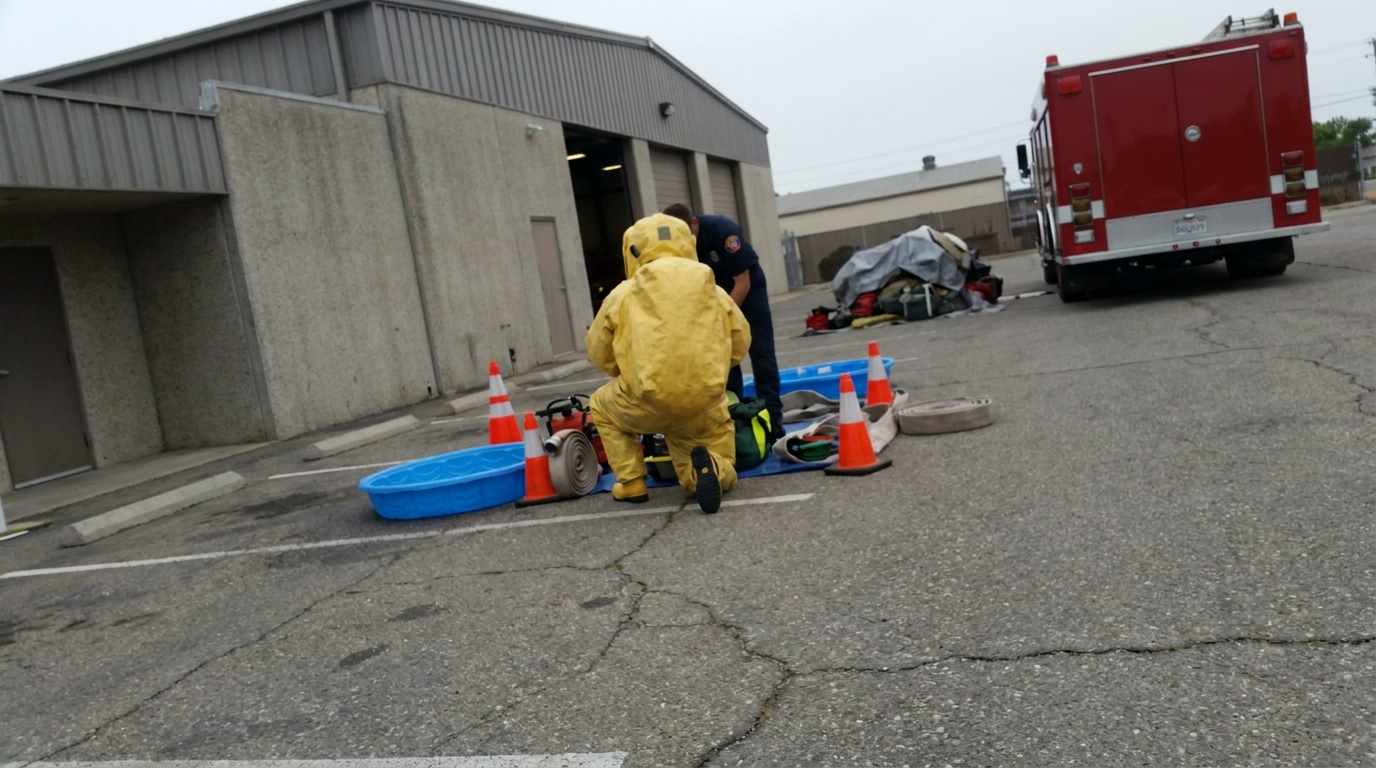
Hazmat is the specialty for firefighters who like procedure, science, and precision. It is the team that shows up when a truck rolls over and starts leaking something unknown, when a lab spills, or when a pipeline fails. The work is deliberate and detail-heavy. This guide walks through the training tiers, the California training system behind them, and how you actually get on a team.
The tiered system
Hazmat response in the United States is built on a legal backbone: the federal OSHA HAZWOPER standard, 29 CFR 1910.120(q). It defines the training levels for emergency responders to hazardous substance releases. (OSHA 1910.120) Those levels are the ladder you climb, and understanding them is the first step.
First Responder Awareness
Awareness is the baseline. At this level you can recognize that a hazardous materials release has happened, understand the risk, isolate the area, and call for the right help. You take no action beyond recognizing and notifying. (OSHA 1910.120(q)) Most firefighters, and many other workers, hold at least awareness-level training.
First Responder Operations
Operations is a defensive level. You can take action to protect people, property, and the environment from a safe distance, contain a release from spreading, and keep it away from exposures, but you do not plug the leak or enter the hot zone to stop the source. (OSHA 1910.120(q)) In California, operations-level capability is a baseline skill most firefighters carry.
Hazardous Materials Technician
Technician is where the specialty really begins. Technicians take aggressive, offensive action. They approach the point of release to plug, patch, or otherwise stop it. This is the level that wears the fully encapsulated suits, runs air monitoring and detection, and manages decontamination. OSHA requires a minimum of 24 hours of training at this level plus demonstrated competencies. (OSHA 1910.120(q)) Real-world hazmat technician programs often run well beyond that minimum.
Hazardous Materials Specialist
Specialist is the top responder tier. Specialists have more advanced and often substance-specific knowledge, provide technical support to technicians, and act as the point of contact with outside government agencies. Their duties parallel the technician's but with deeper expertise and a coordination role. (OSHA 1910.120(q))
There is also an On-Scene Incident Commander training level for the person who runs the incident, but that is a command function rather than a rung on the responder ladder. (OSHA 1910.120(q))
The professional competencies behind these levels are also defined in NFPA standards for hazardous materials response personnel, which departments use to build their programs. Confirm the specific standards and editions your department follows, since NFPA has been consolidating these documents.
CSTI: California's hazmat training authority
The California Specialized Training Institute (CSTI), part of the Governor's Office of Emergency Services (Cal OES), offers hazmat coursework from awareness through specialist levels. Its course-completion certificates are separate from the OSFM State Fire Training Hazardous Materials Technician certification. (Cal OES, Hazardous Materials Program)
For candidates seeking the OSFM Hazardous Materials Technician certificate, the current State Fire Training manual requires CSTI Haz Mat 1A through 1D. It also requires both of these experience records: at least two years of full-time suppression experience, or four years part-time or volunteer, and at least one year with a fire agency responding to hazmat incidents and performing control, containment, or confinement within agency capabilities. The manual does not say those periods must be consecutive or non-overlapping, and it lists no position prerequisite. A department or team may set separate selection requirements.
If you want to see where hazmat sits among the other specialties, read Fire Service Specialties Explained.
What the work is really like
Hazmat is not fast. Where fireground work rewards decisive aggression, hazmat rewards slowing down. You identify the product, look it up, calculate the risk, plan the entry, dress out, and only then approach. A single incident can mean hours of standing by while a small entry team works a controlled problem.
The gear is heavy and hot. Fully encapsulated Level A suits trap heat, limit your movement, and put you on a clock. Air monitoring, chemistry, and detection instruments are a big part of the job, which is why the specialty draws people who like the technical and procedural side. If you are the firefighter who enjoys reading the reference guide and running the numbers, hazmat may fit you well.
Many departments pay a hazmat incentive on top of base salary, but the structure varies widely (flat amount, percentage, or none). Confirm the number with your department.
How to get on a team
The path is similar to other specialty teams, and it rewards groundwork.
- Master the base job first. Get through probation and become a reliable firefighter before you chase a team. Officers pick people they already trust. If you are early, read Surviving Firefighter Probation.
- Stack the training in order. Awareness, then operations, then technician. Take advantage of department-sponsored CSTI courses when they come up.
- Show genuine interest in the technical side. Hazmat teams want people who study, not people chasing a stipend. Ask the team members questions. Show up to their training when you can.
- Apply when a seat opens. Team spots are limited and often competitive. A strong reputation and stacked certifications make you the obvious pick.
For the full playbook on landing a specialty seat, read How to Get on a Specialty Team.
FAQ
What is the difference between hazmat operations and technician?
Operations is defensive: you protect people and contain the spread from a safe distance without stopping the source. Technician is offensive: you approach the release to plug, patch, or stop it, wearing chemical protective suits and running monitoring and decon. Technician is the true specialty level.
How long is hazmat technician training?
OSHA requires a minimum of 24 hours at the technician level plus demonstrated competencies, but many real programs run longer. California courses through CSTI have their own formats and prerequisites. Confirm current course lengths with CSTI or your department.
Do I need a science degree for hazmat?
No. You do not need a degree, but the work is chemistry- and procedure-heavy, so it suits people who are comfortable with technical material and careful process. The training teaches you what you need. A genuine interest in the technical side matters more than a diploma.
Does hazmat pay extra?
Many California departments pay a hazmat incentive, but the amount and structure vary widely and some pay nothing extra. Confirm the specific arrangement with your department rather than assuming.
Is hazmat a good specialty to choose?
It fits methodical, detail-oriented firefighters who like reading references, running instruments, and working a problem slowly and correctly. If the deliberate, technical style of the work appeals to you more than fast fireground action, it is a strong fit.
How do I become a hazmat technician firefighter?
Stack the training in order, then work toward a team seat. Start at awareness and operations, then complete technician-level training, commonly through California's CSTI. If you plan to seek the OSFM Hazardous Materials Technician certificate, review its separate education and experience requirements. Do not assume that one certificate is required for every team assignment. Course formats and team requirements vary, so confirm the current path with CSTI, OSFM, and your department.
Where to go from here
If hazmat interests you, start stacking training from awareness up, get involved with your department's team, and build the reputation that gets you the seat. Take a CSTI course when one is offered and confirm the current path with your training division. To compare it against the other tracks, read Fire Service Specialties Explained.
Sources
- OSHA, 29 CFR 1910.120 Hazardous Waste Operations and Emergency Response (HAZWOPER), including (q) response levels
- Cal OES / CSTI, Hazardous Materials Program
- State Fire Training Procedures Manual, section 7.6.1
Golden State Firefighter is an independent resource and is not affiliated with any fire department or agency. Training levels, course formats, and incentive pay vary by department and change over time. Confirm all details with CSTI and your department.