The Firefighter Task Book, Explained
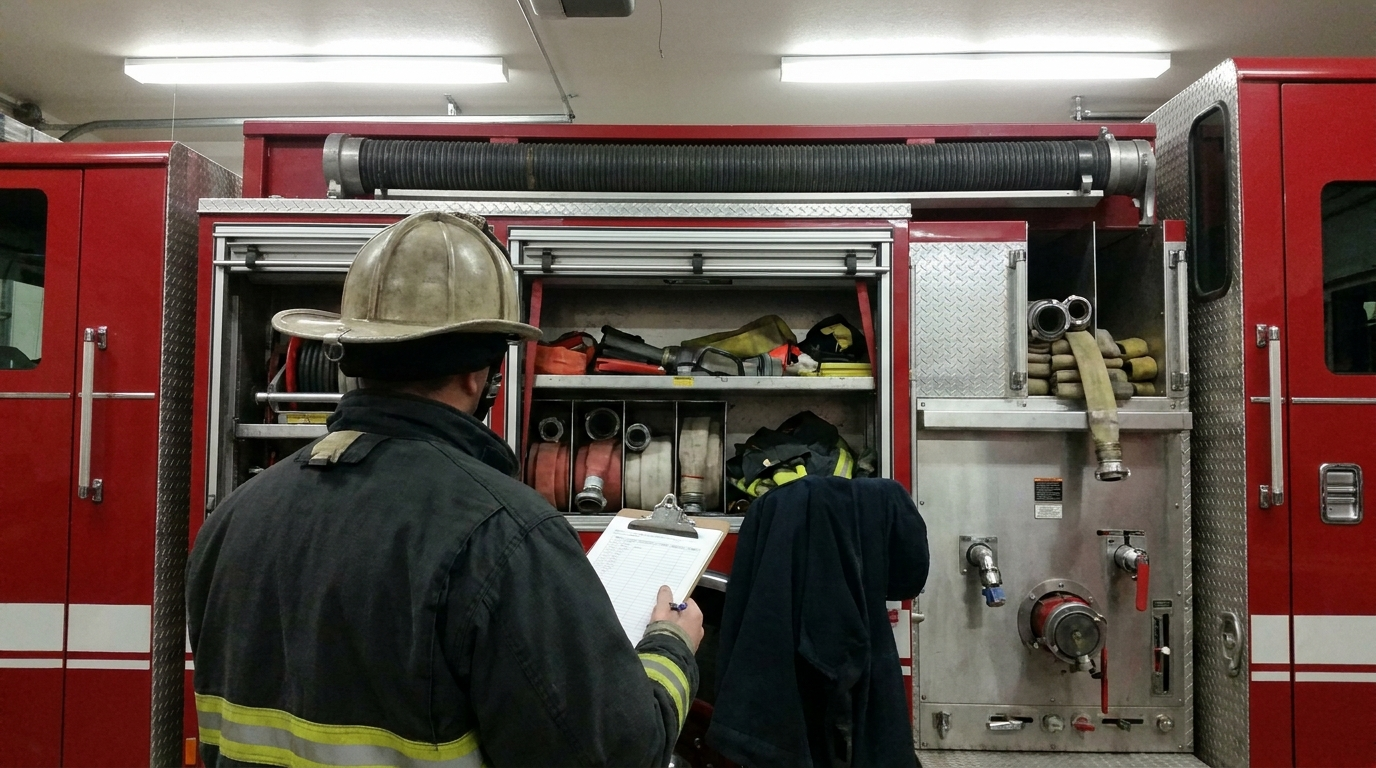
On your first shifts you will be handed a task book, and it will follow you through probation. It is the roadmap for your first year and one of the main tools your department uses to decide whether you clear. Understand it early and work it steadily, and it becomes an ally instead of a source of stress.
Here is what a task book is, how it is built, and how to work through it like someone who intends to keep the job.
What a task book is
A firefighter task book is a structured checklist of the skills and knowledge you must demonstrate to prove you can do the job. It breaks the role into specific, observable tasks. A senior firefighter or your company officer watches you perform each one, and when you meet the standard, they sign it off.
Think of it as the bridge between training and the real job. The academy taught you the skills. The task book verifies you can actually do them on the job, under your crew's eyes, to your department's standard.
Most task books are built on the national standard for the job. NFPA 1001, the Standard for Fire Fighter Professional Qualifications, defines the minimum Job Performance Requirements for firefighters at the Firefighter I and II levels. As of the 2024 edition, NFPA consolidated 1001 and several related professional qualification standards into a single document, NFPA 1010. Departments take those requirements, add their own apparatus, policies, and district specifics, and turn them into the book you carry.
In California, the Office of the State Fire Marshal publishes its own Fire Fighter certification task book through State Fire Training, adopted the 2024 edition standard effective July 1, 2025, and its certification task books are valid for five years. Note that the State Fire Marshal certification task book and your individual department's probationary task book are related but not always the same document.
The exact format, length, and rules vary by department. Some are short workbooks, some are thick binders, some are digital. Follow your department and your officers on how yours works.
What is inside
Contents vary, but most probationary task books cover a common set of areas.
- Firefighting skills. Hose loads and advances, ladders, forcible entry, ventilation, search and rescue, SCBA use, ropes and knots, salvage and overhaul, tool operation and maintenance.
- Apparatus and equipment. Knowing your rig, its tools, how to check and maintain them, and where everything is stowed.
- Medical and EMS. Depending on your role, patient assessment, protocols, and the equipment you run on medical calls.
- Department knowledge. Policies, procedures, chain of command, radio and communications, and your response district including hydrant locations and target hazards.
- Written and knowledge components. Many departments pair the practical sign-offs with written evaluations of the underlying knowledge, often drawn from IFSTA Essentials of Fire Fighting and department material.
Each item usually has a standard attached: do it correctly, often within a time limit, and to the point that the evaluator is satisfied you can repeat it under pressure.
How it structures your first year
The task book turns a vague, overwhelming year into a sequence of concrete goals. Instead of "get good at the job," you have a list of specific things to master and get signed. That structure is a gift if you use it.
Departments typically expect steady progress across the probationary period, which is commonly 12 to 18 months (yours varies, so confirm it). Some set phase deadlines, like a set of sign-offs due by a certain number of months in. Your officers track your pace, and falling behind is a signal that draws attention. The book is also part of your continuous evaluation, so how you work it says as much as the check marks themselves.
How to work your task book well
Read the whole thing early
On day one, read the entire book. Know what is coming so nothing surprises you and you can prepare ahead of a sign-off instead of scrambling. Understand the standards for each task, not just the task names.
Work it steadily, not in a panic
The probies who struggle tend to cram before a deadline. The ones who clear chip away at it every set. Get a few sign-offs each shift when you can. Steady progress keeps you ahead of the pace and shows your officers you are serious.
Practice before you ask for a sign-off
Do not ask to be evaluated on a skill until you can do it cleanly and repeatably. Practice on your own time and with senior firefighters until it is automatic, then request the sign-off. Asking too early and failing wastes everyone's time and dents your credibility.
Ask senior firefighters to train you
Most senior firefighters will gladly drill you if you show initiative and humility. Ask them to watch your ladder throw or your SCBA don and critique it. This is how you both improve and build the relationships that carry you through probation. Take the correction cleanly, the way we describe in why probationary firefighters fail.
Keep it accurate and current
Keep your book organized, up to date, and honest. Never fudge a sign-off or ask someone to sign something you cannot actually do. That is a trust violation, and trust is the whole game on a crew. Bring the book to shift so you are always ready when a training opportunity appears.
Use it to drive your studying
The task book is your study guide. When you have downtime, work the next items. When you are home, review the knowledge behind them. This is the self-directed study that separates probies who clear from those who stall. See the pillar, surviving firefighter probation, for how studying fits the bigger picture.
FAQ
What is a firefighter task book?
It is a structured checklist of the skills and knowledge a firefighter must demonstrate on the job. A senior firefighter or company officer observes each task and signs it off when you meet the standard. It is a primary tool departments use to evaluate probationary firefighters.
How long do you have to complete a firefighter task book?
It varies by department, but it is generally tied to your probationary period, which is commonly 12 to 18 months. Some departments set interim deadlines for groups of sign-offs. Confirm your timeline and expectations with your department and your officers.
Who signs off a firefighter task book?
Usually your company officer or a designated senior firefighter who observes you perform the task to standard. The exact sign-off authority and process vary by department, so follow your department's rules.
What happens if you fall behind on your task book?
Falling behind draws your officers' attention and can raise questions about whether you will clear probation, since progress is part of a continuous evaluation. If you are behind, ask for extra training time, work it every set, and communicate honestly with your officer rather than hiding it.
Is the task book the same as NFPA 1001?
Not exactly. NFPA 1001 (now consolidated into NFPA 1010 as of the 2024 edition) defines the national Job Performance Requirements that most task books are built on, but each department adapts them and adds its own apparatus, policies, and district specifics. Your book is department-specific.
Work the book, clear the year
The task book can feel like a mountain on day one. Broken into steady sign-offs and worked every shift, it becomes the clearest map you have to clearing probation. Read it early, practice before you get evaluated, keep it honest, and let it drive your studying.
Keep reading: surviving firefighter probation, why probationary firefighters fail, and fire station etiquette.
Sources
- NFPA 1001, Standard for Fire Fighter Professional Qualifications - National Fire Protection Association
- NFPA 1010, Standard on Professional Qualifications for Firefighters (2024 edition, consolidating NFPA 1001, 1002, 1003, and 1005) - National Fire Protection Association
- Fire Fighter 1 Certification and Certification Task Books - California Office of the State Fire Marshal, State Fire Training (2024 edition implemented July 1, 2025; certification task books valid five years)
- Essentials of Fire Fighting - International Fire Service Training Association (IFSTA), the common source text behind many written components
Golden State Firefighter is an independent resource and is not affiliated with CAL FIRE, the FCTC, or any fire department. Probation and task book rules vary. Follow your department and your officers. Standards and certification details are current as of 2026 and can change; confirm specifics with your department and the Office of the State Fire Marshal.