How to Get on a Specialty Team (USAR & Hazmat)
Getting on a USAR or hazmat team is one of the more competitive moves in a California fire career. These teams take the calls nobody else can handle, and the seats are limited. This article covers how the teams work, the certifications and reputation it takes, and how to position yourself to actually get selected.
How specialty teams work
A specialty team is a group of firefighters with advanced training who deploy on incidents beyond a normal engine company's scope. Two of the biggest are urban search and rescue (USAR) and hazardous materials (hazmat).
USAR handles structural collapse, trench rescue, confined space, and large disasters. California is home to eight of the nation's 28 FEMA Urban Search and Rescue Task Forces, more than any other state. Each is a large, multi-disciplinary organization built from search, rescue, hazmat, medical, logistics, and planning functions. A FEMA task force carries a roster of 210 trained members, enough to field a fully staffed deployment of roughly 70 and rotate around the clock. Members come from local fire departments and deploy on major regional, state, and national incidents. Hazmat teams handle chemical spills, leaks, and unknown substances, running air monitoring, decon, and entries in encapsulated suits.
These teams operate at two levels worth understanding. Your own department may run a hazmat company or a rescue company as a daily assignment. Separately, regional and FEMA task forces pull qualified people from many departments for large deployments. The path onto each is similar: build the certifications, build the reputation, and be ready when a seat opens. For the full menu of specialties, see Fire Service Specialties Explained.
The certifications it takes
You do not walk onto a specialty team. You qualify for it. The exact certifications vary by department and team, so confirm the specifics with the team you are targeting, but the general picture looks like this.
For hazmat
California runs a tiered hazmat certification system:
- Awareness and Operations are baseline levels most firefighters already hold.
- Technician and Specialist are the specialty levels. California's standards for these are among the strictest in the country, and much of the training runs through the California Specialized Training Institute (CSTI).
To join a hazmat team you generally need to reach technician level, which means classroom hours, hands-on training, and passing rigorous certification. Expect chemistry, air monitoring, and heavy procedure.
For USAR
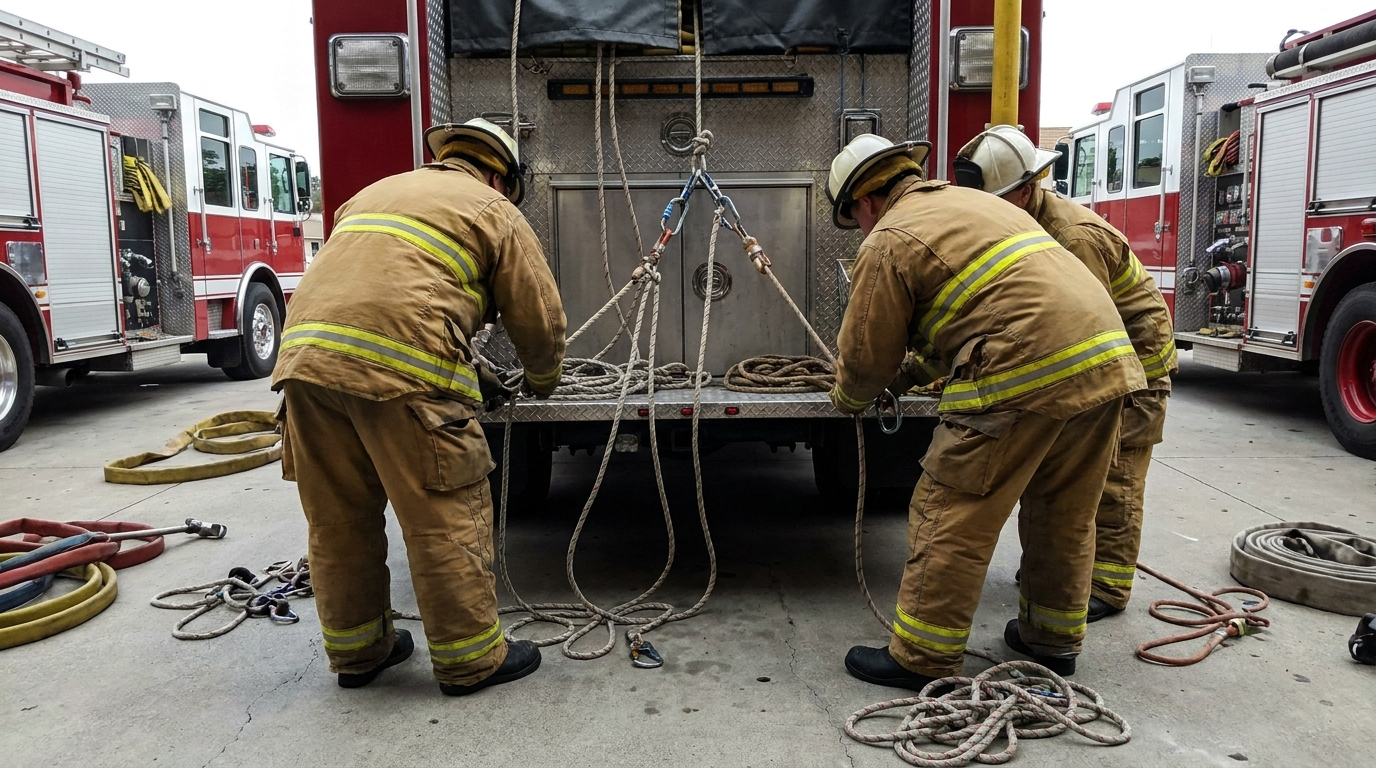
USAR draws on technical rescue disciplines. Members build qualifications in areas like rope rescue, confined space, trench, and structural collapse, plus incident command system courses. Many task force members develop a broad technical rescue background first, then add the specialized structural collapse and shoring training that USAR demands.
Medical, canine, logistics, and planning roles exist on a task force too, so there is more than one door in. But the rescue-side path runs through technical rescue certifications and real proficiency with rigging, breaching, and shoring.
The common thread
Both paths reward people who show up early, drill hard, and keep their certifications current. Certifications get you eligible. They do not get you selected.
Reputation is the real currency
Here is the part that is not on any certificate list. Specialty teams are small, tight, and selective, and they pick people they trust. Your reputation on the department decides whether you get the call.
What builds that reputation:
- Be the firefighter people want on a bad call. Solid, calm, dependable. Teams notice who performs when it counts.
- Master the base job first. Nobody puts a struggling probationary firefighter on a task force. Get excellent at the fundamentals before you reach for the specialty.
- Show genuine interest early. Talk to team members. Ask what they train on. Go to the drills you are allowed to attend.
- Take the training seriously. When you get into a rope or hazmat class, be the one who prepped and paid attention.
- Have a clean, professional track record. Selection often involves people vouching for you. Give them a reason to.
Teams would rather take a dependable firefighter with fewer certs and train them up than take a certified person they do not trust in a hole in the ground at 3 a.m.
How to position yourself
A practical sequence:
- Get off probation and get good. Reputation starts with the basics done well. This is non-negotiable.
- Pick your team. Decide whether hazmat or rescue pulls at you more. They ask for different temperaments. Hazmat rewards precision and procedure. Rescue rewards physical problem-solving.
- Make yourself known. Tell your captain you are interested. Ask team members how they got on and what they look for.
- Stack the certifications. Start with the courses your department offers and build toward technician (hazmat) or the technical rescue disciplines (USAR). Keep everything current.
- Be ready when a seat opens. Spots come open when someone retires, promotes, or transfers. When it happens, you want to already be qualified and already trusted.
- Contact the task force directly. For a FEMA task force, reach out to the sponsoring department or your regional emergency management office to learn their specific process. Requirements vary, so confirm with them.
FAQ
How long does it take to get on a specialty team?
It varies, but plan on years, not months. You need to clear probation, build a reputation, earn the certifications, and wait for a seat to open. Firefighters commonly reach these teams several years into their careers.
Do I need to be a paramedic to be on a USAR team?
Not necessarily. USAR task forces include medical positions that need advanced medical credentials, but rescue, hazmat, logistics, and planning roles do not all require a paramedic license. That said, being a medic never hurts your options. See Should You Become a Firefighter Paramedic?.
What is the difference between my department's hazmat company and a task force?
Your department may run a hazmat or rescue company as a daily assignment covering your jurisdiction. A regional or FEMA task force is a larger, multi-department resource that deploys on major incidents. The qualifications overlap, but a task force seat is a separate selection.
Which is harder to get on, USAR or hazmat?
Both are competitive and depend on how many seats your region has. Hazmat leans toward classroom rigor and certification depth. USAR leans toward physical technical rescue skill and disaster training. The right answer is the one that fits your strengths.
Can I transfer my certifications to another department or team?
Sometimes, but not automatically. Many California certifications carry recognized standards, but each team and department has its own requirements and may want additional training. Confirm with the team you are joining.
What are the fire service specialty teams and how do I get on one?
The common ones are hazmat, urban search and rescue, technical rescue, and dive, plus others depending on your region. The path onto any of them is the same two-part deal: earn the certifications the team requires, then get selected. Selection runs on reputation and trust, so master the base job, show genuine interest, train hard, and be ready when a seat opens. Requirements vary by department and team, so confirm the specifics with the team you are targeting.
Bottom line
Specialty teams reward a specific kind of firefighter: someone who mastered the basics, trained hard, earned trust, and stayed ready. Certifications make you eligible. Reputation gets you picked. Decide which team fits you, tell people you want it, and start building. If you are still weighing your options, read Fire Service Specialties Explained.
Sources
- Cal OES, State and National Urban Search and Rescue Task Forces (eight California task forces of 28 nationally)
- FEMA, Urban Search and Rescue (210-member task force roster)
- Cal OES / CSTI, Hazardous Materials Program
Golden State Firefighter is an independent resource and is not affiliated with any fire department or agency. Specialties and requirements vary by department. Confirm all details with your department.