The Firefighter Schedule Explained (48/96 and More)
The firefighter schedule is one of the biggest lifestyle differences between this job and almost any other. Long shifts, long stretches off, and nights spent at the station change how you live. This explains the common patterns you will see in California, what a shift is actually like, and the real tradeoffs. Specific schedules vary by department, so confirm the details with the one you are targeting.
The basics: long shifts, days off between
Most California career firefighters do not work eight-hour days. They work shifts that commonly run 24 or 48 hours at a stretch, with multiple days off in between. Across a typical rotation, that averages out to roughly 56 hours per week at most departments.
That number matters for pay too. A schedule averaging around 56 hours builds in overtime above the federal threshold set by the FLSA 7(k) exemption for fire protection employees, which is part of why firefighter pay works the way it does. See the California firefighter salary breakdown for that side of it.
The exact pattern differs by department. Here are the common ones.
Common schedule patterns
The 48/96
You work 48 hours straight (two back-to-back 24-hour shifts), then you are off for 96 hours (four full days). The cycle repeats. This pattern has grown popular in California and other western states over the last decade or so.
The appeal: four days off in a row, every cycle. Many firefighters like the long recovery block and the simple rhythm. The tradeoff: two full days on duty back to back is a long stretch, especially at a busy station where sleep is scarce.
The 24-hour "swing" (California-style)
An older pattern still used in various forms: you work a 24-hour shift, take a day off, work another 24, and so on across several shifts, then take a longer break. Some departments describe a version where firefighters work every other day across a set number of shifts, then get a stretch of days off.
The appeal: you are never on for more than 24 hours at a time. The tradeoff: your on days are spread out, so your off days are more broken up than the 48/96's clean four-day block.
Kelly days
A "Kelly day" is an extra scheduled day off worked into the cycle to keep total hours within federal limits. Rather than a full schedule on its own, it is a tool layered onto a rotation. A department using Kelly days on a 24/48 pattern typically lands the weekly average lower, commonly around 53 hours instead of 56.
The point of a Kelly day is compliance and workload management. Whether your department uses one, and how, varies. Ask.
The takeaway: do not assume a department runs the 48/96 just because it is popular. Confirm the actual schedule before you build your life around it.
What a shift is actually like
A 24 or 48-hour shift is not 24 hours of fighting fire. A typical duty day tends to include:
- Morning: shift change and turnover from the off-going crew, then checking the apparatus, tools, and medical gear so everything is ready.
- Daytime: training, station and equipment maintenance, public education, inspections, and physical fitness, all interrupted by calls whenever they come.
- Calls throughout: in most California departments, the majority of calls are medical, not fires. You respond to whatever comes, whenever it comes.
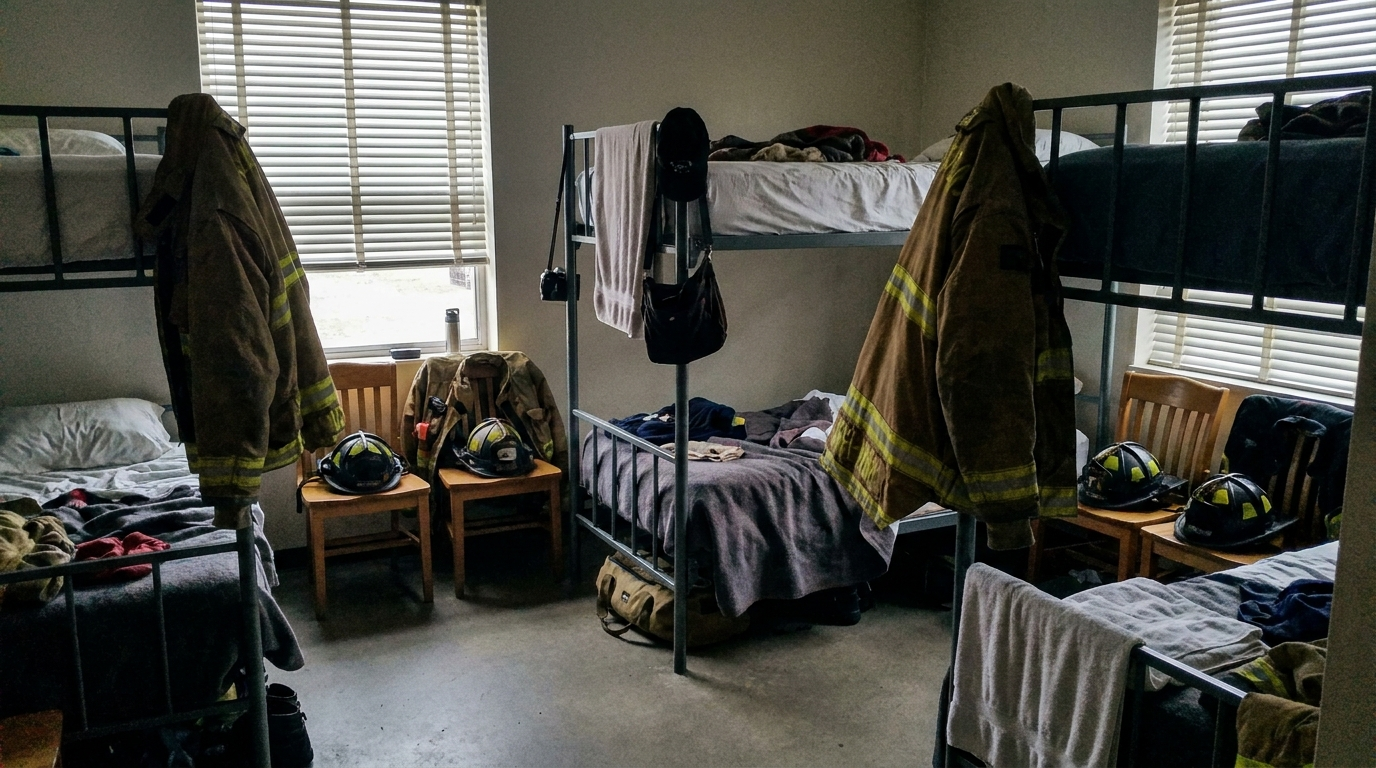
- Evening and night: dinner with the crew, more calls, and sleep at the station when the call volume allows. On a busy night, sleep may be broken or barely happen.
You live at the station for the length of your shift. You cook together, train together, and run every call together. That close-quarters living is part of the culture, and it is a big reason the crew bond runs deep. The type of company you are on shapes the work too, which is worth understanding early: see engine company versus truck company work.
The lifestyle tradeoffs
This is where you decide whether the schedule fits your life.
The upside
- Big blocks of time off. Four days off in a row (on a 48/96) is real time for family, a side business, school, or rest that a five-day week never gives you. If you use those days for a side business, learn how that income and its deductions work before you take the first job.
- Fewer commutes. You drive to work far less often than a daily worker.
- Flexibility to trade. Many departments allow shift trades with coworkers, which can help you cover important dates.
The downside
- You miss things. Holidays, birthdays, and ordinary weeknights fall on your work days sometimes. The fire service does not close.
- Sleep disruption. Nights at the station, especially busy ones, take a toll over a career. Managing sleep and recovery is a real skill.
- It affects your family. Partners handle nights alone, and kids notice when you are on shift. Couples who make it work usually plan around the schedule deliberately.
- Fatigue is real. Two 24s back to back, or a run of broken nights, leaves you tired. Fitness and discipline off duty matter more because of it.
Neither list cancels the other. The schedule is genuinely one of the best perks of the job and one of its real costs, at the same time. Which side weighs more depends on your life and the people in it.
FAQ
What is the most common firefighter schedule in California? There is no single standard. The 48/96 (48 hours on, 96 off) is common and has grown popular, but many departments run 24-hour-based rotations, some with Kelly days. Most average around 56 hours per week. Confirm the schedule with the specific department.
What is a 48/96 firefighter schedule? You work 48 hours straight, then have 96 hours (four days) off, and repeat. It trades two long on-duty days for a long block of days off.
What is a Kelly day? An extra day off built into the work cycle to keep total hours within federal limits. It is layered onto a rotation (often a 24/48) rather than being a full schedule on its own, and commonly brings the weekly average down to around 53 hours.
Do firefighters sleep at the station? Yes, during overnight hours when call volume allows. At busy stations, sleep can be broken or minimal. You are on duty and ready to respond the entire shift.
Is the firefighter schedule good for family life? It cuts both ways. The long blocks off are a real benefit, but you also miss some holidays and weeknights, and the sleep disruption affects the whole household. Families who make it work tend to plan around the schedule intentionally.
Next step
The schedule is a huge part of what daily life on the job feels like. If it fits the life you want, map your path in with the free EMT-to-Badge Roadmap, or figure out your next move with the Where am I? tool. Still weighing the whole decision? Read whether firefighting is worth it.
Sources
- U.S. Department of Labor, Fact Sheet #8: Fire Protection and Law Enforcement Employees Under the FLSA (the 7(k) exemption, work-period rules, and the 212-hour / 28-day overtime threshold for firefighters)
Golden State Firefighter is an independent resource. We are not affiliated with CAL FIRE, the FCTC, or any fire department. Verify schedule details with the department you are applying to, and understand that no career outcome is guaranteed.