Firefighter Tattoos and Grooming Standards in California
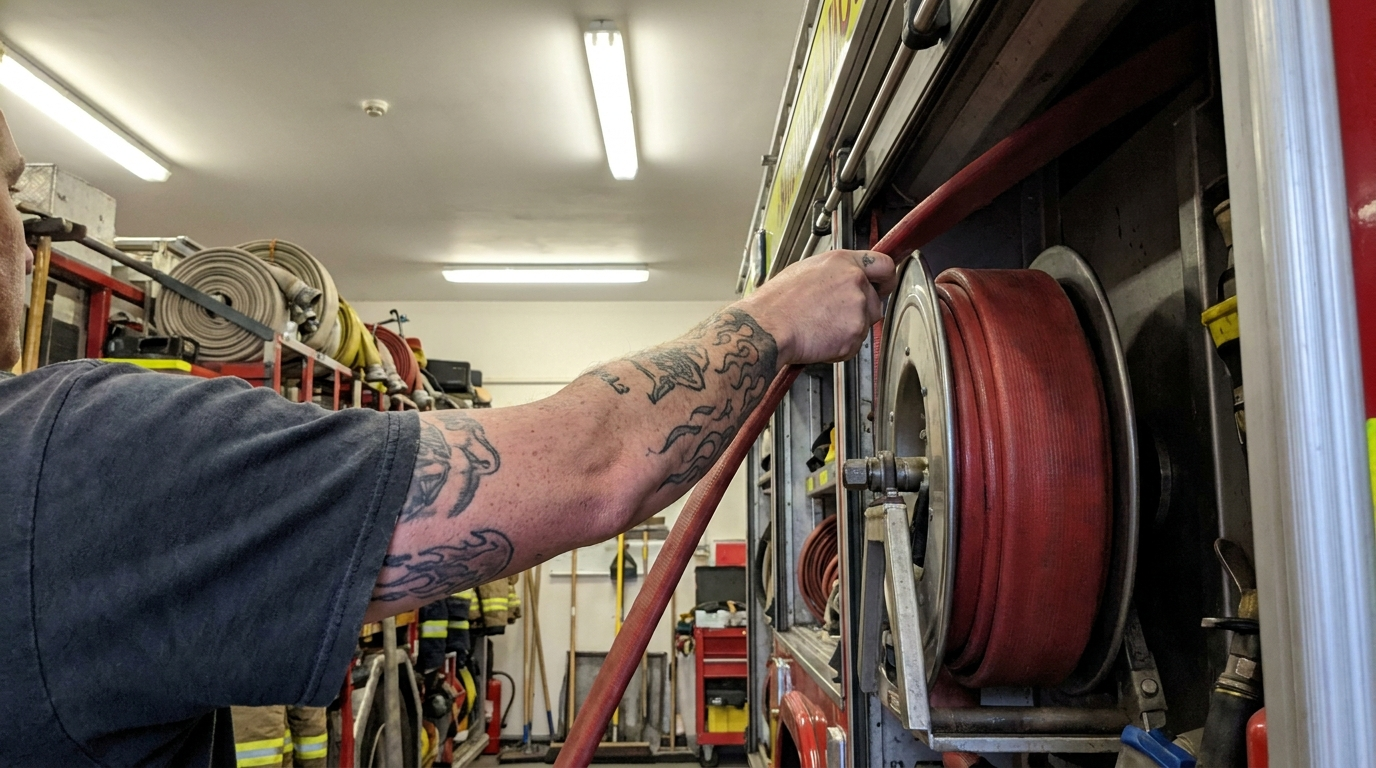
Can you be a firefighter with tattoos? In California, usually yes, but most departments have rules about where tattoos can be and whether they must be covered on duty. Beards are a different story: if your assignment requires a self-contained breathing apparatus (SCBA), you have to be clean-shaven where the mask seals to your face, and that is a federal safety rule, not a preference. Tattoo and grooming policies vary a lot from one department to the next, so this guide explains the common patterns and the safety reasons behind them, then tells you to confirm the specifics with the department you are applying to.
Do not let a tattoo talk you out of applying. Do understand the rules before you show up.
The short version
- Tattoos: Most California departments hire people with tattoos. The common restrictions are on tattoos that are visible on the face, neck, hands, or fingers, and many departments require on-duty tattoos to be covered by the uniform or a skin sleeve. Content that is offensive, hateful, or gang-related is disqualifying almost everywhere.
- Facial hair: If you use a tight-fitting SCBA mask (which is nearly every firefighting assignment), you must be clean-shaven at the seal area. Trimmed mustaches and short sideburns are usually fine. Full beards are generally not, on firefighting assignments.
- Hair: It must be neat and must not interfere with the safe wearing of your helmet, SCBA mask, or hood. Length and style rules vary.
- Everything varies by department. Confirm the current policy with the department before you apply, because these rules change.
Can firefighters have tattoos in California?
In most cases, yes. Tattoos are common in the fire service, and the days of a blanket ban are largely gone. What departments regulate is visibility and content, and the rules split into a few patterns.
The strictest pattern is the one the Los Angeles Fire Department (LAFD) has used: sworn members do not display tattoos while on duty, and visible tattoos must be covered by the uniform or a department-approved skin patch. LAFD has publicly restricted tattoos on the face, hands, neck, and fingers and has said it does not hire candidates whose tattoos cannot be covered by a bandage, skin patch, or long-sleeve shirt. LAFD has also revisited this policy and surveyed the public about it, which tells you these standards are debated and can change.
Other California departments are more relaxed and allow visible arm tattoos on duty as long as the content is appropriate. The through-line across all of them:
- Location matters most. Face, neck, hands, and fingers are the most commonly restricted spots.
- Content is non-negotiable. Tattoos that are obscene, discriminatory, gang-affiliated, or that undermine public trust are disqualifying nearly everywhere, regardless of location.
- "Cover on duty" is common. Even departments that hire heavily tattooed candidates may require sleeves or long sleeves while in uniform and in public.
The reasoning departments give is public perception. Firefighters walk into people's homes on their worst days, and departments argue that a standardized, neutral appearance protects public trust. You do not have to agree with the logic to plan around the rule.
Will a tattoo disqualify me from getting hired?
Rarely, if it is on your arm or torso and the content is clean. A face, neck, or hand tattoo can be a real problem at departments that will not hire what cannot be covered, so know that going in.
Two points for candidates:
- Content can end a candidacy fast. Anything hateful, gang-related, or extremist showing up in your background or at your medical/appearance check is a serious risk. This is one place where a tattoo genuinely can cost you the job.
- A visible tattoo you cannot cover narrows your options. It will not close every door, but it may close some, and it can be a factor in a background or appearance review. If you are early in your journey and considering new ink, keeping the face, neck, and hands clear leaves you the most options.
If you already have a visible tattoo, do not spiral. Apply broadly, read each department's policy, and ask the recruiter directly. Plenty of tattooed firefighters are working in California right now.
Can firefighters have beards?
Generally not on firefighting assignments, and this is the one grooming rule that is truly not up for negotiation.
Federal OSHA respiratory-protection rules (29 CFR 1910.134) state that a tight-fitting respirator, which includes the SCBA mask firefighters wear in smoke and toxic atmospheres, cannot be worn when facial hair comes between the sealing surface and the face. A beard breaks the seal. Studies using quantitative fit testing have found that even a day or two of beard growth can cut the mask's protection sharply, and a full beard can reduce protection to near zero. In a fire, a broken seal means you are breathing poison. Courts have upheld the clean-shaven requirement as a legitimate job qualification precisely because there is no safe workaround on the fireground.
What that means in practice:
- You must be clean-shaven where the mask seals, every shift, before you go to work. This is the sealing area around the mouth and jaw.
- Mustaches are usually allowed if trimmed so they do not reach the seal.
- Sideburns are typically allowed but limited (commonly not below the bottom of the earlobe, neatly trimmed).
- Full beards are generally not permitted for anyone who may need to wear an SCBA, which is nearly all line firefighters.
Some departments allow neatly trimmed beards only for members who do not do firefighting or who do not enter toxic atmospheres, such as certain EMS or administrative roles. That is the exception, not the rule, for a line firefighter.
There is ongoing research (including a NIOSH project) into respirator options and accommodations for facial hair, and some workplaces use powered air-purifying respirators (PAPRs) that do not need a facial seal. But structural firefighting relies on the tight-fitting SCBA, so for now, expect a clean-shaven requirement on the line.
What are the hair and general grooming rules?
Hair rules are mostly about safety and a professional appearance, and they vary by department. The safety core is consistent: your hair, however you wear it, must not stop your helmet, SCBA mask, or fire hood from fitting and sealing correctly.
Common standards you will see:
- Length and volume limits so the helmet and hood fit properly (some departments cap hair height or how far it can extend past the collar).
- Longer hair secured neatly so it stays clear of gear and does not become a snag or fire hazard.
- Sideburns trimmed and limited in length.
- Clean-shaven at the seal for anyone using an SCBA, as above.
- A general neat, professional appearance in uniform.
These specifics differ widely between departments, and many publish a personal-appearance or grooming policy you can read before applying. When in doubt, ask the recruiter for the current standard.
Why are the rules so strict about this?
Two separate reasons, and it helps to keep them apart:
- Safety (non-negotiable). The clean-shaven-at-the-seal rule and the "hair must clear your gear" rule exist because your breathing protection has to work in an environment that can kill you in minutes. There is no flexibility here, because the physics of an air seal does not care about anyone's preferences.
- Public trust and uniformity (department discretion). The tattoo-covering and appearance rules are about how the department wants to present itself to the public it serves. These are policy choices, they vary between departments, and they change over time.
Understanding which bucket a rule falls into tells you how likely it is to bend. Safety rules do not. Appearance rules sometimes do, and they differ by agency.
FAQ
Can you be a firefighter with tattoos in California?
Usually yes. Most California departments hire firefighters who have tattoos. The common limits are on tattoos that are visible on the face, neck, hands, or fingers, and many departments require on-duty tattoos to be covered by the uniform or a skin sleeve. Offensive, hateful, or gang-related content is disqualifying almost everywhere. Policies vary by department, so confirm the current rule where you are applying.
Will I have to cover my tattoos on duty?
At some departments, yes. Agencies like LAFD have required visible tattoos to be covered on duty with the uniform or an approved skin patch, while other California departments allow visible arm tattoos as long as the content is appropriate. Ask the specific department, because "cover on duty" is common but not universal.
Can firefighters have facial tattoos?
This is the riskiest location. Departments that will not hire tattoos they cannot cover often specifically restrict the face, neck, hands, and fingers. A face tattoo can genuinely limit where you can get hired. If you are still deciding on new ink, keeping those areas clear leaves you the most options.
Do firefighters have to be clean-shaven?
Where the SCBA mask seals to your face, yes, every shift. Federal OSHA rules prohibit facial hair in the sealing area of a tight-fitting respirator, and a beard can drop the mask's protection to near zero in a fire. Trimmed mustaches and limited sideburns are usually allowed. Full beards generally are not, for anyone on a firefighting assignment.
Can I have a beard if I work EMS or an administrative fire job?
Sometimes. A few departments allow neatly trimmed beards only for members who do not perform firefighting or enter toxic atmospheres, such as certain EMS or office roles. This is an exception, not the standard for a line firefighter, and it varies by department. Confirm with the agency.
Can firefighters have long hair?
Often, if it is secured neatly and does not interfere with the safe fit of the helmet, SCBA mask, and fire hood. Departments set their own limits on length, height, and how hair is worn on duty. The safety requirement (hair must clear your gear and its seal) is consistent; the exact style rules vary.
Do these rules change?
Yes. Tattoo and appearance policies in particular have loosened at many departments over the years, and some, like LAFD, have publicly reconsidered them. Always check the current policy at the department you are applying to rather than relying on what was true a few years ago.
The takeaway
Tattoos will not keep most people out of the California fire service, as long as they are not on the face or neck and the content is clean. Beards are the real line, and it is a safety line, not a style one: your mask has to seal, so the sealing area stays clean-shaven on the fireground. Everything in between varies by department. Read each department's policy, ask the recruiter, and do not disqualify yourself over a rule you have not actually confirmed.
Sources
- OSHA Respiratory Protection standard, 29 CFR 1910.134 and OSHA interpretation letters on facial hair and respirator fit and firefighters using SCBA in IDLH atmospheres - the clean-shaven-at-the-seal requirement and why it exists.
- USFA / NIOSH: respirator effectiveness with facial hair - research on how facial hair affects mask protection.
- LAFD tattoo policy coverage and reporting on the policy - example of a strict California department policy (cover on duty; face, neck, hands, fingers restricted) and how it is being reconsidered.
- Example department grooming standards, such as San Bernardino County Fire grooming standards and Firehouse: Uniforms, Grooming and Appearance - typical hair, sideburn, and clean-shaven rules and the safety-versus-appearance rationale.
This is an independent resource, not affiliated with LAFD, CAL FIRE, or any fire department. Tattoo, facial hair, and grooming policies vary by department and change over time. Verify the current policy with the department you are applying to before making any decisions. No outcome is guaranteed.
Last reviewed: July 2026.