Engine vs Truck Company: What's the Difference?
Ask a firefighter whether they are engine or truck and you will usually get a proud answer. The two companies do different work, carry different tools, and tend to attract different personalities. Here is what separates engine from truck work, how the culture differs, and which might suit you. Assignments and staffing vary by department, so treat this as the general picture and confirm specifics locally.
The simple version
- The engine company puts water on the fire. Its core job is fire suppression: pulling hose lines and getting water where it needs to go. Engines also handle the medical calls that make up most of a department's call volume.
- The truck company does everything else at a fire. Often called truck, ladder, or "the truck," its jobs include forcible entry, search and rescue, ventilation, laddering the building, and overhaul. Truck work is sometimes called "truck work" or "the trades" because of the range of hands-on tasks and tools involved.
Put simply: the engine flows water, the truck opens up the building, searches for people, and makes the fireground work. On a structure fire, both are essential and they work together.
What the engine company does
The engine is built around its pump and its water. A crew's bread-and-butter tasks include:
- Stretching and advancing hose lines to attack the fire.
- Operating the pump to supply water at the right pressure (usually the engineer's job).
- Securing a water supply, often by connecting to a hydrant.
- Running medical calls. In most California departments, medical responses far outnumber fires, and engine companies carry a heavy share of that work. Paramedic-staffed engines handle advanced care.
Engine work rewards aggressive, coordinated hose handling and strong fireground fundamentals. It is physical, direct, and the crew that gets water on the fire is often the one that stops it.
What the truck company does
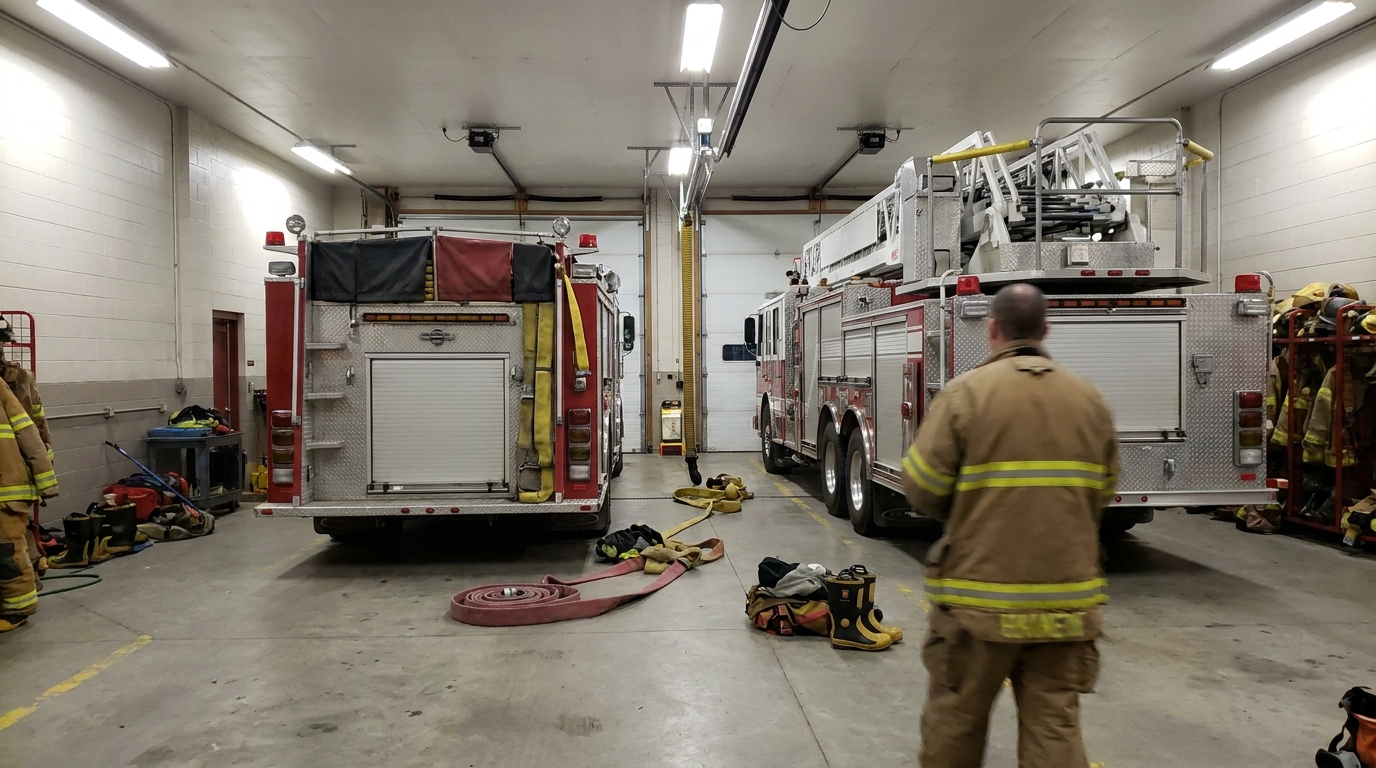
The truck carries ladders, saws, forcible-entry tools, and rescue equipment instead of a large water tank and hose load. Its work spans several jobs that all happen while the engine is flowing water:
- Forcible entry: getting through locked or blocked doors so crews can reach the fire and any victims.
- Search and rescue: finding and removing people from the structure.
- Ventilation: opening the roof or building to release heat and smoke, which improves conditions inside.
- Laddering: placing ground and aerial ladders for access and escape.
- Overhaul: opening walls and ceilings after knockdown to find and extinguish hidden fire.
Truck work is varied and tool-heavy. It rewards people who like problem-solving on the fly, working with their hands, and mastering a wide range of equipment. Not every department runs dedicated truck companies, and in smaller departments the same crew may handle both roles.
Culture differences
The stereotypes are real, if lighthearted. They come from the nature of the work.
- Engine culture often prides itself on aggressive fire attack, hose discipline, and the medical grind. Engine crews run the highest call volume and carry the medical load.
- Truck culture often prides itself on craft, tools, and the "trades" side of the job, the search, the vent, the forcible entry. Truckies tend to enjoy the hands-on problem-solving.
There is friendly rivalry between the two, but on the fireground they depend on each other completely. A fire is not knocked down and made safe without both. Do not read the rivalry as a real division; it is more like two positions on the same team.
The daily rhythm of both is shaped by the firefighter schedule, and both are staffed by firefighters who came up the same hiring path.
Which might suit you
You usually do not get to pick engine or truck as a new firefighter. You go where the department assigns you, and many firefighters work both over a career. That said, knowing your lean helps you understand the job and talk about it in interviews.
Consider engine if you:
- Like direct, aggressive fire attack and the satisfaction of putting the fire out.
- Are drawn to the medical side and do not mind high call volume.
- Prefer a clear core mission: water on the fire.
Consider truck if you:
- Like variety, tools, and hands-on problem-solving.
- Enjoy mastering many skills rather than one core task.
- Are drawn to search, rescue, ventilation, and the "trades" work.
Either way, the fundamentals you build early (fitness, fireground basics, medical skills) serve you in both. Early in your career, be glad to go wherever they put you and learn everything.
FAQ
What is the difference between an engine and a truck in the fire service? The engine carries water and hose and its main job is putting water on the fire, plus running medical calls. The truck (or ladder) carries ladders, saws, and rescue tools, and handles forcible entry, search and rescue, ventilation, laddering, and overhaul. They work together on a fire.
Is engine or truck harder? Both are demanding in different ways. Engine work is physically intense hose and medical work at high call volume. Truck work is tool-heavy and varied. Neither is objectively harder; they suit different strengths.
Do firefighters choose engine or truck? Usually not as a new hire. You are assigned, and many firefighters rotate through both over a career. Assignments depend on the department and its staffing.
Does every fire department have a truck company? No. Larger departments run dedicated truck companies, while smaller departments may run engines that handle both suppression and truck tasks. It varies by department.
Which one runs more medical calls? Engine companies typically carry a large share of the medical load, since medical calls are the majority of most departments' volume. But both respond to medical calls depending on staffing and dispatch.
Next step
Understanding engine and truck work helps you speak the language before you ever get hired. To map the path to that first assignment, start with the free EMT-to-Badge Roadmap, and if you are choosing where to apply, compare CAL FIRE versus a city or county department. Not sure firefighting is your path yet? Read whether it is worth it.
Sources
- IFSTA, Structural Fire Fighting: Truck Company Skills and Tactics (standard truck-company functions: forcible entry, search and rescue, ventilation, laddering, overhaul, salvage, utilities)
- Fire Engineering, "Know the Role of the First-Due Truck Company" (engine-versus-truck roles on the fireground)
Golden State Firefighter is an independent resource. We are not affiliated with CAL FIRE, the FCTC, or any fire department. Verify assignment and staffing details with the department you are applying to, and understand that no career outcome is guaranteed.