Fire Explorer and Cadet Programs in California
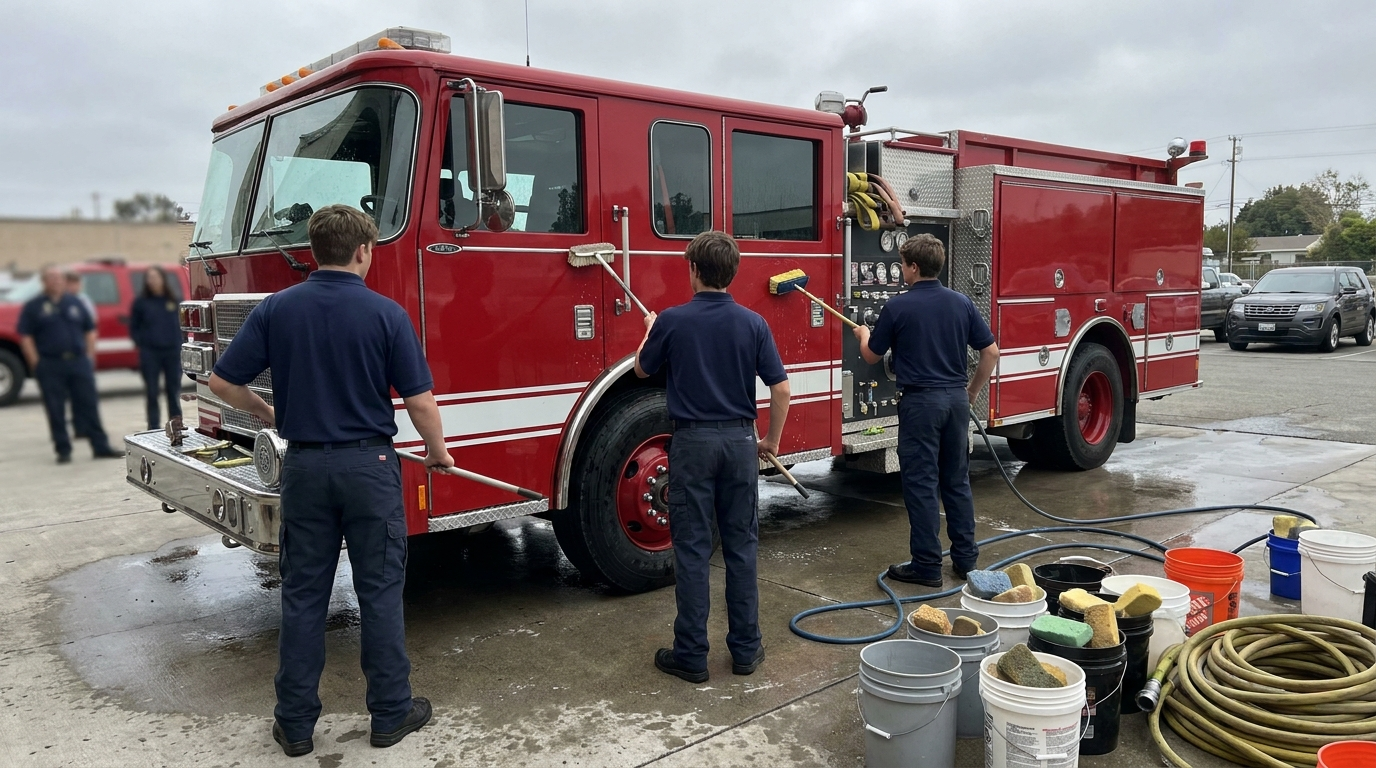
A fire Explorer program is a youth development program that lets teenagers and young adults train alongside real firefighters to learn what the job is actually like. Most California posts are run through Learning for Life (an affiliate of the Boy Scouts) and take members roughly ages 14 to 21, though the exact age range varies by department. If you are young and serious about this career, an Explorer or cadet post is one of the best on-ramps there is: you learn real skills, build discipline and references, and get years of a head start on people who discover the fire service later. This guide explains what these programs are, who can join, and how they actually help you get hired.
This will not guarantee you a job. Nothing does. But few things put a young candidate further ahead.
The short version
- What it is: A hands-on youth program where you train with a fire department, learn firefighting and EMS basics, and see the culture from the inside.
- Who runs it: Individual fire departments, most through Learning for Life. "Explorer" and "cadet" are the common names; a few departments use their own titles.
- Age range: Commonly about 14 to 21, but it varies. Some posts start at 14 (often after eighth grade), some at 15 or 16, and most cap around 20 or 21. Many require a minimum GPA (often 2.5).
- What you learn: Fire behavior, hose and ladder work, CPR and basic medical, hazmat awareness, tools and equipment, teamwork, and discipline.
- Why it helps: Real skills, real references, a real network, and clear proof you have wanted this for years.
What is a fire Explorer program?
It is a structured program where young people train with a fire department to explore firefighting as a career. Most California posts operate under Learning for Life, a program affiliated with the Boy Scouts of America that runs career-exploration "posts" in many fields, fire service among them. Each fire department runs its own post with its own schedule, standards, and instructors.
You will hear two words used almost interchangeably:
- Explorer: The most common term, tied to the Learning for Life Exploring program.
- Cadet: Some departments (for example the City of Los Angeles and City of San Diego run cadet programs) use this name for a similar youth program. A few, like LAFD, describe the cadet program as the top tier of a progressive youth pathway toward city firefighter.
The names differ, but the idea is the same: supervised, hands-on exposure to the fire service for young people, run by working firefighters.
Who can join, and what are the requirements?
Age and academic requirements vary by department, so treat these as the common pattern and confirm with the specific post.
Typical requirements you will see:
- Age: Roughly 14 to 21. Some posts admit members at 14 (often once they have completed eighth grade), others start at 15 or 16, and most cap around 20 or 21.
- School: Many posts require you to be enrolled in school and to maintain a minimum GPA, commonly around 2.5.
- Conduct: A clean record and good standing. These programs value discipline and hold members to a standard.
- Commitment: Regular attendance at drills and meetings, plus department events. It is a real time commitment, not a drop-in club.
Because the exact ages and rules genuinely differ (Riverside County has listed 14 to 18, LA County has listed 15 to 20, others use their own ranges), the instruction is to check the post you want to join. Do not assume one department's numbers apply to another.
What do you actually do and learn?
More than most people expect. Explorer and cadet training is often modeled on what reserve and career firefighters do, scaled for youth and safety. Depending on the post, you can learn:
- Basic fire behavior and how fire spreads.
- Hose evolutions (deploying and operating hoselines).
- Ladder operations.
- Medical response and CPR.
- Hazardous materials awareness.
- Auto extrication (using tools to free people from vehicles).
- Tools, equipment, and SCBA basics.
- Teamwork, leadership, and discipline, which is half the value.
Many posts also compete in Explorer competitions and drills against other posts, which builds skill and confidence fast. You are supervised by working firefighters the entire time, and the physical, hands-on nature of it is exactly what makes it useful preparation.
How does an Explorer program help you get hired?
It helps in four concrete ways, and it is worth being clear about each.
- Real skills and vocabulary. You show up to adult hiring already knowing fireground basics, the terminology, and how a department operates. That confidence shows in oral boards and academies.
- References and a network. You spend years around firefighters, captains, and sometimes the chief. Those relationships become references, mentorship, and a heads-up when recruitments open. In a competitive field, knowing people who can vouch for you matters.
- Proof of genuine commitment. Oral boards reward candidates who can show they have wanted this for years and did something about it. Time as an Explorer is hard evidence, not a talking point.
- A clear pathway. At some departments, the youth program is an explicit step in a progressive path to a paid firefighter job. LAFD, for example, describes its cadet program as the top tier of its youth pipeline toward becoming a city firefighter.
Be honest with yourself about the limits, too. Aging out of an Explorer post does not make you a firefighter and does not skip the adult hiring gauntlet. You still need to become an adult candidate: get your EMT, pass the CPAT, land on eligibility lists, and win oral boards. The Explorer years make all of that easier and put you ahead of peers who start cold. They do not replace it.
What if I am too old for an Explorer post?
You have other on-ramps, and they do similar work for adults. If you have aged out (or are already over 21), look at:
- Reserve or volunteer firefighter programs at many California departments and counties.
- Seasonal wildland firefighting with CAL FIRE or federal agencies.
- EMT or paramedic work on an ambulance to build patient-care experience.
These give adults the same core benefits Explorers get: real experience, references, and proof of commitment. See our guide on how to stand out and get hired for how to stack these as an adult candidate.
How do I find and join a post?
Start local. Most departments that run a post publish it on their careers or community pages. To find one:
- Check the websites of fire departments near you for "Explorer," "cadet," or "youth program" pages.
- Look at both city and county fire agencies, since either may run a post.
- Contact the department directly and ask about age requirements, meeting schedules, and how to apply.
Apply to the post you can realistically attend, since these programs meet regularly and reward consistent attendance. If there is no post near you, the adult on-ramps above are your path.
FAQ
What is a fire Explorer program?
It is a youth development program where teenagers and young adults train with a fire department to explore firefighting as a career. Most California posts run through Learning for Life, an affiliate of the Boy Scouts, and are supervised by working firefighters. You learn fire and medical basics, teamwork, and discipline while seeing the job from the inside.
What age do you have to be to join a fire Explorer or cadet program?
It varies by department, but commonly about 14 to 21. Some posts start at 14 (often after eighth grade), others at 15 or 16, and most cap around 20 or 21. Many also require a minimum GPA, often around 2.5. Confirm the exact ages and rules with the specific post.
What is the difference between an Explorer and a cadet program?
Mostly the name. "Explorer" is tied to the Learning for Life Exploring program and is the most common term. Some departments, like the City of Los Angeles and City of San Diego, call their similar youth program a "cadet" program, and a few treat the cadet program as a top tier of a progressive path toward a paid firefighter job. The purpose (hands-on youth exposure to the fire service) is the same.
Does being a fire Explorer help you get hired as a firefighter?
Yes, in real ways: you gain fireground skills and vocabulary, build references and a network inside the department, and can prove years of genuine commitment, which oral boards reward. At some departments it is an explicit step toward paid hiring. It does not replace the adult hiring process, though. You still need your EMT, the CPAT, eligibility lists, and oral boards later.
Do you get paid as a fire Explorer?
Generally no. Explorer and cadet posts are youth development and training programs, not paid jobs. The payoff is experience, skills, references, and a head start, not a paycheck. Confirm with the specific program.
I am over 21. What can I do instead?
Look at adult on-ramps that do similar work: reserve or volunteer firefighter programs, seasonal wildland firefighting with CAL FIRE or federal agencies, and EMT or paramedic work on an ambulance. These build the same experience, references, and proof of commitment for candidates too old for a youth post.
How do I find a fire Explorer post near me?
Check the websites of city and county fire departments near you for an "Explorer," "cadet," or "youth program" page, and contact the department directly to ask about ages, schedules, and how to apply. Apply to a post you can realistically attend, since they meet regularly and reward consistent attendance.
The takeaway
If you are young and serious about this career, joining a fire Explorer or cadet post is one of the highest-value things you can do. You will learn real skills, meet the people who may one day hire you, and prove you have wanted this for years, all before your peers even start. Just keep it in perspective: it is a head start on the adult hiring process, not a replacement for it. Use the years well, then become the adult candidate departments want to hire.
Sources
- Learning for Life / Exploring and department Explorer posts such as Riverside County Fire Explorer, LA County Fire Explorer Program, and San Bernardino County Fire Explorers - program purpose, typical ages (14 to 18, 15 to 20, and similar ranges), GPA requirements, and the training provided (fire behavior, hose and ladder work, CPR/medical, hazmat awareness, extrication).
- LAFD Fire Cadet / youth programs and City of San Diego Fire Cadet Program - cadet programs as a named youth pathway, including LAFD describing its cadet program as a top tier toward becoming a city firefighter.
- Indeed: How to become a firefighter in California - how cadet and volunteer programs build skills and relationships that help with hiring.
This is an independent resource, not affiliated with Learning for Life, the Boy Scouts of America, CAL FIRE, or any fire department. Program names, ages, and requirements vary by department and change over time. Verify current details with the specific program and department. No outcome is guaranteed.
Last reviewed: July 2026.