What Firefighters Actually Do All Day
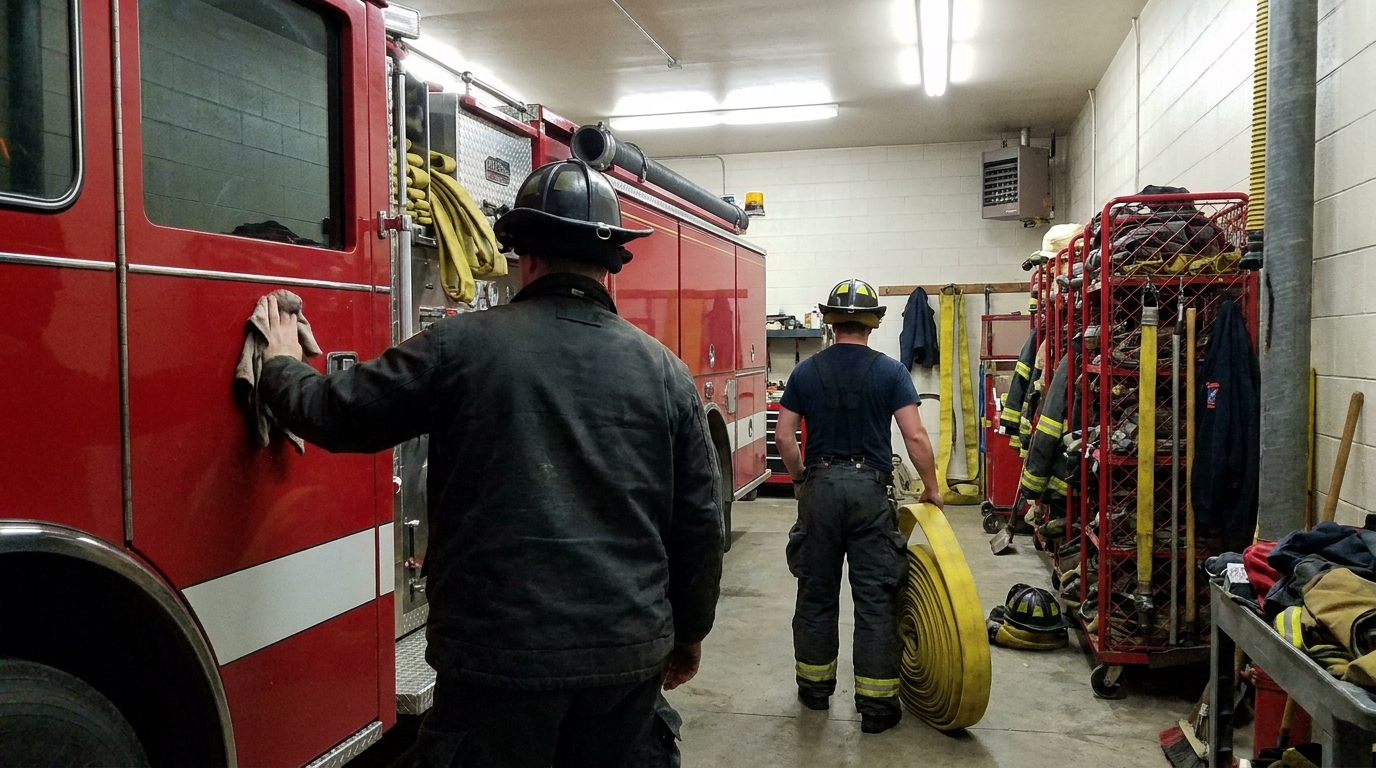
Most of what a firefighter does all day is not fighting fire. On a typical 24-hour shift you check the rig and equipment, train, do station chores, work out, cook and eat with your crew, handle paperwork, and respond to calls, and the large majority of those calls are medical emergencies, not fires. Nationally, about two-thirds of fire department runs are EMS and rescue, while only a small single-digit share are actual fires. If you are chasing this career picturing flames every shift, adjust the picture now. The reality is steadier, more medical, and more about readiness than most people expect. Here is what the day actually looks like.
What does a firefighter actually do all day?
A shift is a rhythm of two things: scheduled work and unscheduled calls. The calls interrupt everything, at any hour, which is the whole point of being there. Around the calls, the day is structured.
A common shape looks like this:
- Shift change and roll call. You relieve the off-going crew, get briefed on anything ongoing, and take over your assignment.
- Rig and equipment checks. You inspect the apparatus, the SCBA, the medical gear, the hoses, the tools, and the truck itself. Everything is tested and accounted for. If it is broken or missing when a call comes in, it is too late.
- Training. Nearly every shift includes training, because skills decay. Crews drill hose deployment, ladders, search patterns, medical procedures, and department policy.
- Station duties. Cleaning, cooking, maintenance, and upkeep of the station and the equipment. The firehouse runs on shared chores.
- Physical training. Firefighting is physically demanding, and most departments build in daily workout time.
- Paperwork and projects. Incident reports, inspections, public education, and other assignments.
- Downtime and readiness. Between calls you may cook, study, handle reports, or rest, but you are always ready to go from still to running in seconds.
How much of the job is actually fighting fires?
Far less than the public imagines, and this surprises a lot of new firefighters.
According to the U.S. Fire Administration, in its 2020 national run profile nearly two-thirds (about 64%) of fire department calls were for emergency medical services and rescue, while only about 4% of all runs were fire related. Read that again. Roughly two out of three calls are medical. Only a small fraction are fires.
The modern fire service is, in day-to-day terms, primarily a medical response system that also fights fire. That is why EMT certification is required or strongly expected almost everywhere, and why so many firefighters go on to become firefighter-paramedics. If you are not comfortable with medical emergencies, sick and injured people, and the emotional weight some of those calls carry, this is the part of the job to sit with honestly. See should you become a firefighter-paramedic.
None of this means fires do not matter. When a structure fire comes in, it is exactly the high-stakes work the training is for, and it can be the most demanding thing you do all year. It is just not the daily reality. The daily reality is medical calls, training, and readiness.
What kinds of calls do firefighters run?
Beyond structure fires and EMS, a fire company responds to a wide range of emergencies. Depending on the department and area, that can include:
- Traffic collisions and vehicle extrication
- Medical emergencies of every kind, from chest pain to falls to overdoses
- Vehicle and dumpster fires
- Vegetation and wildland fires (a major reality in much of California)
- Hazardous materials incidents
- Public assistance and rescue calls (lift assists, water rescue, confined space, and more)
- Fire alarms, many of which turn out to be false or unintentional
A meaningful share of runs are false alarms and good-intent calls that turn out to be nothing serious. You respond to all of them the same way, because you do not know which is real until you arrive. Getting up at 0300 for an alarm that turns out to be burnt toast is part of the job, not a failure of it.
What is station life actually like?
The firehouse is part workplace, part shared home, because you live there for 24 hours or more at a stretch. That shapes everything.
Crews cook and eat together, often pooling money for groceries and rotating cooking duty. You clean together, train together, and pass downtime together. The culture of the station matters a lot to whether the job feels good, which is why fitting into the crew and pulling your weight is so important, especially on probation. See fire station etiquette and surviving firefighter probation.
Sleep is real but never guaranteed. On a 24-hour shift you have quarters and a bunk, but a call can come at any hour, and busy stations may run calls all night. You learn to sleep when you can, get up fast, and function on interrupted rest. Over a career, that pattern is one of the genuine health challenges of the job, and it is worth taking seriously from the start. See firefighter mental health.
Why is so much of the day spent on training and checks?
Because the whole value of a firefighter is being ready before the emergency, not figuring it out during one.
When a call drops, there is no time to learn the skill, find the tool, or discover the SCBA bottle is low. The training and the equipment checks are what make the fast, correct response possible. A crew that drills hose deployment every week does it right at 2 a.m. in the smoke without thinking. A crew that skipped the rig check finds the broken gear at the worst possible moment.
So the "boring" parts of the day, the checks, the drills, the maintenance, are not filler. They are the job. The calls are the test. The rest of the shift is the preparation that decides whether you pass it. New firefighters who understand that early tend to do well, because they take the quiet hours seriously instead of resenting them.
Is the job boring, then?
It depends on the station and on you. A slow suburban station can have long quiet stretches. A busy urban or downtown company can run calls back to back for a full shift. Most fall somewhere between.
The reality is that the job is not constant action, and if you need constant adrenaline you may be disappointed or, worse, careless. The firefighters who last are the ones who find meaning in the whole thing: the training, the crew, the readiness, and the calls when they come. If that steadier, service-oriented picture appeals to you more than the Hollywood one, that is a good sign this career fits. See is being a firefighter worth it.
FAQ
What do firefighters do all day when there are no fires?
They check and maintain the apparatus and equipment, train and drill, do station chores and cooking, work out, handle inspections and paperwork, and stay ready to respond. And they still run calls, mostly medical emergencies, because most fire department runs are EMS, not fires.
What percentage of firefighter calls are actually fires?
Nationally, only a small share. In a recent U.S. Fire Administration run profile, about 4% of all fire department runs were fire related, while roughly 64% were EMS and rescue. The exact mix varies by department and area, but medical calls dominate almost everywhere.
Do firefighters really spend most of their time on medical calls?
Yes. Emergency medical services and rescue make up roughly two-thirds of fire department runs nationally. That is why EMT certification is standard for firefighters and why many become firefighter-paramedics. Being comfortable with medical emergencies is central to the job.
Do firefighters sleep at the station?
On 24-hour shifts, yes, there are quarters and bunks, but sleep is not guaranteed. Calls come at any hour, and busy stations may run calls through the night. Firefighters learn to rest when they can and get up and function fast. Long-term, disrupted sleep is one of the real health challenges of the career.
Is being a firefighter boring?
It varies. Slow stations have long quiet stretches; busy stations run calls constantly. The job is not nonstop action. The people who thrive value the training, the crew, and the readiness, not just the emergencies. If you need constant adrenaline, this may not be the fit you imagine.
Why do firefighters train so much if they are not always fighting fires?
Because readiness is the whole job. Skills fade and equipment fails if they are not checked, so crews drill and inspect constantly to perform correctly and safely when a real emergency comes with no time to prepare. The quiet work is what makes the fast work possible.
Sources
- U.S. Fire Administration Fire Department Overall Run Profile - about 64% of fire department runs are EMS and rescue and about 4% are fire related (NFIRS data).
- NFPA Fire Department Calls statistics - national breakdown of call types showing medical calls as the largest share.
- USFireDept: A Day in the Life at a Fire Station - structure of a 24-hour shift: rig checks, training, chores, cooking, and downtime.
- North Shore Fire and Rescue: Life of a Firefighter and Ebbetts Pass Fire District: Life of a Firefighter - daily routine, equipment checks, training, and station duties.
This is an independent resource, not affiliated with the U.S. Fire Administration, NFPA, or any department. Duties, schedules, and call mixes vary by department and region, so verify specifics with the department you are interested in. No outcome is guaranteed. Last reviewed: July 2026.