How to Become a Fire Investigator in California
Fire investigation is one of the least understood specialties in the fire service. It is not the fireground. It is evidence, documentation, courtrooms, and patience. Some investigators carry a badge and a gun. Others never do. This guide explains the California path, the difference between sworn and civilian roles, and how a firefighter moves into the work.
What a fire investigator actually does
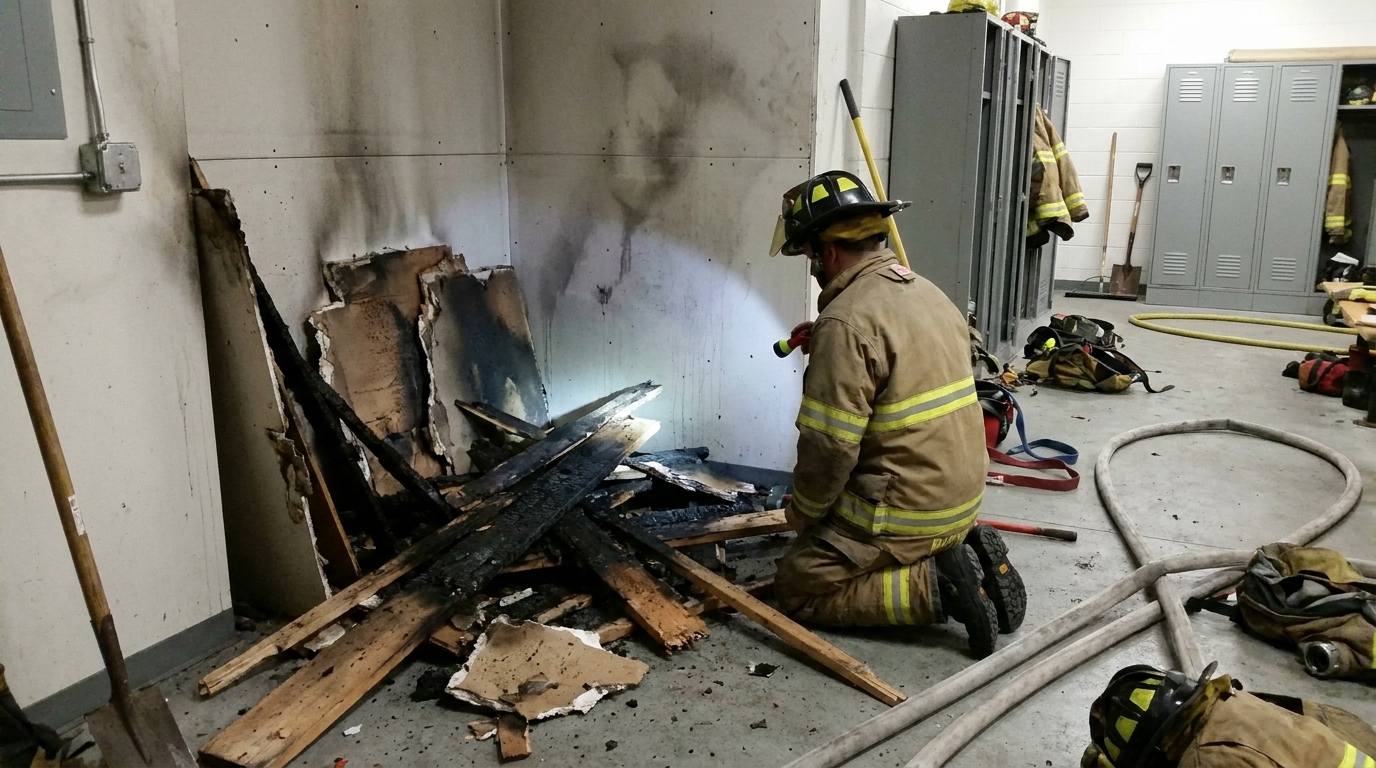
A fire investigator determines where a fire started (origin) and what caused it (cause). That sounds simple. In practice it means reading burn patterns, documenting a scene, interviewing witnesses, working with lab analysis, and building a case that can hold up if it goes to court.
The work splits roughly into two lanes. Accidental and cause-and-origin work answers "what happened here" for insurance, code, and prevention purposes. Arson work is criminal. When a fire is set on purpose, the investigation becomes a criminal case, and that changes everything about who does it and what authority they carry.
If you are still comparing specialties, start with Fire Service Specialties Explained.
Sworn versus civilian
This is the first fork in the road, and it matters more than any certification.
Sworn investigators are peace officers. Under California Penal Code section 830.37, members of a regularly paid arson-investigating unit of a fire department or fire protection agency are peace officers when their primary duty is detecting and apprehending people who violate fire laws or commit related fraud. (CA Penal Code 830.37) That status carries real authority: they can carry a firearm, make arrests, write search warrants, and testify as the arresting officer. Because they are peace officers, they must meet California Commission on Peace Officer Standards and Training (POST) requirements. (California POST)
Civilian investigators are not peace officers. Many investigators do origin-and-cause work without any law enforcement authority. They document scenes, determine cause, and support prevention or insurance work, but they do not carry a badge or make arrests. Plenty of skilled career investigators are civilians. The role simply has a different scope.
Which one a department uses varies. Some departments run a sworn arson unit. Some contract the criminal side to a police agency or the county. Some keep investigation civilian and hand criminal cases off. Confirm how it works at your department before you build a plan around one model.
The standard: NFPA 1033
Whether sworn or civilian, the professional baseline for fire investigators is NFPA 1033, the Standard for Professional Qualifications for Fire Investigator. It defines the job performance requirements for the role in both the public and private sectors. (NFPA 1033)
NFPA 1033 also sets knowledge prerequisites in areas like fire science, fire chemistry, fire dynamics, building construction, and investigation methodology. This is a technical, science-heavy discipline, not something you pick up casually on the side.
In California, the Office of the State Fire Marshal (OSFM) runs a State Fire Training Fire Investigator certification built on the NFPA 1033 standard. (OSFM, Fire Investigator) That certification, along with the required coursework, is a common formal credential for California investigators. Confirm the current certification track and course list with OSFM, since State Fire Training programs are periodically updated.
Certifications that carry weight
Beyond the OSFM certification, two credentials come up constantly in California:
- CCAI Certified Fire Investigator (CFI). The California Conference of Arson Investigators offers a rigorous CFI certification. It involves a written examination and a practical competency examination, and applicants must document substantial casework (recent requirements have called for a large number of documented origin and cause investigations) plus completion of a courtroom testimony course. (CCAI, Certified Fire Investigator) Confirm the current exact requirements with CCAI, as they set the bar and update it.
- IAAI Certified Fire Investigator. The International Association of Arson Investigators offers a nationally recognized CFI credential that many California investigators also pursue. (IAAI)
These are not entry credentials. They are earned after you have real cases under your belt, which is exactly why investigation tends to come mid or late in a career.
How firefighters move into it
There is no shortcut. The common path looks like this:
- Build a solid firefighting foundation first. You need to understand fire behavior from the fireground before you can read a scene backward. Get through probation and get good at the base job. If probation is your current concern, read Surviving Firefighter Probation.
- Take investigation coursework. Start with fire investigation fundamentals through State Fire Training, a community college, or IAAI/CCAI courses. This tells you whether the work fits you before you commit years to it.
- Get involved with the fire prevention or investigation bureau. Many departments let interested firefighters ride along, assist at scenes, or rotate through prevention. That exposure is how you learn the reality and get noticed.
- Pursue certification. Work toward the OSFM certification and, over time, a CFI credential as your casework builds.
- Decide on the sworn question. If you want the criminal and arrest authority, you are committing to the POST path and law enforcement responsibilities. That is a bigger decision than any single certification. Be honest with yourself about whether you want to carry that.
FAQ
Do I have to be a firefighter first to become a fire investigator?
Not universally, but in the fire service it is the common route. Understanding fire behavior from the fireground is a real advantage in reading a scene, and most department investigator positions draw from experienced firefighters. Some civilian and private-sector investigators come from other backgrounds.
Are all fire investigators armed peace officers?
No. Only sworn investigators (under Penal Code 830.37) carry peace officer authority, which requires meeting POST standards. Many investigators are civilians who do origin-and-cause work without arrest powers. Departments structure this differently, so confirm with yours.
What is NFPA 1033?
It is the national standard that defines the professional qualifications for fire investigators, including the job performance requirements and knowledge areas the role demands. California's OSFM Fire Investigator certification is built on it.
How long does it take to become a fire investigator?
There is no fixed timeline, but it usually comes mid or later in a career. You build firefighting experience first, then coursework, then hands-on case exposure, then certification. Serious credentials like the CCAI CFI require documented casework that takes years to accumulate.
Is fire investigation a good fit for me?
It suits people who are patient, methodical, and comfortable with documentation, science, and the legal system. It is less about physical fireground action and more about careful analysis. If you like puzzles and evidence and can sit with a case for the long haul, it may fit.
How do I become a fire investigator?
Build a solid firefighting foundation first, then take origin-and-cause coursework and get exposure through your prevention or investigation bureau. If you plan to earn the OSFM Fire Investigator certification, its current prerequisites include POST PC 832 Arrest and POST Interview and Interrogation. A civilian origin-and-cause job may not require peace-officer status, but that employment question is separate from the OSFM credential requirements. Roles and certification tracks vary, so confirm the current path with OSFM and your department.
Where to go from here
If investigation interests you, take an introductory course and spend time around your department's prevention or investigation bureau. Learn the reality before you commit. Then decide whether you want the civilian origin-and-cause path or the sworn arson path, because that choice shapes everything after it. For the wider view, read How to Get on a Specialty Team.
Sources
- California Penal Code section 830.37 (peace officer status for arson investigators)
- California Commission on Peace Officer Standards and Training (POST)
- NFPA 1033, Standard for Professional Qualifications for Fire Investigator
- California Office of the State Fire Marshal, Fire Investigator certification
- State Fire Training Procedures Manual, section 7.8.1
- California Conference of Arson Investigators, Certified Fire Investigator
- International Association of Arson Investigators (IAAI)
Golden State Firefighter is an independent resource and is not affiliated with any fire department or agency. Investigator roles, authority, and certification requirements vary by department and change over time. Confirm all details with OSFM, CCAI, and your department.