How to Become a Fire Chief in California
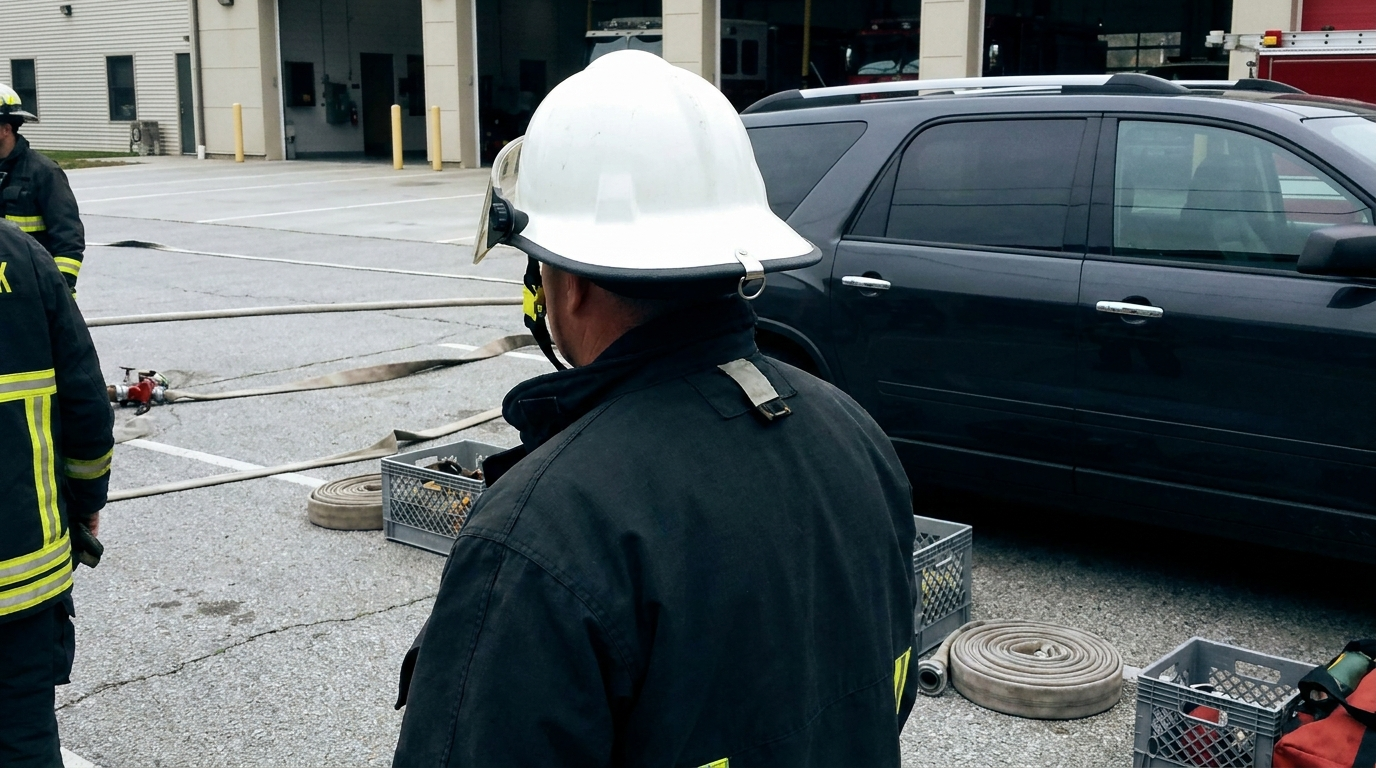
Fire chief is the top of the organization. It is also the least understood rank, because most firefighters never see what the job actually is. The chief spends very little time on the fireground. The work is budgets, politics, personnel, policy, and long-range planning. Getting there takes decades, and getting there for the right reasons matters as much as the credentials.
This guide lays out the executive path to chief officer in California: what the role involves, the credentials and degrees that build the resume, and the long game required to reach it. As with every rank above firefighter, specifics vary by department. Treat this as a map of the terrain, not a guaranteed route.
For the ranks below this one, see our guides on promoting to fire captain and promoting to battalion chief. Fire chief builds on both.
What a fire chief actually does
The fire chief is the chief executive of the department. In a city, the chief usually reports to a city manager or council. In a special district, the chief reports to a board of directors. The chief is accountable for the entire operation: the budget, staffing, labor relations, apparatus and facilities, service levels, and the department's relationship with the community and elected officials.
A useful way to picture it: the higher you rank, the further your time horizon stretches. A captain thinks about today's shift. A battalion chief thinks about this week and this battalion. A fire chief thinks about the next budget cycle, the next station, the next decade of the department. Emergencies are handled by the people below you. Your job is to make sure those people are trained, staffed, equipped, and supported before the emergency happens.
Most chiefs will tell you the hardest parts of the job are the parts firefighters never train for: navigating politics, defending a budget, managing labor and management tension, and making unpopular decisions in public. If you want the rank, you have to want that work, not just the title.
The executive credentials that build the resume
There is no single license that makes you a fire chief. Instead, chief candidates assemble a portfolio of certification, education, and experience over many years. Several credentials appear repeatedly on the resumes of California chief officers.
California officer-track certification
The Office of the State Fire Marshal (OSFM), through California State Fire Training (SFT), offers an officer certification series that runs up through the chief officer levels. Completing the Fire Officer 3 (formerly Chief Fire Officer) certification, and where offered the Fire Officer 4 (formerly Executive Chief Fire Officer) certification, is a strong signal that you have met a recognized statewide standard. Confirm the current certification names and requirements directly with OSFM, because the program has been restructured over time. OSFM State Fire Training, Professional Certifications Our guide to fire officer certification in California walks through how this series works.
The National Fire Academy Executive Fire Officer Program
The Executive Fire Officer Program (EFOP) at the National Fire Academy is the flagship executive development program for senior fire service leaders, and completing it is a respected line on a chief officer resume. It is competitive to enter and involves multiple course components over an extended period. The program was recently restructured, so confirm the current format and requirements directly with the U.S. Fire Administration.
CPSE Chief Fire Officer designation
The Center for Public Safety Excellence (CPSE) awards the Chief Fire Officer (CFO) designation through a peer-reviewed portfolio process. To pursue it you generally must hold the rank of battalion chief or above, and you accumulate a minimum number of points across education, experience, professional development, professional contributions, and community involvement. The designation is renewed every three years. Note that this CPSE designation is distinct from the OSFM State Fire Training Fire Officer 3 (formerly Chief Fire Officer) certification, even though the names are similar. CPSE, Chief Fire Officer designation
College degrees
Education requirements for chief vary by department, but the trend is clear. A bachelor's degree is common for chief officer positions, and many chief and assistant chief postings prefer or require a master's degree, often in public administration, business administration, emergency services management, or a related field. If you are serious about reaching chief, plan your degree path early. Degrees take years, and you cannot compress them at the end.
The long game
Reaching fire chief is a career-length project. Nobody does it quickly, and the people who reach it usually started preparing long before they thought they were ready. A few principles hold up across most paths.
Build up through the ranks
The standard progression is firefighter, engineer or apparatus operator, captain, battalion chief, then the executive ranks such as division or assistant chief, deputy chief, and finally chief. Each level teaches something the next one requires. Skipping the work at one level tends to catch up with you at the next.
Get comfortable outside your department
Chiefs are often hired competitively, and many are recruited from other departments. That means the resume that gets you promoted internally is not always the resume that gets you hired as a chief elsewhere. Regional assignments, county and state committees, mutual aid roles, professional associations, and instructor work all broaden your name and your network beyond your own station.
Learn the business side early
The parts of the job that separate chief candidates are usually the administrative and political parts: budgeting, grant writing, labor relations, strategic planning, public speaking, and working with elected officials. Volunteer for the assignments that expose you to these while you are still a company or chief officer. You cannot learn them for the first time as the chief.
Document everything
By the time you compete for a chief position, your resume has to tell a decade-plus story clearly. Start building your promotional file now, so the record is there when you need it.
A realistic timeline and pay note
There is no fixed number of years to chief, and any specific promise would be dishonest. In broad strokes, most fire chiefs have spent well over a decade in the service, often two or more, moving through each rank and building credentials along the way. Many reach chief in their forties or fifties.
Pay for fire chief varies widely by the size and type of the department and is typically set by contract rather than a bargaining-unit MOU. A chief of a large metropolitan department and a chief of a small rural district can earn very different salaries. If money is your only motivation, understand that the pay climb slows relative to the jump in responsibility and personal exposure at the top, and that a career is built more by avoiding the common money mistakes than by chasing the next rank.
FAQ
How long does it take to become a fire chief?
There is no set timeline. Most fire chiefs have well over a decade in the service, and often much more, having promoted through each rank and built the required education and credentials. It is a career-length goal, not a short-term one.
Do you need a college degree to be a fire chief?
Requirements vary by department, but a bachelor's degree is common for chief officer positions, and many larger departments prefer or require a master's degree in public administration, emergency services management, or a related field. Plan your degree path years in advance.
What is the difference between the OSFM Fire Officer 3 (formerly Chief Fire Officer) certification and the CPSE CFO designation?
They are two separate things with similar names. The OSFM State Fire Training Fire Officer 3 is a California certification. The CPSE Chief Fire Officer (CFO) is a national peer-reviewed professional designation earned through a points-based portfolio. Many chief officers pursue both.
Do fire chiefs still respond to fires?
Rarely, and usually only to major incidents in a strategic role. The chief's daily work is executive: budgets, staffing, policy, labor relations, and long-range planning. The hands-on emergency work is handled by the ranks below.
Can you become a fire chief in a department other than your own?
Yes. Chief positions are often filled through competitive recruitment, and many chiefs are hired from outside. Broadening your experience, network, and reputation beyond your home department is an important part of the long game.
Play the long game on purpose
You do not stumble into the chief's office. The people who get there decide early, build steadily, and put in the years across every rank. If becoming a fire chief is your goal, start now: pick the next credential, enroll in the next class, and volunteer for the next assignment that stretches you. The rank is earned one deliberate step at a time.
This article is general career information for California firefighters. It is not legal or employment advice, and requirements vary by department. Always confirm current standards with the Office of the State Fire Marshal, the relevant credentialing bodies, and your department's human resources office.