Firefighter Money Mistakes: The First Five Years
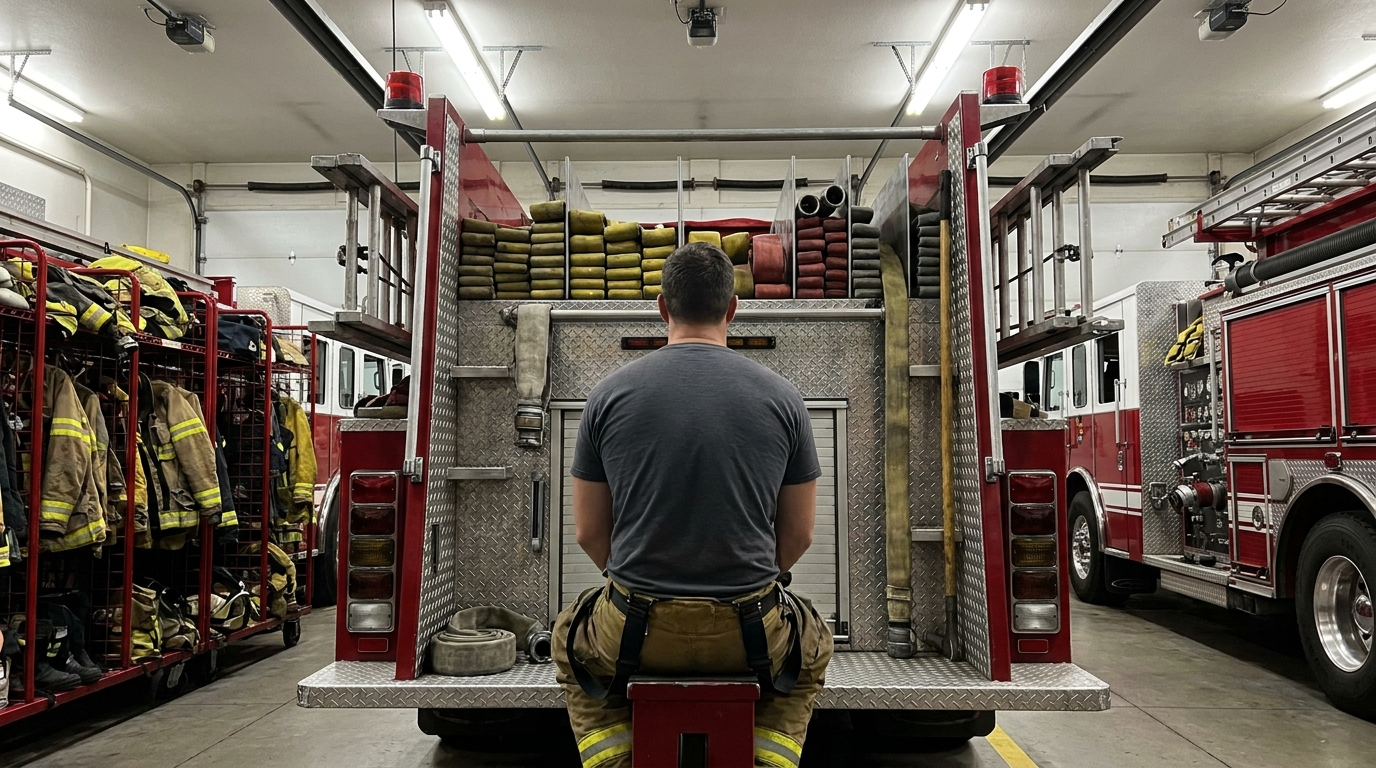
The money mistakes firefighters make in their first five years are almost never about greed or stupidity. They come from optimism about overtime, generosity toward family and crew, and trusting the wrong person who showed up at the station with a folder. This article walks through the eight most common ones so you can spot them before they cost you a decade.
This is education, not tax, legal, or investment advice. Tax law changes and your situation is specific. Confirm anything here with a licensed CPA or advisor before acting.
None of what follows is a lecture. Most of these mistakes are made by good firefighters for good reasons. The job pays you in lumps, surrounds you with people you trust, and hands you a pension story that sounds finished. Every mistake below grows out of one of those three things.
Mistake 1: Building your life on the overtime number
Your second year, overtime turns your income into a number you never expected. The mistake is letting your lifestyle grow into it: the mortgage sized to a $190,000 year, not your base pay.
Overtime is real money, but it is not guaranteed money. Staffing changes, an injury, a slow fire season, a new chief's OT policy, or a baby at home that makes shift holds impossible, and the number drops. Here is the discipline the 30-year guys who retired comfortable actually used: budget your fixed life (housing, cars, insurance) on base pay, and treat overtime as bonus money for goals, not groceries. If your fixed costs need OT to survive, you do not own your schedule anymore. The overtime owns you.
Mistake 2: The truck loan at the academy
It is a tradition at this point: get hired, buy the truck. A new firefighter with a conditional offer signs an $80,000 loan before the first probation evaluation, because the income finally makes the payment "affordable."
Probation is real, and people do not pass it every year. Even when you do, that payment sits on top of years one through seven, exactly the years when money into a retirement account does its longest compounding. Nobody is saying never buy the truck. The version that works is: buy it in year three, used, after probation, after the emergency fund exists, and after Mistake 3 is fixed. The truck will still be there. The compounding years will not.
Mistake 3: Skipping the 457(b) in year one
"I'll start contributing once I'm off probation" is the most expensive sentence in the firehouse. The governmental 457(b) is arguably the best retirement account in America, and firefighters are one of the few groups who get it: for 2026 you can defer up to $24,500 (per IRS Notice 2025-67), and unlike a 401(k), money in a governmental 457(b) can be withdrawn after you separate from service with no 10% early-withdrawal penalty at any age (per IRS Topic 558). For a career that can end at 50, that penalty-free early access is built for you.
Start in year one, even at $100 a paycheck. The habit matters more than the amount at first, and every raise or OT bump is a chance to raise the percentage before the money ever hits your checking account. The full case, including Roth versus traditional, is in the 457(b) guide.
Mistake 4: Buying the firehouse annuity pitch without reading the fees
Someone's friend, someone's dad, someone who "works with a lot of firefighters" comes through the station with a variable annuity or a high-fee fund lineup for your deferred comp. He is friendly, he buys coffee, and the crew vouches for him. That is the whole sales model, and it works because it borrows the trust culture of the fire service.
The numbers are the tell. GAO-22-104439 found investment-option fees from 0.01% to 2.37% among the 403(b) plans in its non-generalizable survey of 45 responses. That is not a representative range for firefighter 457(b) plans. The SEC's Investor.gov warns that annuities inside 457(b) and 403(b) plans may carry higher fees and surrender charges. Get your own fee disclosure and product prospectus, then run the numbers through the 457(b) fee audit before signing.
Mistake 5: Assuming the pension is the whole plan
The pension is genuinely great, and that is exactly why it becomes an excuse to save nothing else. Two problems with outsourcing your whole retirement to it.
First, the stories you hear around the table are mostly Classic-tier stories. If you were hired after January 1, 2013, you are almost certainly a PEPRA member: usually 2.7% at 57 instead of 3% at 50, a three-year final compensation average instead of a single highest year, and most overtime is excluded from pensionable compensation. Government Code section 7522.34 contains a 7(k) exception, so confirm treatment with your retirement system and bargaining agreement. The old-timers' math is not your math. Second, many California fire agencies do not participate in Social Security, so the pension may be your main employer retirement benefit. The Social Security Fairness Act repealed WEP and GPO for benefits payable after December 2023, so a public pension no longer reduces Social Security benefits you otherwise earned under those two rules. Run your own numbers in the pension and retirement explainer, then treat the 457(b) as the part of retirement you actually control.
Mistake 6: Getting blindsided at tax time in your first big overtime year
Your first heavy OT year produces two surprises. During the year, the big checks look brutally taxed, because payroll withholding treats a large check as if you earn that much every period, or applies the flat 22% supplemental rate (per IRS Publication 15 for 2026). Much of that over-withholding comes back as a refund; the check was not "taxed at 50%." The mechanics are in why your overtime check looks so small.
The reverse surprise is meaner: if you and a working spouse both set your withholding without accounting for the combined income, or you picked up taxable side income, you can owe at filing. And California taxes every overtime dollar at your full state rate; for a single filer, roughly every dollar from about $73,000 up sits in the 9.3% bracket (per FTB rate schedules; 2026 bracket dollars are not final until the FTB publishes them in fall 2026). After your first big-OT year, spend 20 minutes with the IRS withholding estimator or ask your CPA to project the next year. One check-up prevents the April ambush.
Mistake 7: Never reviewing disability and life coverage, in this job of all jobs
Firefighters accept physical risk professionally and then skip the 30-minute review of what happens to their family financially if the risk lands. You have real protections: California Labor Code 4850 provides up to a year of full salary, tax-free, for a job injury, and an industrial disability retirement pays 50% of final compensation excluded from income tax (per IRC 104(a)(1) and the CalPERS disability retirement guide). Those are strong, and they are not a complete plan. 4850 runs out at 52 weeks, IDR is half your pay, and neither replaces a paycheck for an off-duty injury or covers a young family if you die off duty.
This is not a pitch for any product; it is a pitch for knowing your numbers. Find out what your department and union actually provide, what an off-duty disability would pay, and what your family would have. Then decide, with an advisor you chose (not one who found you at the station), whether there is a gap worth covering.
Mistake 8: Mixing hobby money and business money
Half the firehouse has a side gig by year five, and most of them run it through their personal checking account. That commingling is exactly what costs you later: missed deductions you cannot document, and no clean evidence you are running a business rather than a hobby, which matters because a reclassified hobby pays tax on gross income with no deductions (per 26 USC 183 and the now-permanent suspension of miscellaneous itemized deductions). Open a separate account the week the side work starts, log your miles, and keep records like someone will check, because someday someone might. The full picture, including the surprisingly low real self-employment tax for high W-2 earners and California's CSLB rules for construction work, is in side business taxes on a 48/96.
The pattern under all eight
Look back through the list. Every mistake is optimism (the OT will always be there, the pension is plenty, probation is a formality) or trust (the crew vouched for the annuity guy, cash flows in one account because it all feels like family money). Those are the same traits that make you good at the job. You do not need to become cynical with money. You need one habit: nothing gets signed, bought, or skipped based on a hallway conversation. Big money decisions get a night's sleep, a second opinion, and math on paper.
FAQ
What is the single biggest money mistake new firefighters make?
Building fixed costs on overtime income. Almost every other mistake flows from it: the truck loan needs the OT, the skipped 457(b) is "because money is tight," and the tax surprise hits hardest when every dollar is spoken for. Base pay covers the life; overtime covers the goals.
How much should a new firefighter put in the 457(b)?
There is no universal number, and this is a question for your own budget and advisor. The pattern that works is starting in year one with any amount, then raising it with each raise and strong OT year. The 2026 deferral limit is $24,500 (per Notice 2025-67), but the habit matters more than hitting the max early.
Is the firehouse financial advisor always a bad idea?
No, and that is what makes it tricky. Some are fine. The problem is the setting: crew trust substitutes for due diligence. Judge the product, not the friendship: total annual fees, surrender charges, and how the person is paid. Investment option fees in the 403(b) plans GAO surveyed ranged from 0.01% to 2.37% (per GAO-22-104439), so which end you land on matters enormously.
Why did my first big overtime check get taxed so hard?
It mostly was not. Payroll withholding annualizes big checks or applies the 22% flat supplemental rate (per Pub 15), so heavy-OT periods are systematically over-withheld and the difference returns at filing. The real cost of overtime is your normal marginal rate, federal plus California. The full breakdown is in the overtime tax myth article.
Do I really need anything beyond the pension?
Almost certainly yes. PEPRA-tier pensions are leaner than the Classic-tier stories, most overtime is excluded from pensionable compensation, and many California fire agencies do not pay into Social Security. Government Code section 7522.34 contains a 7(k) overtime exception, so confirm your own system's treatment. The pension is a strong foundation, not a finished plan. The 457(b) is the piece you control.
Sources
- IRS Notice 2025-67 (2026 retirement plan limits, $24,500 457(b) deferral)
- IRS Topic 558 (governmental 457(b) distributions; no 10% early-distribution penalty after separation)
- GAO-22-104439 (K-12 403(b) plan fee ranges, the closest studied cousin of a 457(b)); Investor.gov (SEC warning on annuities in 457(b)/403(b) plans)
- CalPERS local safety benefit factors, 2.7% at 57 and 3% at 50 (benefit factor charts; the three-year final compensation rule comes from PEPRA itself)
- IRS Publication 15 (2026) (supplemental wage withholding, 22% flat rate, aggregate method)
- FTB rate schedules (9.3% bracket span; 2026 dollars pending fall 2026 publication)
- California Labor Code 4850; IRC 104(a)(1); Government Code 21413 (salary continuation and IDR tax treatment)
- 26 USC 183 (hobby losses); OBBBA permanent suspension of 2%-floor miscellaneous itemized deductions
Keep going
If this list stung a little, good; it means you caught it early. The next step is the full guide to how California firefighters actually reduce their taxes. Then go deeper on the specific fixes: the 457(b), the annuity fee audit, and the pension math. For one money briefing a month, no pitches, join the Golden State Firefighter newsletter.
This is education, not tax, legal, or investment advice. Tax law changes and your situation is specific. Confirm anything here with a licensed CPA or advisor before acting.
Golden State Firefighter is not affiliated with any government agency, department, or retirement system.
Last reviewed: August 2026.