Building Your Firefighter Promotional File
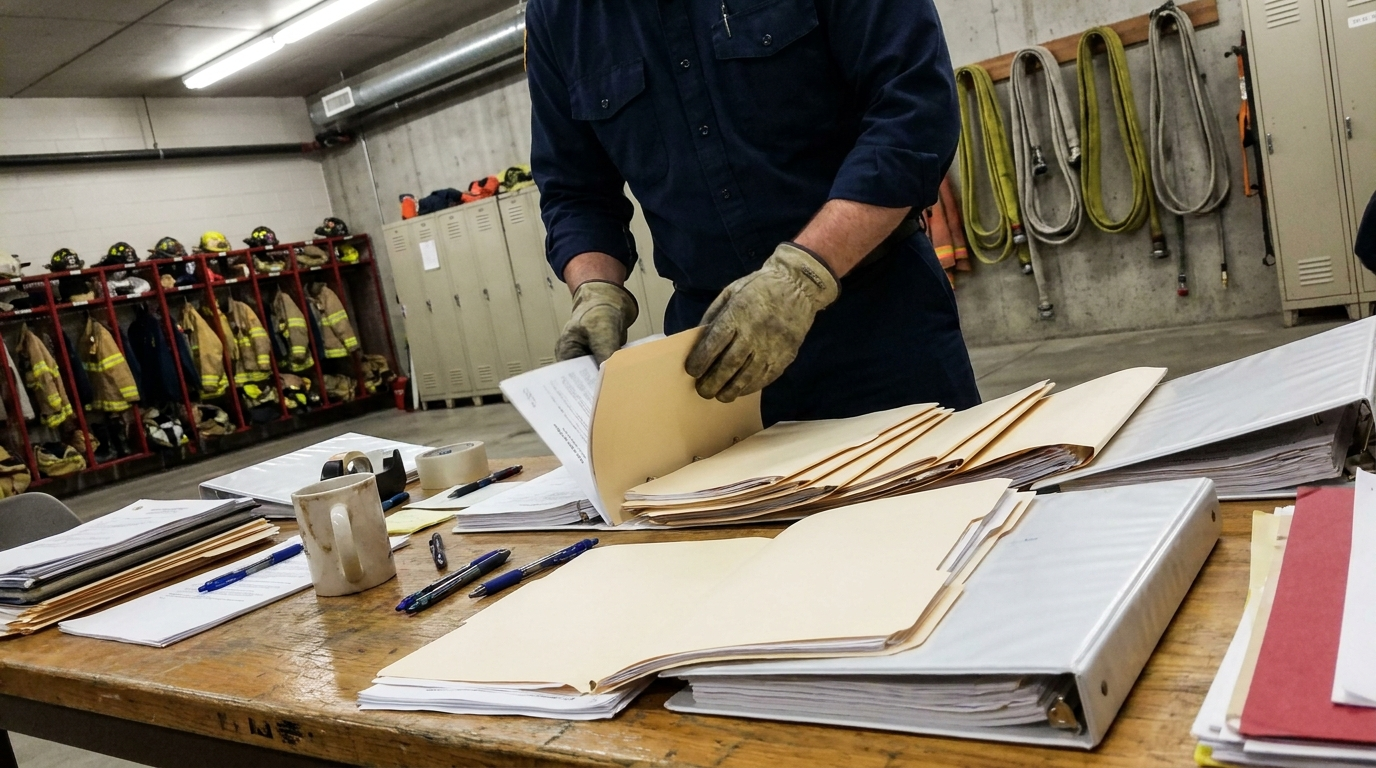
Promotions in the fire service rarely go to the person who starts preparing when the position opens. They go to the person who has been quietly building a record for years. That record is your promotional file: the education, certifications, assignments, and documentation that prove you are ready before anyone asks.
This guide explains how to build that file over time so you are not scrambling when a spot finally opens. Some of this is process. A lot of it is habit. The firefighters who promote well tend to be the ones who treated their career like a long project from early on.
Much of what follows is practical experience from the promotional process rather than a formal requirement. Departments differ, so use this as a framework and confirm specifics against your own department's bulletins and memorandum of understanding (MOU).
What a promotional file actually is
Your promotional file is both a literal collection of documents and the broader body of evidence that you are ready for the next rank. Think of it in two parts.
The first part is the paper trail: certificates, transcripts, training records, evaluations, letters, and a current resume. The second part is the experience behind the paper: the assignments you took, the projects you led, the problems you solved. A strong file connects the two, so your resume is not a list of classes but a record of a firefighter who kept stepping up.
Some California promotional processes formally score parts of this, through education and certification points, seniority, or a review of your training record. Others use it more informally, as the background a chief weighs when making an appointment from an eligibility list. Either way, a well-kept file helps you.
Start early and keep it current
The single biggest mistake is waiting. Certifications take months. Degrees take years. Special assignments come around on their own schedule. If you start building the day a promotion is announced, you have already lost.
Set up a simple system now.
- Keep a folder, digital and physical, with every certificate, transcript, and completion record. Scan paper the day you get it.
- Keep a running resume and update it the same week something changes. Do not reconstruct it from memory two years later.
- Keep a log of assignments, projects, and notable incidents. A few lines each. You will forget the details, and the details are what make a resume real.
- Keep copies of positive evaluations and any letters of recognition.
This habit costs a few minutes here and there. It saves you from the panic of hunting for a ten-year-old certificate the week an application is due.
The four pillars to build
A strong promotional file usually rests on four pillars. Work on all of them over time rather than cramming one at the end.
Education
College coursework is a common thread in California promotions, and it becomes more important the higher you go. Fire technology, emergency management, public administration, and business are all relevant fields. An associate degree is a common floor for the chief officer ranks, and a bachelor's or master's degree helps at the executive level. Education also frequently ties into pay through incentives. See firefighter incentive pay for how that can work.
Degrees are the slowest pillar to build, so start early. One or two classes a semester adds up over a career, and it is far easier than trying to finish a degree while preparing for an exam.
Certifications
Certifications are the most controllable pillar. No one can take them from you once earned, and they signal a recognized standard. Map the certifications required for your target rank and work through the prerequisites ahead of time. The California officer certification path is covered in fire officer certification in California. Get the certification before the promotion opens, not during the rush.
Special assignments and experience
This is the pillar that separates strong candidates. Volunteer for the assignments that stretch you and show initiative: instructor duties, committee work, apparatus or equipment committees, recruitment, public education, specialty teams, and acting or relief time in the position above yours. Acting time is especially valuable. Time spent doing the job you want to promote into is the most convincing evidence that you can do it.
Say yes to the work others avoid. The person who runs the messy project, organizes the training, or takes the extra assignment builds a resume that a list of classes cannot match.
Documentation and reputation
The final pillar is proof and perception. Keep your records clean and current. Build a professional reputation through consistent, reliable work. When it comes time for interviews, references, or a chief's appointment, the people around you are part of your file whether you like it or not. A firefighter who is trusted, prepared, and easy to work with carries an advantage no certificate provides.
Turn the file into a resume and packet
When a promotion opens, your years of preparation get distilled into an application packet, usually a resume and sometimes supporting documents. A few principles help.
- Lead with relevance. Put the education, certifications, and assignments that match the target rank up front.
- Show impact, not just attendance. Instead of listing a class, note what you did with it. Instead of listing a committee, note what the committee accomplished.
- Keep it accurate. Never inflate a role or a credential. Assessors and chiefs check, and a single exaggeration can undo years of good work.
- Keep it clean. Typos and sloppy formatting signal carelessness to people evaluating your judgment.
The stronger your ongoing file, the easier this step is. You are assembling from a well-kept record, not inventing a story under deadline.
A simple year-by-year rhythm
You do not have to do everything at once. A sustainable rhythm beats a burst of effort.
- Each year, finish at least one certification or one or two college classes.
- Each year, take at least one assignment or project outside your normal duties.
- Each quarter, update your resume and log.
- Each time you get a certificate or evaluation, file it immediately.
Kept up over a career, this rhythm produces a candidate who is simply ready when the time comes, without any last-minute heroics.
FAQ
When should I start building my promotional file?
From the beginning of your career, or as soon as you decide you want to promote. Degrees take years and certifications take months, so early preparation is the whole point. Waiting until a promotion is announced puts you behind.
What goes in a firefighter promotional file?
Certificates, college transcripts, training records, performance evaluations, letters of recognition, a current resume, and a log of assignments and projects. The goal is a complete, current record you can draw on when an application opens.
Do special assignments really matter for promotion?
Yes. Assignments, committee work, instructor duties, and especially acting time in the position above yours are often what separate strong candidates. They provide real evidence that you can do the higher-level job, not just study for it.
How important is a college degree for firefighter promotion?
It varies by department and rank, but education matters more the higher you go. An associate degree is common in the chief officer ranks, and bachelor's or master's degrees help at the executive level. It also can tie into incentive pay.
Is the promotional file formally scored?
Sometimes. Some California processes award points for education, certification, and seniority, or review your training record. Others use the file more informally as background for an appointment. Either way, a strong file works in your favor.
Start the file today
You cannot control when a promotion opens, but you can control whether you are ready when it does. Open a folder today, drop in your current certificates, update your resume, and pick the one class or certification you will start next. Readiness is built in small, steady steps, and the best time to take the first one is now.
This article is general career information for California firefighters. It is not legal or employment advice, and requirements vary by department. Always confirm current standards with your department's human resources office and your applicable memorandum of understanding.