CAL FIRE vs City vs County Fire: How to Choose
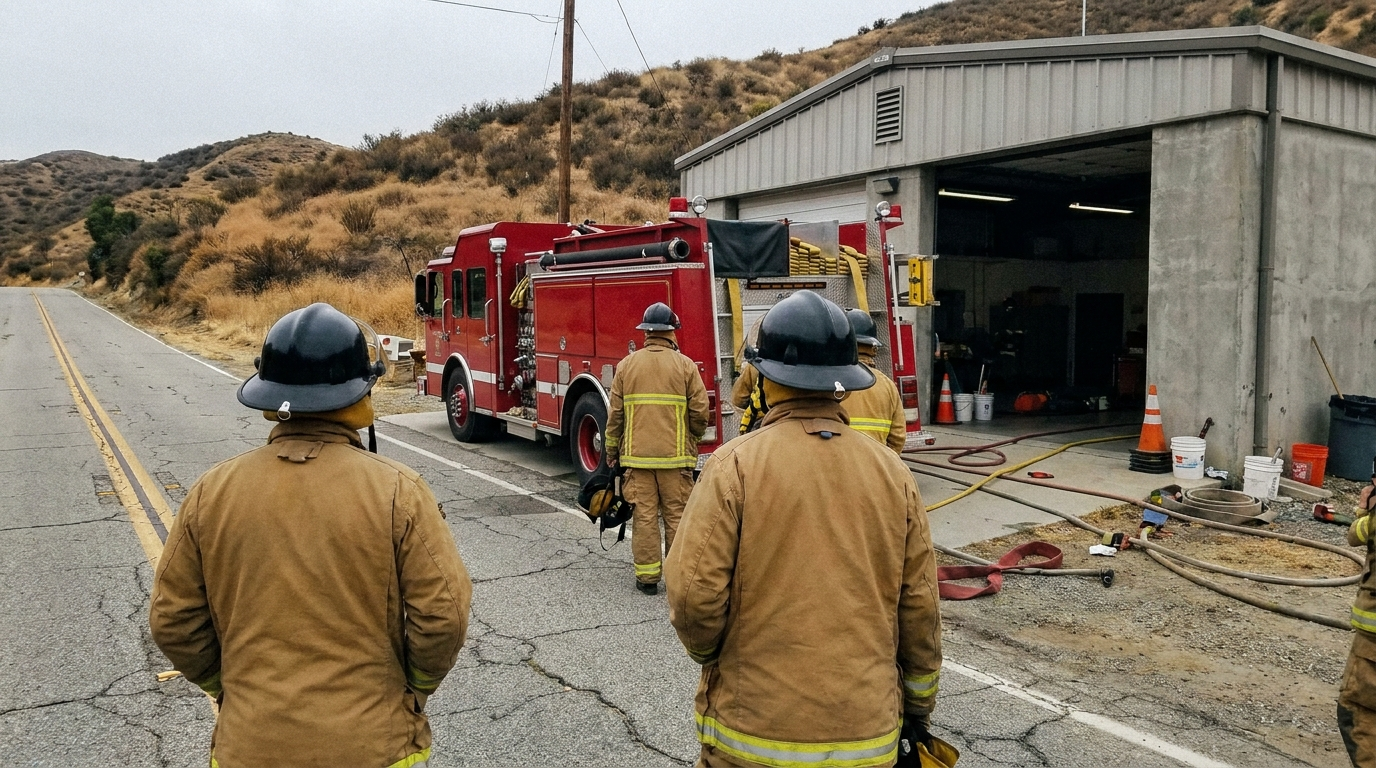
In California, "firefighter" covers more than one kind of job and more than one way in. City departments, county departments and districts, and the state agency CAL FIRE do overlapping but different work, and they hire through different systems. Here is how they compare on work, hiring, and pay in general terms, with real California examples, so you can choose where to aim. Every department sets its own rules, so confirm the specifics with each one.
The three main paths
City (municipal) fire departments
Run by a city for that city. Think Los Angeles Fire Department, San Jose Fire, or San Diego Fire-Rescue. Work is heavy on structure fires, medical calls, vehicle accidents, and other urban and suburban emergencies. Medical calls usually make up the majority of the volume.
County fire departments and fire districts
Run by a county or by a special district that serves a defined area, sometimes covering multiple cities by contract. Examples in the dataset include Los Angeles County Fire, Alameda County Fire, Orange County Fire Authority (a joint-powers district serving unincorporated areas plus 20-plus contract cities), and Santa Clara County Fire (Central Fire). The work is similar to city work but often spans a larger and more varied area, which can mix dense neighborhoods with rural or wildland-urban-interface zones.
CAL FIRE (the state agency)
CAL FIRE is the California Department of Forestry and Fire Protection, a statewide agency focused on wildland fire protection across the state's responsibility areas. CAL FIRE firefighters train in wildland, rural, and structural suppression and use hand tools like the Pulaski and McLeod alongside engines. CAL FIRE also contracts to provide fire protection for some counties (Riverside County Fire is operated by CAL FIRE under contract, for example).
Differences in the work
- City: high call volume, mostly medical, structure fires, and urban rescues, concentrated in a defined city. Predictable geography, dense population.
- County and district: similar emergency mix but often over a wider, more varied area, which can include significant wildland-urban interface. The specific mix depends on the district.
- CAL FIRE: a strong wildland focus, especially through California's long fire season, with seasonal surges and the potential for deployment away from your home unit. State crews also respond to other emergencies in their areas, but the core identity is wildland protection.
If you want a busy medical and structure-fire career in a city, a municipal or urban county department fits. If you are drawn to wildland firefighting and the state mission, CAL FIRE is the direct path.
Differences in hiring
This is where the paths split most clearly, and it shapes how you should prepare.
Many city, county, and district departments use FCTC
A large share of California city and district departments hire through the Firefighter Candidate Testing Center (FCTC), which administers the CPAT and a standardized written exam and maintains a Statewide Eligibility List used by over 170 California fire departments. In the dataset, San Francisco, San Jose, Fremont, Long Beach, Orange County Fire Authority, and many others are FCTC-affiliated. For these, getting on the FCTC list (by passing the CPAT and the written test) is a core step. Confirm requirements at fctconline.org and on each department's careers page.
But not all of them
Plenty of major departments run their own process instead of FCTC. Examples from the dataset:
- Los Angeles Fire Department (city) runs its own Firefighter Candidate Assessment, not FCTC.
- Oakland uses the National Testing Network written exam.
- Anaheim and Ventura County use their own physical tests (Biddle and VCPAT) rather than the standard CPAT-through-FCTC route.
- Fresno runs its own multi-step process and written exam.
Notably, the City of Los Angeles (LAFD) does not use FCTC, but Los Angeles County Fire does. Same region, two different systems. Never assume; check each department.
CAL FIRE hires through CalCareers
CAL FIRE does not use the FCTC list. You apply through the state's CalCareers system (joincalfire.com is the recruitment hub). Entry-level state firefighting often starts with the seasonal Fire Fighter I classification, whose application window typically opens in the fall with hiring in the spring, and permanent tracks are available. The process, exams, and timelines differ from the FCTC path entirely.
EMT and paramedic timing varies
When you need your EMT or paramedic certification also varies. Some departments require EMT at application (Ventura County, for example). Others let you obtain it later, such as after a conditional offer or within a set window (Alameda County allows EMT within 90 days of a conditional offer; Stockton allows it within a year of employment). Some departments hire primarily Firefighter/Paramedics and require a current paramedic license up front (Escondido, San Bernardino County). These examples are as of 2026. Confirm the exact requirement and timing in each department's current bulletin before you plan your training.
Differences in pay and benefits (in general terms)
All three paths can offer solid pay and a defined-benefit pension, but the details differ by employer.
- City and county/district pay varies widely by region and department, with Bay Area and major metro departments often among the higher-paying. Pension is generally a defined-benefit plan through either CalPERS or, in some counties, a 1937 Act county retirement system, and either way the pension is taxable income in retirement.
- CAL FIRE pay is set through the state system, and entry often begins seasonally before permanent status. State employees generally participate in CalPERS. Structure and progression differ from local departments.
Do not assume any one path pays more across the board. Compare actual salary schedules and confirm the pension system and formula with each employer. For how to read these numbers and verify them, see the California firefighter salary breakdown.
How to choose
Work through these questions honestly:
- What work pulls you? Urban medical and structure fires point toward city or county. Wildland and the state mission point toward CAL FIRE.
- Where do you want to live and work? City and county jobs anchor you to a region. CAL FIRE can move you and can deploy you during fire season.
- How do you test best? If you are building toward the FCTC list, you are aiming at FCTC departments. If you are open to multiple systems, prepare for several exam types.
- What is your certification timeline? Match your EMT or paramedic plan to the departments you are targeting.
A common approach is to not put all your eggs in one basket. Many candidates test with multiple departments across paths at once, because openings are competitive and infrequent. Casting a wide net, while tailoring to each department's process, improves your odds over years of testing.
FAQ
What is the difference between CAL FIRE and a city fire department?
CAL FIRE is a statewide agency focused on wildland fire protection, hired through the CalCareers system, often starting seasonally. A city fire department serves one city, runs mostly medical and structure-fire calls, and typically hires through FCTC or its own process. The work, mission, and hiring systems differ.
Is CAL FIRE or a city department better?
Neither is universally better; they fit different goals. CAL FIRE suits people drawn to wildland firefighting and the state mission. City and county departments suit people who want an urban or suburban medical and structure-fire career anchored to a region.
Does every California department use FCTC?
No. Many do (San Francisco, San Jose, OCFA, and others), but major departments like the City of Los Angeles, Oakland, Anaheim, and Ventura County use their own processes. CAL FIRE uses CalCareers. Always check each department.
What is the difference between a city and a county fire department?
A city department serves a single city. A county department or fire district serves a county or a defined district, sometimes covering several cities by contract, often over a larger and more varied area. Note that a city and its county can be entirely separate departments (LAFD versus LA County Fire).
Do CAL FIRE and city firefighters get the same pay and pension?
Not necessarily. Pay and pension vary by employer. Many participate in CalPERS, but some counties use a 1937 Act system, and CAL FIRE pay is set through the state. Confirm the specifics with each employer.
Next step
The path you choose shapes how you prepare, so decide early and cast a wide net. Map your route with the free EMT-to-Badge Roadmap, figure out your current step with the Where am I? tool, and if you are still deciding on the career itself, read whether firefighting is actually worth it.
Sources
- Firefighter Candidate Testing Center (FCTC) and its Statewide Eligibility List (CPAT, written test, and the departments that use the list)
- Join CAL FIRE and CalCareers (state Fire Fighter I hiring path)
- Join OCFA hiring process (Orange County Fire Authority uses the FCTC process; JPA serving unincorporated areas plus contract cities)
- JoinLAFD qualifications and selection process (City of Los Angeles uses its own Firefighter Candidate Assessment, not FCTC)
- Oakland Fire Department via National Testing Network (own written-exam route)
- Ventura County Fire, Become a Firefighter (EMT required and the VCPAT / Biddle physical test)
- Alameda County Fire careers (EMT or paramedic within 90 days of a conditional offer)
- CAL FIRE / Riverside County Fire Department (county fire protection provided by CAL FIRE under contract)
Golden State Firefighter is an independent resource and is not affiliated with CAL FIRE, the FCTC, or any fire department. Verify all hiring, work, pay, and pension details with the department you are applying to, and understand that no career outcome is guaranteed.