How to Promote to Fire Engineer in California
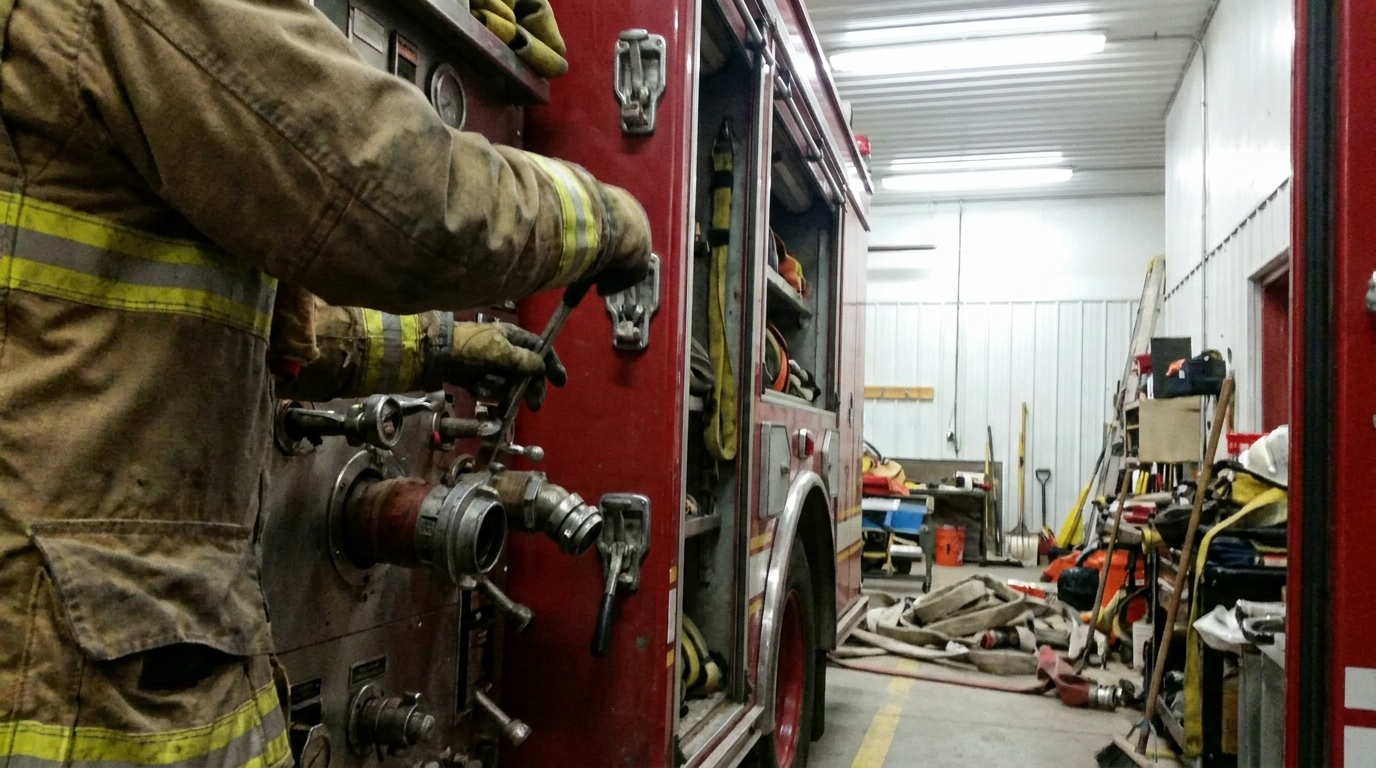
The engineer promotion is the first real rung on the officer-track ladder, and it is a big one. You go from riding the apparatus to owning it. This guide covers what the engineer, or apparatus operator, actually does, what the promotion commonly requires, and how to prepare so the test is a formality rather than a gamble. Requirements vary a lot by department, so confirm the specifics with yours.
What a fire engineer does
The engineer is the crew member who drives the apparatus to the scene and then runs it once there. Departments use different titles for the same role, including Apparatus Operator, Driver-Operator, and Fire Apparatus Engineer. Whatever the title, the core job is the same, and it comes down to three things.
Driving
You are responsible for getting a heavy, expensive vehicle and your entire crew to the scene safely and quickly. That means mastering the apparatus in traffic, in tight streets, and in the conditions California throws at you, from coastal fog to mountain grades to wildland roads. A crash on the way to a call helps no one, so safe, competent driving is the foundation of the whole role.
Pumping
Once on scene, you operate the pump. You take water from a hydrant, a tank, or a draft source and deliver it to the crew's hose lines at the right pressure and volume. The firefighters on the nozzle are trusting you to keep water coming and to keep it steady. Getting that wrong puts them in danger, so pump operation is the heart of the job.
Hydraulics
Behind the pump work is fire-ground hydraulics: the math and judgment that tell you the right discharge pressure for a given hose layout. You account for friction loss in the hose, elevation changes, appliances, and nozzle pressure. Good engineers can run these calculations quickly and reliably, and the promotional exam almost always tests them hard.
The engineer step sits directly above firefighter on the California rank ladder. It is where the officer track begins.
What the engineer promotion commonly requires
Every department runs its own process, but the engineer promotion usually pulls from the same set of requirements. Confirm each one with your department.
Time in grade
Most departments require a minimum number of years as a firefighter before you can test for engineer. A few years is common, but the exact number varies and is often set in the MOU. Check yours.
Apparatus Driver/Operator certification
California's certification for this role is the OSFM Fire Apparatus Driver/Operator series, run by State Fire Training and built on the NFPA Driver/Operator standard (long known as NFPA 1002, which NFPA has since folded into the consolidated NFPA 1010). The series has five certifications, one for each apparatus type: Pump Apparatus, Aerial Apparatus, Tillered Apparatus, Water Tender, and Wildland Fire Apparatus. The prerequisite is commonly certification as a Firefighter 1 (or appointment to an officer rank). The certification task book documents the hands-on skills and stays valid for five years from initiation. Some departments require the certification before you promote, others let you earn it after appointment. Confirm which your department expects, and which apparatus certifications apply to your assignment.
Written exam
The engineer written test leans heavily on hydraulics, pump operations, apparatus systems, driving law, and your department's SOPs. Departments usually publish a reading list ahead of time. Study it closely, because this exam rewards precision.
Practical or driving evaluation
Many departments add a hands-on component: a driving course, a pump-operations evaluation, or both. You may be timed setting up a draft, spotting the apparatus, or hitting target pressures on a hose layout. Some departments also fold in an oral interview or a scenario, similar to a scaled-down assessment center.
How to prepare for the engineer promotion
The engineer test rewards hands-on reps more than almost any other promotion. Here is where to put your effort.
Master the hydraulics until they are automatic
Friction-loss and pump-pressure math is the part most candidates fear and the part you can most fully control. Drill the formulas and the common hose-layout scenarios until you can run them without hesitation. On the exam and on the fire ground, speed and accuracy here separate strong engineers from weak ones.
Get real time behind the wheel and on the pump
Ask your current engineer to coach you every shift. Spot the apparatus. Set up drafts. Run the pump on training evolutions. Learn the quirks of every rig in your station. There is no substitute for repetitions on the actual equipment you will be tested on.
Learn your apparatus systems cold
Know the pump, the tank, the plumbing, the aerial if you run one, and the daily checks inside and out. Engineers are expected to catch and troubleshoot problems. The candidate who can explain how the apparatus works, not just how to drive it, stands out.
Study the department's SOPs and driving policy
National standards set the baseline, but your written test will pull from your own department's procedures and California driving law for emergency vehicles. Read your SOPs and your vehicle-operations policy directly.
Ride with a critical eye
Every call is practice. Watch how your engineer chooses a hydrant, positions the rig, and manages water supply. Ask why afterward. Building that judgment now makes the scenario portions of the test far easier.
FAQ
How long does it take to become a fire engineer?
It varies. Most departments require a minimum time in grade as a firefighter, commonly a few years, and then you wait for an opening and pass the process. Some people test at their first eligibility, others wait years for a vacancy. Confirm the time-in-grade minimum with your department.
Do I need the OSFM Driver/Operator certification before I promote?
It depends on the department. Some require the Fire Apparatus Driver/Operator certification before you can test or be appointed. Others let you promote and then earn it within a set window. The certification is built on the NFPA Driver/Operator standard (NFPA 1002, now consolidated into NFPA 1010) and comes in five tracks by apparatus type. Confirm your department's rule and which apparatus certifications apply.
Is the engineer test mostly hydraulics?
Hydraulics and pump operations are a large and heavily weighted part of it, but not the whole thing. Expect apparatus systems, driving law, SOPs, and often a practical driving or pumping evaluation as well. Study broadly, but do not underestimate the math.
Is engineer a supervisory rank?
Not usually in the way a captain is. The engineer is a technical specialist role focused on the apparatus, though you often act as a senior crew member and a resource for newer firefighters. Formal company command begins at the captain rank.
What if my department uses a different title?
Apparatus Operator, Driver-Operator, and Fire Apparatus Engineer generally refer to the same role. The core duties of driving, pumping, and hydraulics are consistent. Confirm your department's exact title and requirements.
How do I promote to fire engineer?
Most departments require a minimum time in grade as a firefighter, then run a promotional process built around a written exam heavy on hydraulics and pump operations, often plus a practical driving or pumping evaluation. Many also expect the OSFM State Fire Training Fire Apparatus Driver/Operator certification, either before you test or shortly after you promote. The exact steps and the time-in-grade minimum vary by department, so confirm them with yours and read your MOU.
Take the first step
The engineer promotion rewards preparation you can start today. Get behind the wheel and on the pump every shift, drill your hydraulics, and pull the OSFM Driver/Operator task book for your apparatus. When you can already do the job, the test is just paperwork. From here, look ahead to captain and read the pillar guide to promoting.
Sources
- OSFM, Fire Apparatus Driver/Operator (Pump Apparatus) certification
- OSFM, Fire Apparatus Driver/Operator (Aerial Apparatus) certification
- OSFM State Fire Training, Professional Certifications
- NFPA 1010 standard development (consolidates the former NFPA 1002 Driver/Operator standard)
Golden State Firefighter is an independent resource and is not affiliated with any fire department, CAL FIRE, or the Office of the State Fire Marshal. Promotional processes vary by department. Confirm all requirements with your department.